

 commons.wikimedia.org on Google
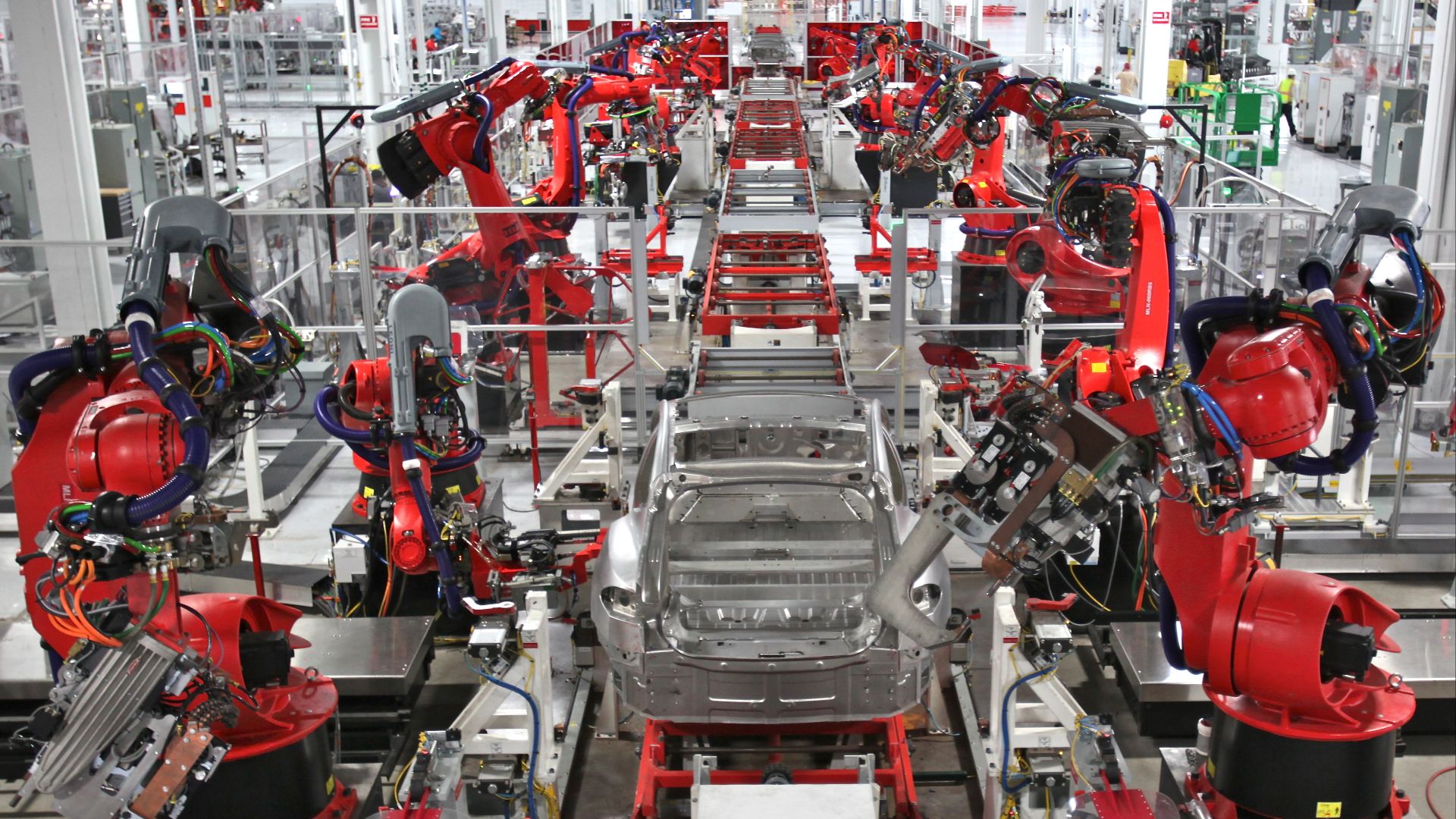
The numbers have become difficult to ignore. Mexico surpassed China in 2023 to become the United States' largest trading partner, and a substantial share of that trade rolls on four wheels. The country now produces over 3.2 million vehicles annually, according to the Mexican Automotive Industry Association, and hosts assembly plants for virtually every major global automaker, including BMW, General Motors, Ford, Stellantis, Toyota, Audi, and Kia. That roster didn't assemble itself by accident, and it didn't happen because Mexico simply offered the cheapest labor available. The story is considerably more layered than that.
What Mexico has built over roughly four decades is something economists call a deep industrial cluster, a self-reinforcing concentration of manufacturers, suppliers, engineers, logistics networks, and trained workers that becomes more attractive to new investment the larger it gets. A single vehicle contains thousands of parts sourced from hundreds of suppliers, and when those suppliers already sit within a few hundred kilometers of an assembly plant, the economics of manufacturing shift dramatically. Geography, policy, and accumulated expertise have combined to create a competitive position that other countries would struggle to replicate quickly, regardless of what any individual trade agreement says.
NAFTA Built the Foundation, USMCA Deepened It
The North American Free Trade Agreement, signed in 1994, is the obvious starting point. By eliminating tariffs on vehicles and parts moving among the United States, Canada, and Mexico, NAFTA made it rational for automakers to treat North America as a single integrated production zone. Mexico's lower labor costs made it the natural home for labor-intensive assembly and component manufacturing, while engineering, design, and higher-complexity production stayed concentrated further north.
What is less often acknowledged is how the 2020 replacement of NAFTA with the United States-Mexico-Canada Agreement actually deepened Mexico's position rather than threatening it. The USMCA raised regional content requirements for duty-free vehicle trade, meaning automakers had to source more parts from within North America to qualify for tariff-free access to the American market. For companies already embedded in Mexico's supplier ecosystem, this was manageable. For competitors considering building supply chains elsewhere, it raised the cost of entry significantly. The new rules functioned, in practice, as a moat around the existing manufacturing complex.
The USMCA also included labor provisions requiring that a meaningful share of vehicle content be produced by workers earning at least $16 per hour, a measure designed partly to narrow the wage gap that had driven investment south. Mexico's government more than doubled its minimum wage between 2018 and 2023 in response. Wages in automotive manufacturing now exceed the national minimum by a wide margin, but the total cost of Mexican automotive labor, factoring in benefits and productivity, remains well below comparable costs in the United States or Germany.
Skilled Labor Is the Underappreciated Advantage
The labor cost narrative gets repeated most often, but it obscures what has become Mexico's more durable edge: the depth of its automotive engineering and technical workforce. The Bajío region, a corridor running through Guanajuato, San Luis Potosí, Querétaro, and Aguascalientes, has developed an educational infrastructure explicitly built around the needs of the automotive industry. Universities and technical institutes there have designed curricula in direct coordination with manufacturers, producing graduates calibrated to the specific demands of modern vehicle production.
Audi's decision to build its Q5 plant in San José Chiapa, Puebla, which opened in 2016, was accompanied by a dedicated training academy that has since certified thousands of technicians. BMW's San Luis Potosí plant, which opened in 2019, was similarly preceded by years of workforce development investment. These companies weren't chasing cheap labor. They were building relationships with a technical workforce sophisticated enough for premium vehicle production.
Mexico now graduates more engineers annually than Germany, and a growing share of those graduates are being absorbed into automotive research, development, and process engineering rather than purely production roles. The image of Mexico as a destination for low-skill assembly work has been outdated in the automotive context for at least a decade.
Nearshoring Turned a Trend Into a Structural Shift
The disruptions of the past several years accelerated a reallocation of manufacturing investment that had been building quietly for much longer. Supply chain crises during the pandemic, combined with rising tensions around Chinese manufacturing, pushed automakers and parts suppliers to reconsider the logic of long intercontinental supply chains. Mexico, sitting on the United States' southern border with mature logistics infrastructure and deep integration into North American production networks, was the natural beneficiary.
KPMG reported that nearshoring investment announcements in Mexico reached record levels in 2023, with automotive and auto parts sectors leading the way. Monterrey saw industrial real estate vacancy rates fall to historic lows as companies competed for manufacturing space. The northern border states of Nuevo León, Coahuila, and Chihuahua attracted particular attention given their proximity to American plants and their established maquiladora networks.
Electric vehicle production has added a new dimension. Battery suppliers and EV component manufacturers from South Korea, Japan, and Europe have been establishing Mexican operations in anticipation of demand from existing and forthcoming assembly plants. The transition to electric vehicles, which analysts initially assumed might disrupt Mexico's position, is instead becoming another chapter in the same story.





.jpg)