Most patents exist to keep a good idea locked up long enough for someone to profit from it. The three-point seatbelt broke that pattern almost immediately, and the story behind why still holds up as one of the more remarkable decisions in automotive history. An engineer named Nils Bohlin built a safety design simple enough to fit in a few straps of fabric, and the company behind it chose to let every carmaker on earth use it without paying a cent.
That engineer had spent years solving a very different kind of survival problem before he ever touched a car. His background, and the belt he eventually designed, explain why the decision to share it so freely made sense to the people who made it, even though it meant walking away from what could have been an enormous stream of licensing income.
An Aviation Engineer Solves A Problem Cars Had Ignored For Years
Bohlin came to Volvo with a resume built almost entirely around keeping people alive at speed. Before joining the company in 1958, he had spent years at Saab working on ejection seats for fighter pilots, a job that demanded restraint systems capable of holding a human body steady under extreme force. Cars, by comparison, were still relying on simple lap belts that fastened across the waist and did little to protect the upper body in a real crash.
Volvo brought Bohlin on as the company's first dedicated safety engineer, a role that did not widely exist in the auto industry at the time. Lap belts alone had a well-documented problem, since a hard enough impact could cause the upper body to fold forward violently even while the hips stayed anchored in place. Bohlin's aviation background gave him a different way of thinking about the same physics.
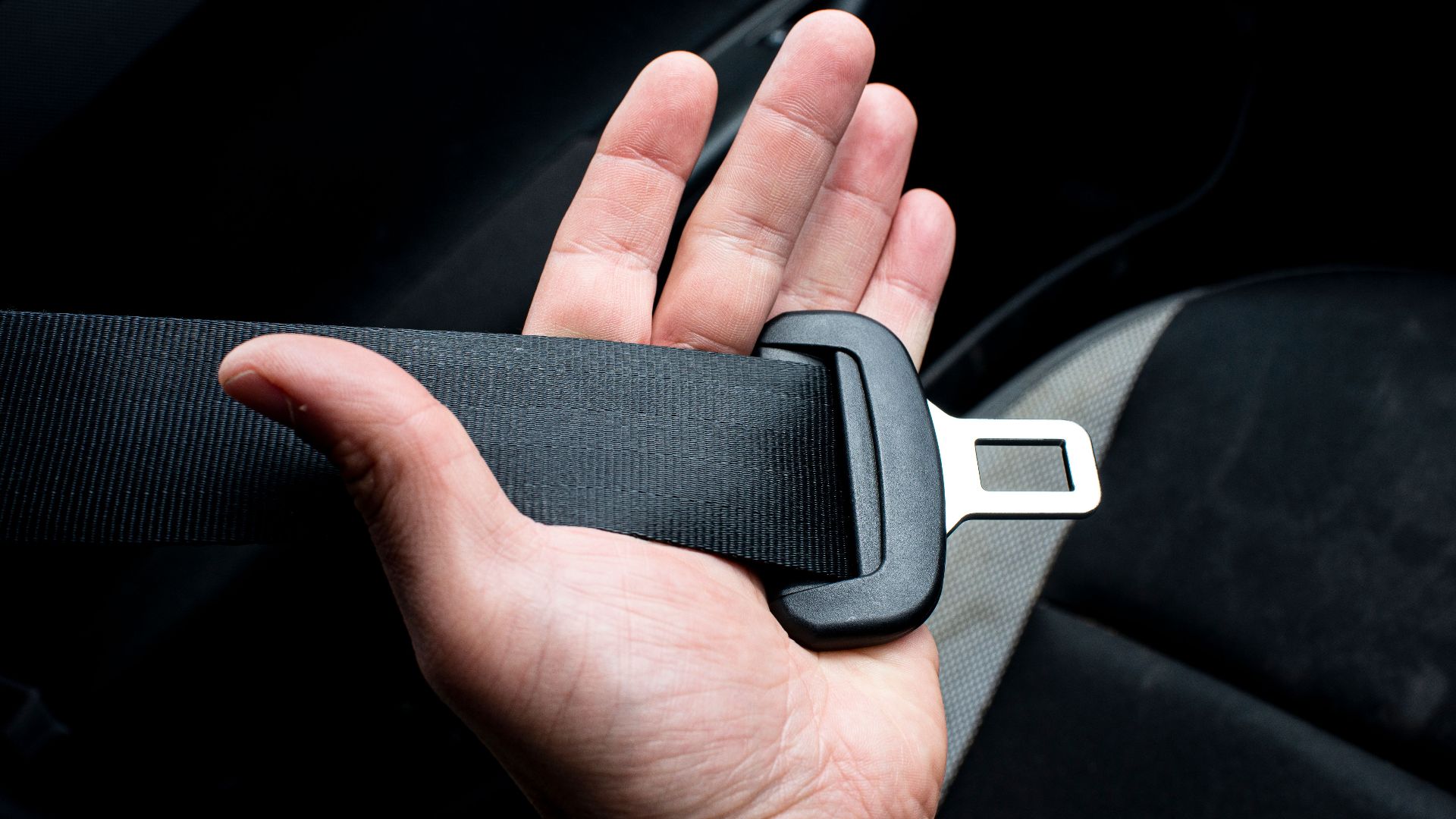
Rather than treating the shoulder and the waist as separate problems, Bohlin designed a single belt that anchored at three points across the body, distributing crash forces across the chest and pelvis at once. He reportedly finished the core design in under a year, a remarkably short timeline for a restraint system that would eventually become mandatory equipment across the entire industry.
From Ejector Seats To A Three-Point Belt
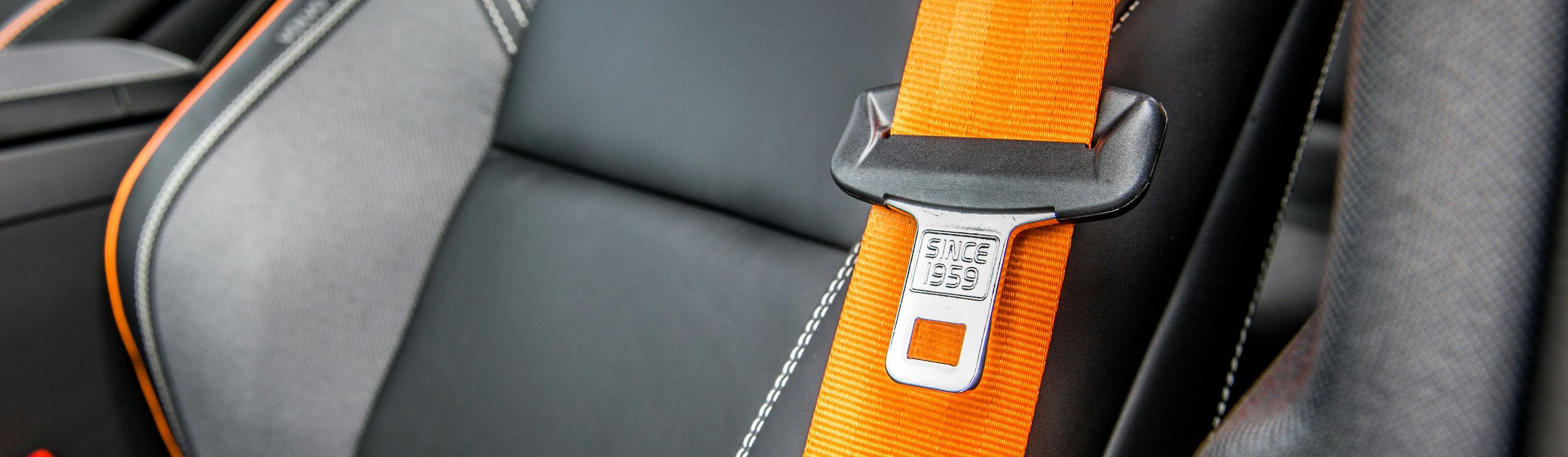
Volvo introduced the new design in 1959, fitting it as standard equipment on the Volvo PV544 and the Amazon model. On August 13 of that year, the first car equipped with the modern three-point belt was delivered to a customer in Kristianstad, Sweden, a fairly quiet moment for what would eventually become one of the most consequential safety features ever installed in a vehicle.
Bohlin filed for a United States patent that same month, and the application was formally granted in 1962 under his name, assigned to Volvo's parent company. That detail matters, since the patent technically belonged to Volvo as a business asset rather than to Bohlin personally, which is part of what made the company's next decision so unusual.
Most manufacturers holding a patent this valuable would have spent years licensing it for a fee before any competitor got to use it. Two-point lap belts were still standard across much of the industry at the time, which meant Volvo genuinely could have controlled a significant piece of automotive safety technology for years if it had chosen to.
The Decision To Let Everyone Use It For Free
Volvo's leadership made the opposite choice almost immediately, opening the patent so that any manufacturer could use the three-point design without paying royalties. The reasoning came down to something fairly straightforward. Restricting the belt to Volvo vehicles alone would have meant deliberately limiting how many lives it could actually save, and that tradeoff was not one the company was willing to make for the sake of licensing revenue.
The decision fit the same philosophy that had driven Bohlin's design work in the first place, treating the belt as a safety tool meant for as many people as possible rather than a competitive advantage. Other automakers adopted the three-point design over the following years, and it eventually became a standard safety requirement written into law across much of the world.
Estimates from safety researchers and Volvo's own historical records suggest the design has saved well over a million lives since it was introduced. A single decision to leave a patent open, made by a company that could easily have chosen differently, ended up reshaping what a basic strap of fabric was capable of doing inside every car built afterward.