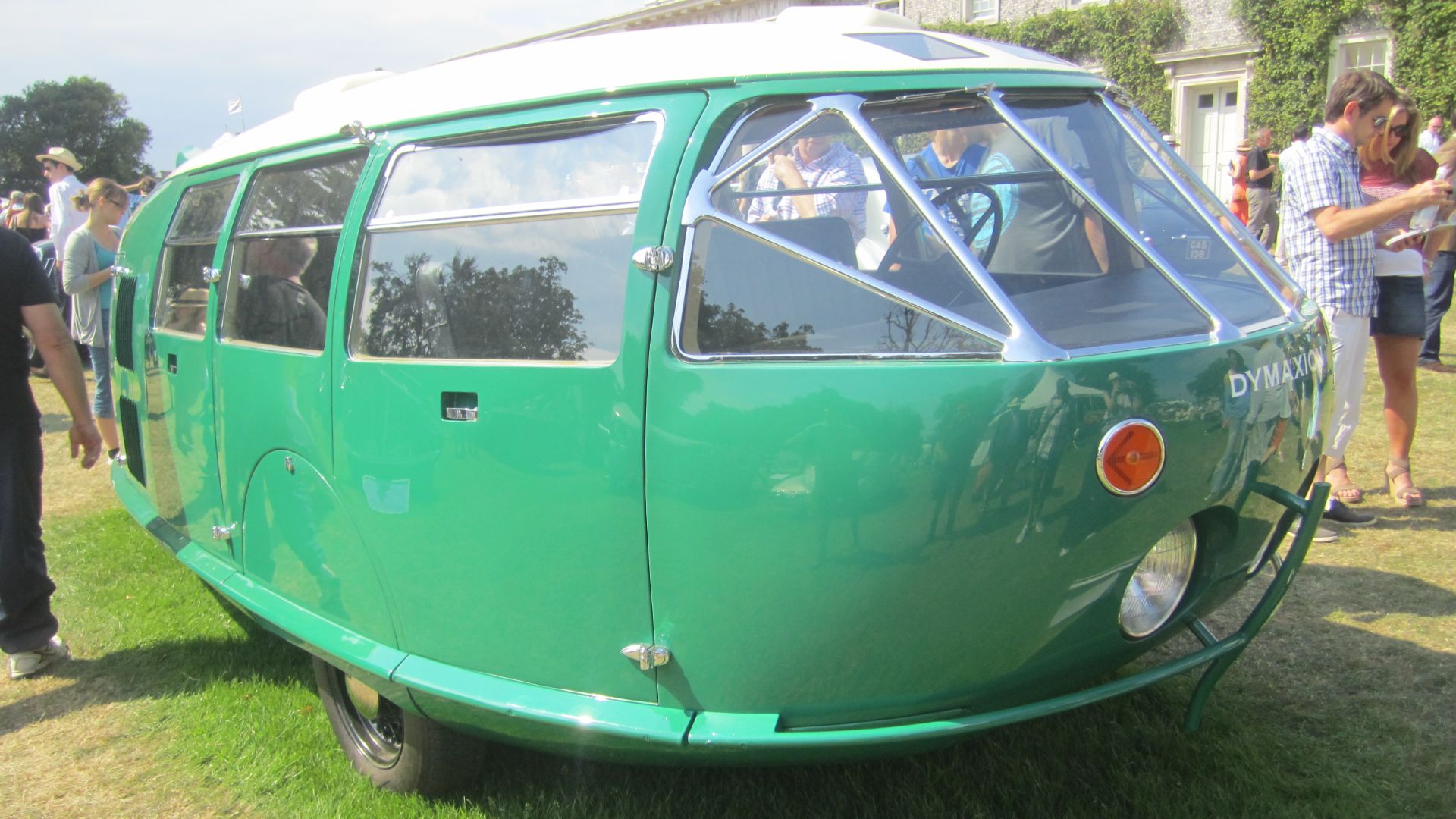
In the early 20th century, there was a glorious period when cars were still new enough that we didn't quite know what to do with them. We know how to drive them, of course, but we could never have guessed what America's car-focused future would look like. This lead to a gloriously anarchic era where designers were basically doing whatever with cars, leading to some wacky and wonderful designs.
A Vision Of The Future
 https://www.flickr.com/photos/saschapohflepp/ on Wikimedia
The wonderfully-named Buckminster Fuller was one such man. Fuller popularized the concept of Spaceship Earth, a belief that we must all work together to crew this little blue dot we call home. If you've ever visited Walt Disney World's Epcot, you're likely familiar with the concept, along with the park's iconic geodesic sphere (another Fuller brainchild).
Fuller was a futurist, concerned with how the least energy could benefit the most people. He called this concept Dymaxion, a portmanteau of dynamic, maximum, and tension. Fuller developed a Dymaxion house, Dymaxion world map, and, yes, a Dymaxion car.
The Dymaxion Car
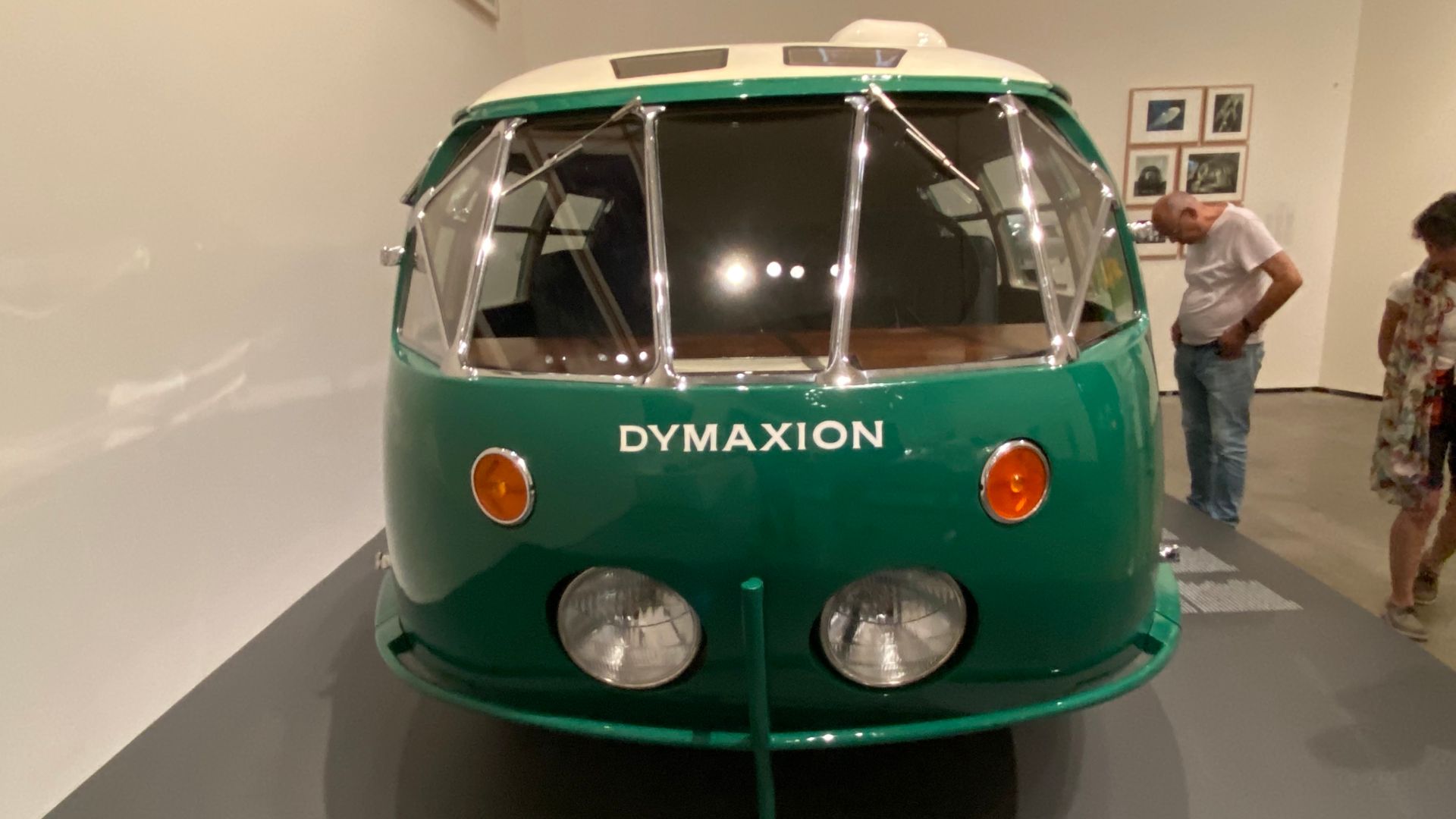
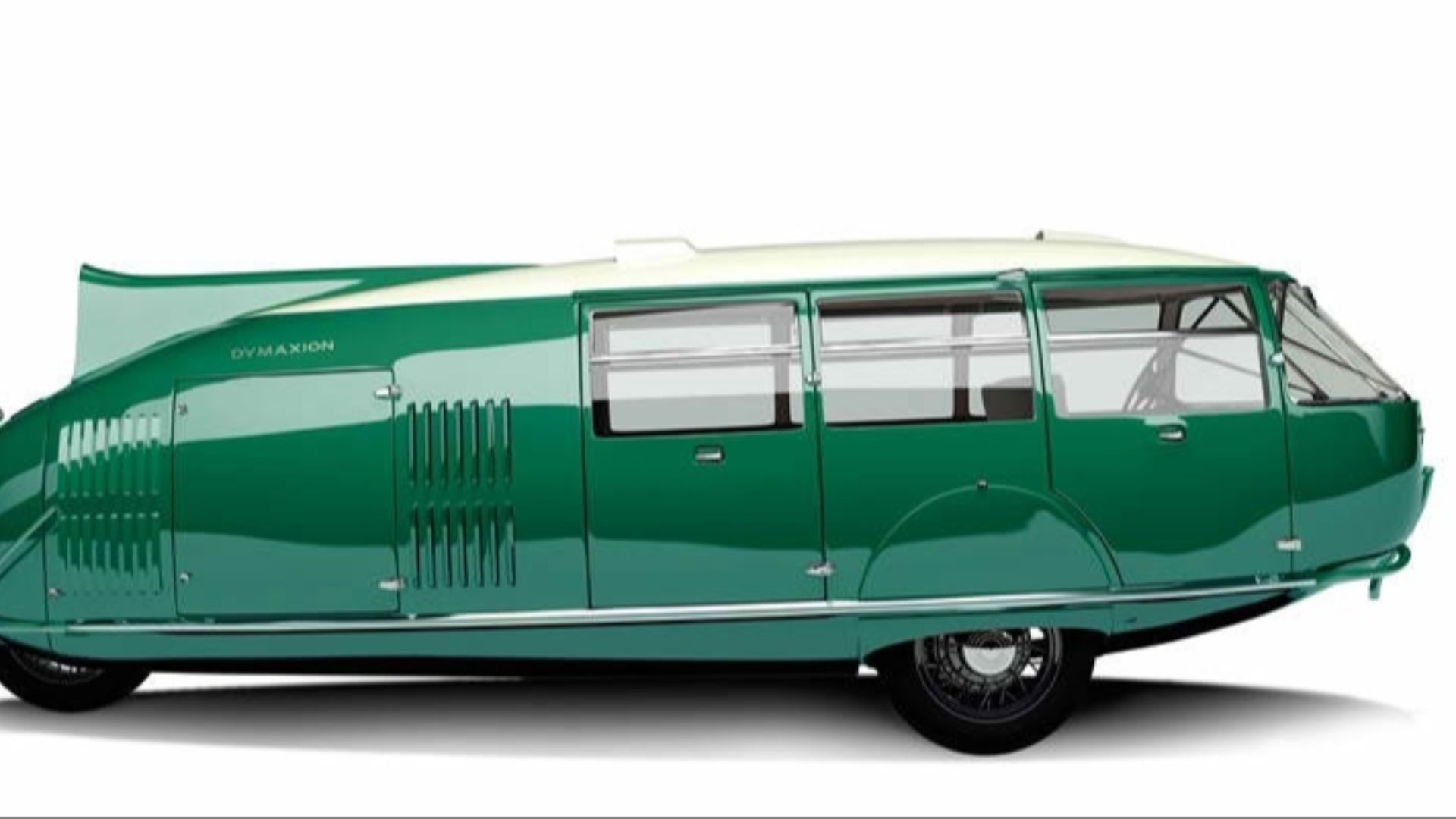
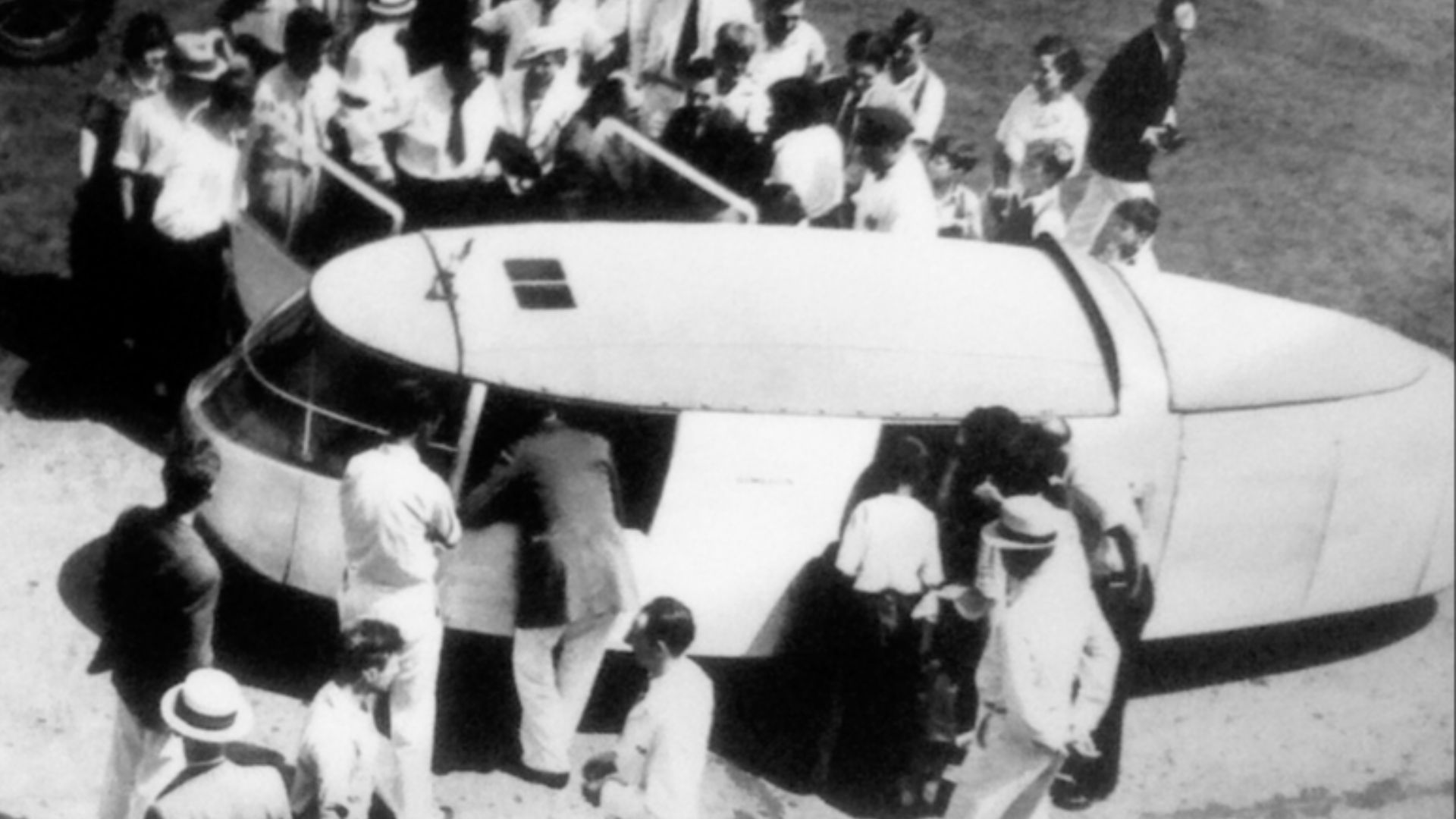
The Dymaxion car looks silly to the modern eye, resembling a bright green submarine with an uneven three wheels. Nearly 20 feet long and able to fit 11 passengers, this was Fuller's vision of the future. A prototype debuted at the 1933 Chicago World's Fair.
While the Dymaxion car may look strange to the modern eye, its' design wasn't too radical for the art deco age. Since the 1910s, designers sought to craft the most aerodynamic cars possible, leading to some delightful designs. The Porsche Type 12 and Stout Scarab were both showcased around the same time as the Dymaxion car; testing for the delightfully egg-shaped Schlörwagen would start a few years later.
For all its bulk, the Dymaxion was designed for excellent fuel efficiency. The steering (concentrated on the single rear wheel) allowed the Dymaxion to make extremely tight turns and spin micro-donuts. Onlookers at the World's Fair went wild for this feature in specific.
Unfortunately, the Dymaxion's innovative design was also its downfall. While the car could allegedly reach top speeds of 128 mph, it didn't fare too well at high speeds or in the face of high winds. These limitations restricted operations of the Dymaxion to trained drivers, as well as Fuller himself.
These restrictions were for the best. Shortly before entering the World's Fair, the Dymaxion rolled over during a crash. The crash took the life of the driver and wounded the two passengers. The second prototype also crashed with Fuller himself behind the wheel and his daughter in the passenger seat (both came out with only minor scrapes).
Omni-Medium Transport
The most remarkable thing about the Dymaxion wasn't its design or its' tight turning, it was Fuller's vision for it. You see, Fuller intended it as an "Omni-Medium Transport" capable of traversing earth, sea, and sky. Fuller's vision for the Dymaxion was a vehicle that could "hop off the road at will, fly about, then, as deftly as a bird, settle back into a place in traffic."
Of course, this plan never came to fruition. While there have been amphibious vehicles (albeit ones that aren't very popular), and flying cars (albeit ones that the general public will never get their hands on), there's never been a car that could do all three. Fuller's plan for flight involved strapping jet stilts to the Dymaxion; it isn't clear how he intended for it to swim.
Eventually, Fuller sold all three of his prototypes and stated that the Dymaxion was never intended as a commercial car. It was "a mere sketch, of the glorious, eventual future." Despite major manufacturers taking interest in the design and illustrious figures such as Amelia Earhart and Diego Rivera riding shotgun, the Dymaxion never really took off.
It's been close to 100 years since the Dymaxion car debuted at the Chicago World's Fair, and Fuller's vision of the future seems farther away than ever before. Replicas, as well as one later prototype, are still on display, yet the Dymaxion seems like a practical joke rather than a viable means of transportation. Is there any hope of a future that will include this omni-terrain vehicle?