 Tim Wang from Beijing, China on Wikimedia
In a world where the most popular colors for cars are white, black, and silver, choosing a brightly-colored car can be seen as a sign of self-expression—or even rebellion. Brightly-colored cars are not only easier to pick out of a crowded parking lot, but they make a bold statement about the person behind the wheels. BMW's Art Cars are the boldest of the bold.
As the project recently celebrated its 50th anniversary and is scheduling museum tours across the world, let's dig into the history of BMW's Art Cars. Some of the most iconic visual artists of the 20th and 21st centuries have literally left their marks on the automotive world forever. These cars are not only visually stunning, but they can go head to head in a race.
The Origin Of Art Cars
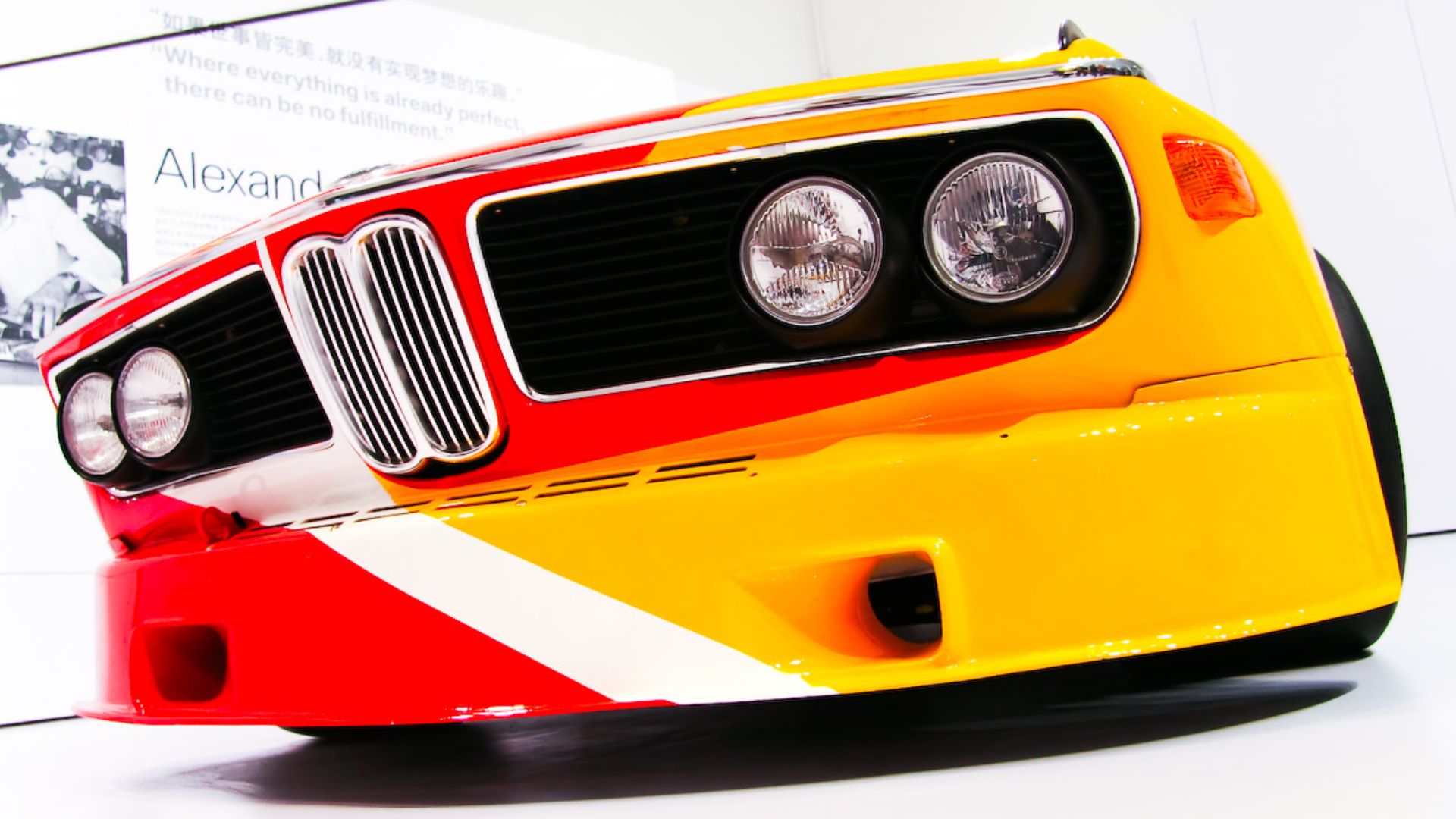
Begun in 1975, the Art Cars were the brain child of French racer, Hervé Poulain. Set to race in the legendary grueling 24 Hours of Le Mans, Poulain wanted to compete in style. Poulain commissioned his friend, artist Alexander Calder to paint a custom BMW 3.0 CSL for the race.
Calder's name probably rings a bell if you're at all familiar with sculpture. Even if you aren't a fan of modern art, you've likely seen work either by or directly inspired by Calder's large-scale kinetic sculptures. In typical Calder fashion, the artist adorned his car in bright swaths of primary colors, playing with the contours of the car's body.
While Hervé Poulain did not finish the 24-hour race that year due to a gearshaft failure, his vehicle created a big splash. Spectators at Le Mans and art critics alike were dazzled by the vehicle. It was the first of BMW's Art Cars, but certainly not the last.
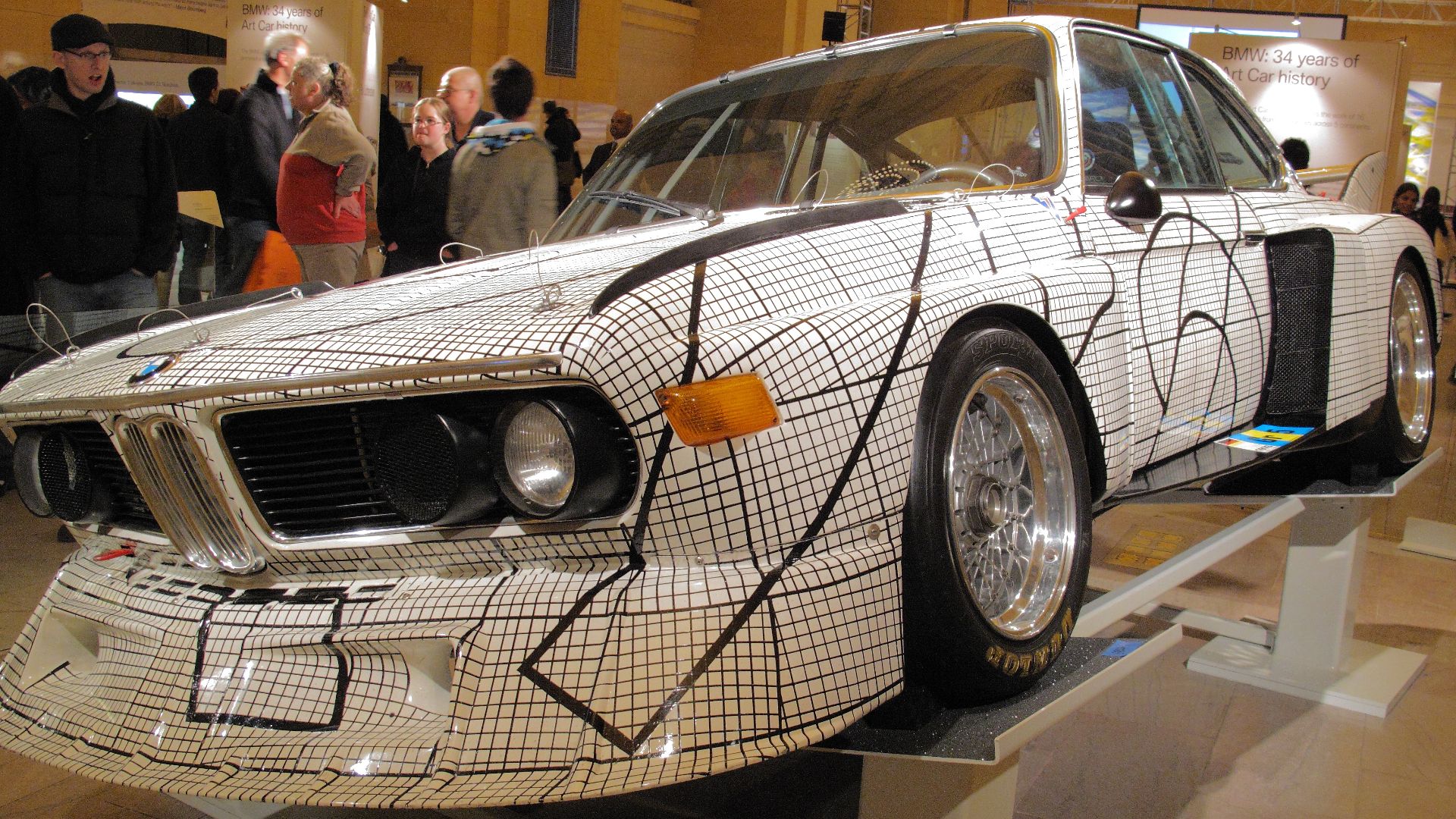
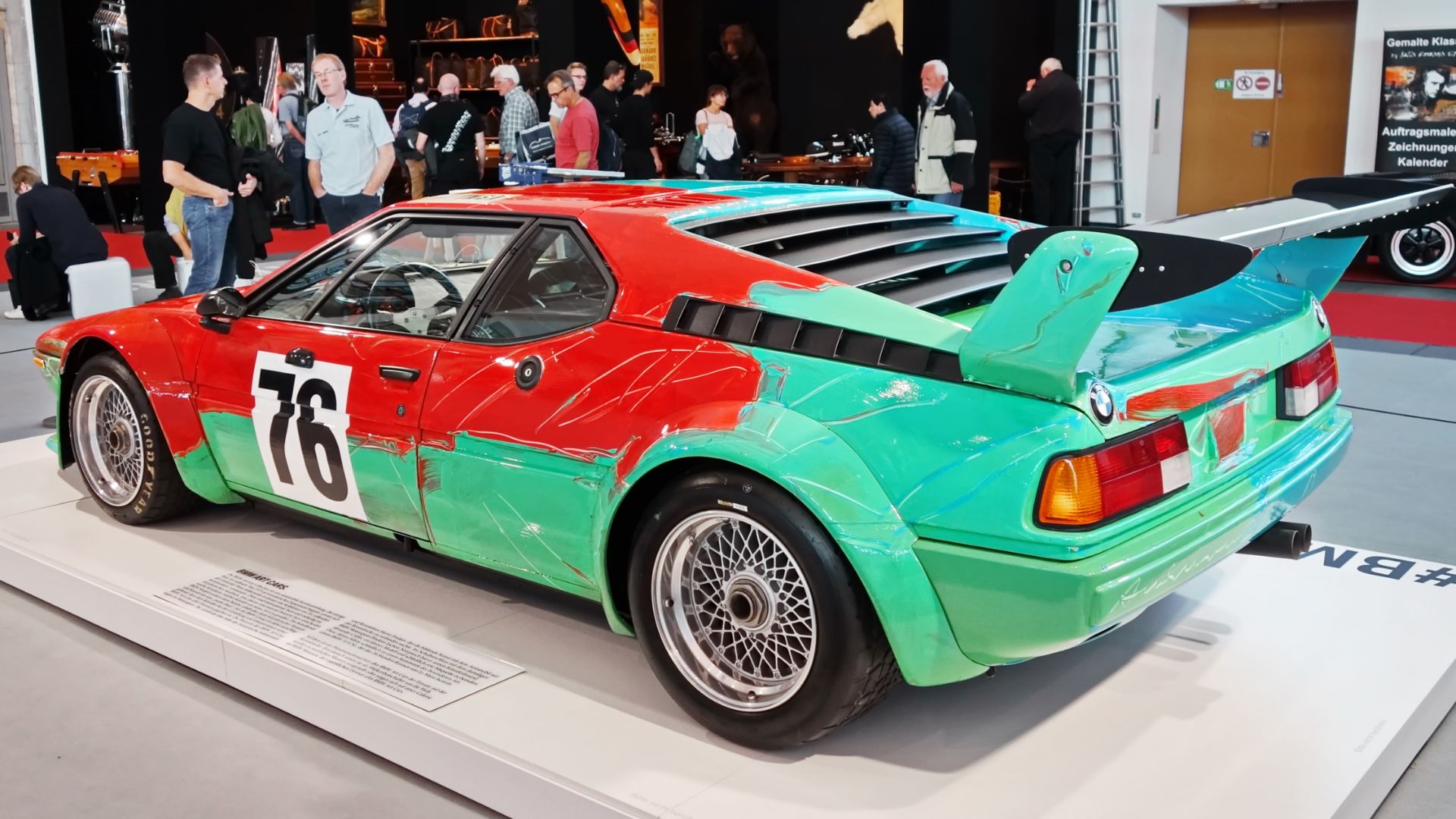
The following year, minimalist Frank Stella tried his hand at painting a BMW 3.0 CSL, developing a geometric design reminiscent of graph paper. Roy Lichtenstein and Andy Warhol went on to paint cars with bold, Pop Art-inspired flair. Warhol's car in particular became one of the most valuable cars in history.
Leaving Their Mark On The Automotive World
While all of the Art Cars are functioning vehicles, not all of them went on to compete at Le Mans. Ernst's Fuchs' fiery red and black car, for example, was conceived as an exhibition piece rather than a racing vehicle. Similarly, the only driving that Robert Rauschenberg's car did was in traffic, with the artist himself behind the wheel.
Artists from across the world left their mark on Art Cars. Michael Nelson Jagamarra's puzzle-like design took inspiration from the cave paintings of Aboriginal Australians. Esther Mahlangu's car, the first to be painted by a woman, incorporates motifs from South Africa's Ndebele people.
Due to the success of the Art Car project, BMW has released a line of miniatures, so you can take your favorite car home with you. These diecast 1:18 scale miniatures represent 18 of the 20 total cars. Olafur Eliasson and Cao Fei's cars, which push the boundaries of experimental art pieces, were deemed too difficult to represent.
Art and technology are two sides of the same coin. As we continue to experiment with the intersections between the two, BMW's Art Cars will continue to evolve. We can't wait to see what the next Art Car will look like!