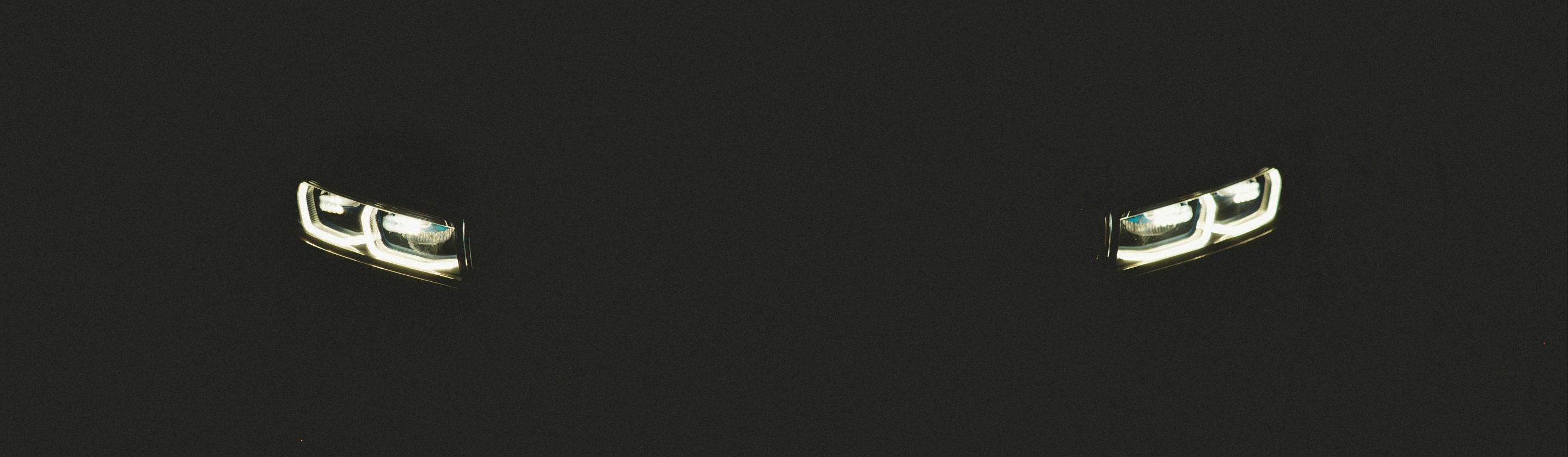
Flashing headlights feels like the closest thing drivers have to a shared language, except nobody ever published the dictionary. One quick flick can read as helpful, annoyed, or mysterious, depending on the road, the time, and the mood in the other car. That uncertainty makes headlight signals easy to misunderstand, and even easier to mythologize.
Urban legends love everyday actions because they already feel believable. A headlight flash is common, quick, and hard to interpret from the outside, which is basically a dream setup for rumor culture. Once a scary story attaches itself to a normal habit, it doesn’t need evidence to travel; it just needs repetition.
The “Lights Out” Legend: What the Warning Actually Claimed
The best-known headlight-flashing legend says a driver will cruise around at night with their lights off, waiting for a “good Samaritan” to flash them as a reminder. After the flash, the story claims, the unlit driver turns around, follows the helpful person, and attacks them as part of a gang initiation. The plot is simple, cinematic, and terrifying enough to stick in your brain after one reading.
This rumor didn’t spread in the misty past with campfires and spooky whispers. It blew up in the early 1990s, when fax machines and chain messages acted like the original “share” button, and people trusted anything that looked official. Deseret News reported in September 1993 that a faxed warning about a so-called “Blood Initiation Weekend” was circulating and triggering public alarm. The message claimed initiates would drive with headlights off and attack the first motorist who flashed them.
Police agencies were asked about it constantly, and the response was blunt. Another Deseret News report from September 1993 quoted a Salt Lake City police lieutenant calling the initiation story “a total hoax,” describing it as a prank fax that had spiraled. The article also described how the warning reached businesses, schools, and community groups, which gave it a veneer of credibility. That “official-looking” path is one reason the rumor got treated like a public safety alert instead of gossip.
Later gang-focused resources treated the claim as folklore, not documentation. The National Gang Center has referenced the headlight-flashing initiation story as an example of gang misinformation, noting there were “few, if any, recorded incidents” that matched the warning’s dramatic scenario.
Why This Legend Took Root So Easily
The legend sticks because it hijacks a polite instinct. Seeing a car moving at night without headlights is genuinely concerning, since it creates a visibility hazard for everyone around it. The rumor turns that common-sense reaction into a trap, which makes people second-guess their own helpfulness. Fear has a way of rewriting normal manners into “never engage,” and the legend thrives on that hesitation.
Social sharing did the rest, and the 1990s version of virality still looks familiar. The faxed warnings spread through workplaces, schools, and community lists, which made the message feel vetted even when it wasn’t. Deseret News described the widespread circulation and the public worry it generated, including the way repeated retellings turned an unverified claim into something that sounded confirmed. A rumor repeated in an “official” format can feel like a fact, even when it’s still a rumor.
There’s also a darker reason the story felt plausible: real gang violence existed, and public anxiety was high. That context gave the warning emotional fuel, since people could easily think, “Something like that could happen,” and stop asking whether it did happen. The National Gang Center’s discussion of online gang misinformation highlights how sensational narratives can outpace evidence, especially when they align with existing fears. Stories that sound like cautionary tales often get shared as “prevention,” even when the details don’t hold up.
The result is a legend that reshapes behavior long after the initial debunking. People remember the rule, “Don’t flash your lights,” without remembering the source, the date, or the corrections. That’s why the rumor keeps resurfacing in new formats, from forwarded emails to social posts that claim a friend-of-a-friend “heard it from police.” The story survives because it’s easy to retell, not because it’s well supported.
Why Folks Flash Their Headlights Today
Most modern headlight flashing is practical, boring, and safety-focused, which is a relief. One of the clearest uses is signaling someone who’s blinding everyone with high beams and refusing to dim them. New York’s official driver manual even suggests a brief high-beam flash for a second and then returning to low beam if the other driver won’t dim their lights. That’s a rare example of a manual spelling out the behavior instead of leaving it to vibes.
A different flash is basically a heads-up that something’s off with the other vehicle. Sometimes it’s “your headlights aren’t on,” which is increasingly common with bright dashboard displays and daytime running lights that can confuse drivers into thinking their full lights are active. Other times it’s a warning about a trunk that’s popped, a door that isn’t latched, or a trailer light that’s doing its own solo performance. The message isn’t always received, yet the intent is usually plain: fix the thing before it becomes a bigger problem.
Some flashes are community alerts about road conditions, and those can be genuinely useful. Drivers will signal for a sudden slowdown, debris in the lane, or an animal near the shoulder, especially on dark rural roads where hazards appear fast. A quick flick can communicate “pay attention” without forcing anyone to brake hard or swerve. That kind of warning sits closer to courtesy than legend, since it’s tied to immediate, observable conditions.
The “speed trap warning” flash still exists, and it’s where things get legally complicated. In Elli v. City of Ellisville, a federal court granted a preliminary injunction in 2014 after a Missouri city stopped and cited drivers for flashing headlights to warn of police ahead, treating the practice as protected expressive conduct in that situation. That doesn’t mean every jurisdiction handles it the same way, since local statutes and enforcement priorities vary. It does show that the “always illegal” claim doesn’t match how courts have evaluated it in at least some cases.
Headlight flashing has also become a reaction to modern glare, since headlights have gotten brighter and more intense. NHTSA published work focused on glare concerns, including a report discussing how glare can affect drivers and how Congress directed NHTSA in 2005 to study glare risk and develop recommendations. AAA has also documented how hazy headlight lenses can scatter light, and it reported that restoration can reduce glare-producing light scatter by up to 60%. When glare feels like a daily issue, some drivers flash as a protest signal, even when it doesn’t land the way they intend.
One more reason headlight flashes can get messy is that road communication happens in a tense environment. AAA’s research has found that 96% of drivers admitted to engaging in aggressive driving behaviors in the prior year, which means a lot of people are already primed to interpret signals as hostile. IIHS has also reported observational research suggesting many drivers rarely use high beams, which adds another layer of confusion around what flashing “should” mean. Short, minimal flashing tends to be the safest approach, since it lowers the chance of escalating a misunderstanding into a weird highway standoff.