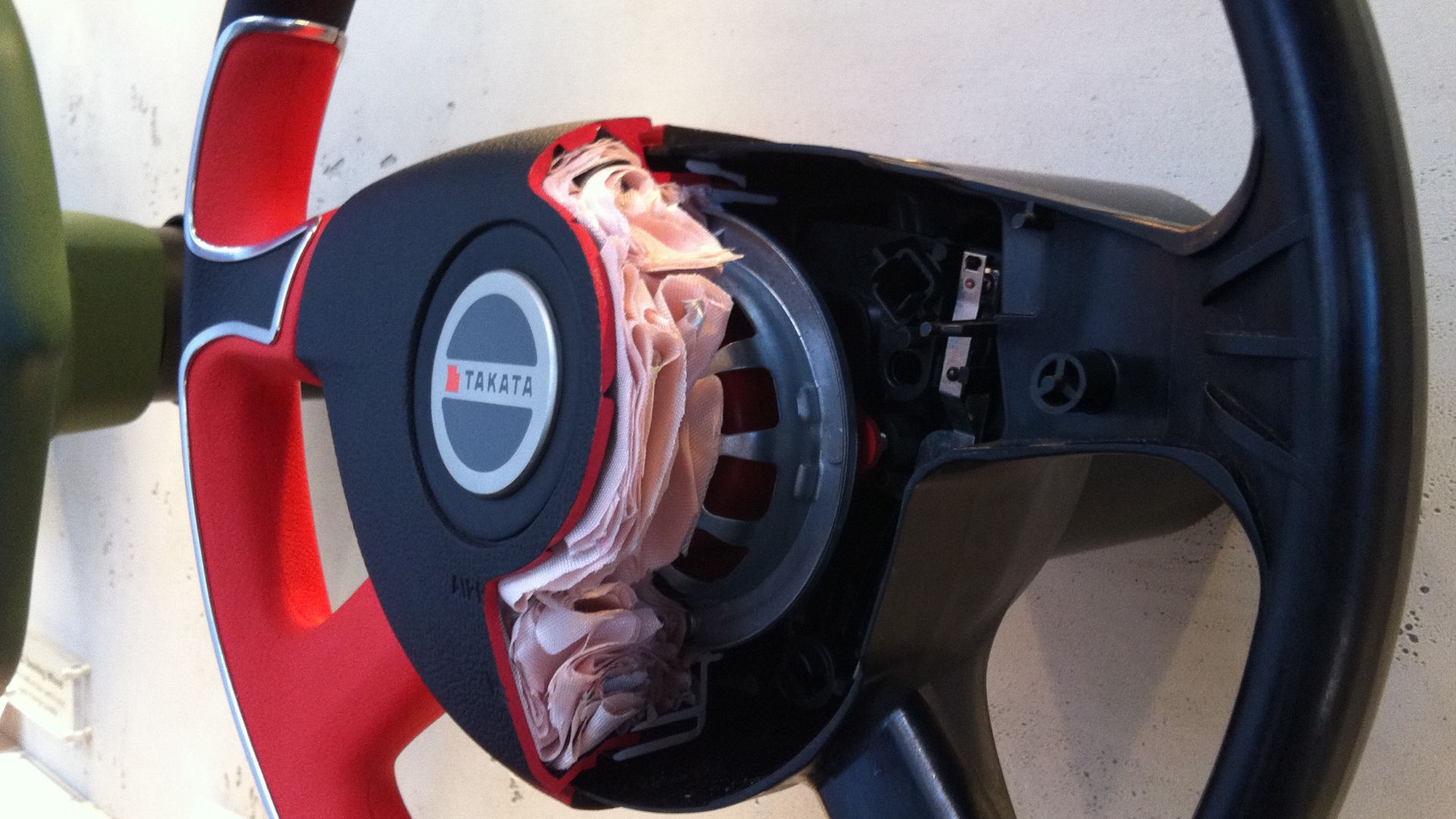
At first, it seemed like a technical issue that could be fixed with a quick recall. Then it unraveled into one of the biggest automotive safety crises in history.
If you’ve ever driven a car from the early 2000s to the mid‑2010s, there’s a chance you were affected. The Takata airbag recall didn’t just call back a few models—it shook the global auto industry. Before you shrug it off as “just another recall,” it’s worth revisiting what made this one so massive—and why it still affects millions today.
The Hidden Defect That Sparked A Global Scandal
Takata Corporation was a trusted name in vehicle safety, supplying millions of airbags to manufacturers including Toyota, Honda, Ford, BMW, and more. For years, drivers relied on these airbags to save lives in collisions.
Few knew they contained a serious flaw. The inflator, which used a cheap chemical propellant called ammonium nitrate, could deteriorate over time. Heat and humidity made it unstable. When triggered, it could explode with excessive force, sending metal fragments into the car’s cabin.
At first, incidents seemed rare. A few mysterious injuries led to isolated recalls. But as reports mounted, investigators uncovered a disturbing truth—the defect wasn’t limited to one model or one brand. It was everywhere. What began as a technical defect grew into an international emergency after inflators were linked to 28 deaths and 400 injuries in the U.S. alone.
When The Numbers Became Impossible To Ignore
By 2014, U.S. regulators demanded full accountability. The National Highway Traffic Safety Administration (NHTSA) began an extensive investigation.
Takata’s airbags had been installed in more than 100 million vehicles worldwide across 19 major manufacturers. What followed was the largest recall in automotive history.
Car companies scrambled to contact owners and replace the defective airbags. But replacement parts were slow to arrive, and millions of drivers waited months—some years—for a fix. Many didn’t even realize their cars were dangerous. According to the NHTSA, over 6 million affected vehicles were left unrepaired in 2024, despite repeated alerts.
The scandal exposed how profit pressures and cost‑cutting can lead to deadly consequences. Takata had used unstable materials and concealed failed safety tests for years. Internal documents showed that warnings from engineers were ignored. The company collapsed under lawsuits and criminal charges, declaring bankruptcy in 2017. Its fall became a cautionary tale about negligence and the price of avoiding accountability.
What Drivers Can Still Do

Though years have passed, this recall continues to affect people. Some older vehicles still contain defective airbags. Checking your VIN on the NHTSA website takes only a moment and can confirm whether your vehicle is part of the recall.
The Takata airbag crisis serves as a powerful reminder that safety features deserve constant scrutiny. One small choice—verifying your car today—could protect you or someone you love tomorrow.