 commons.wikimedia.org on Google
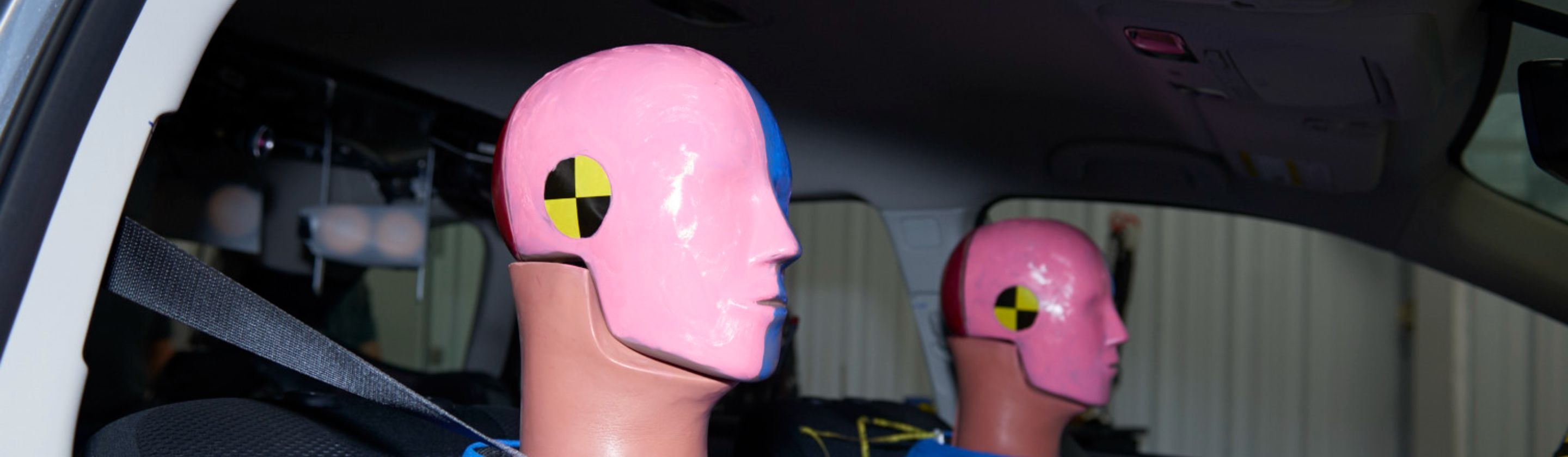
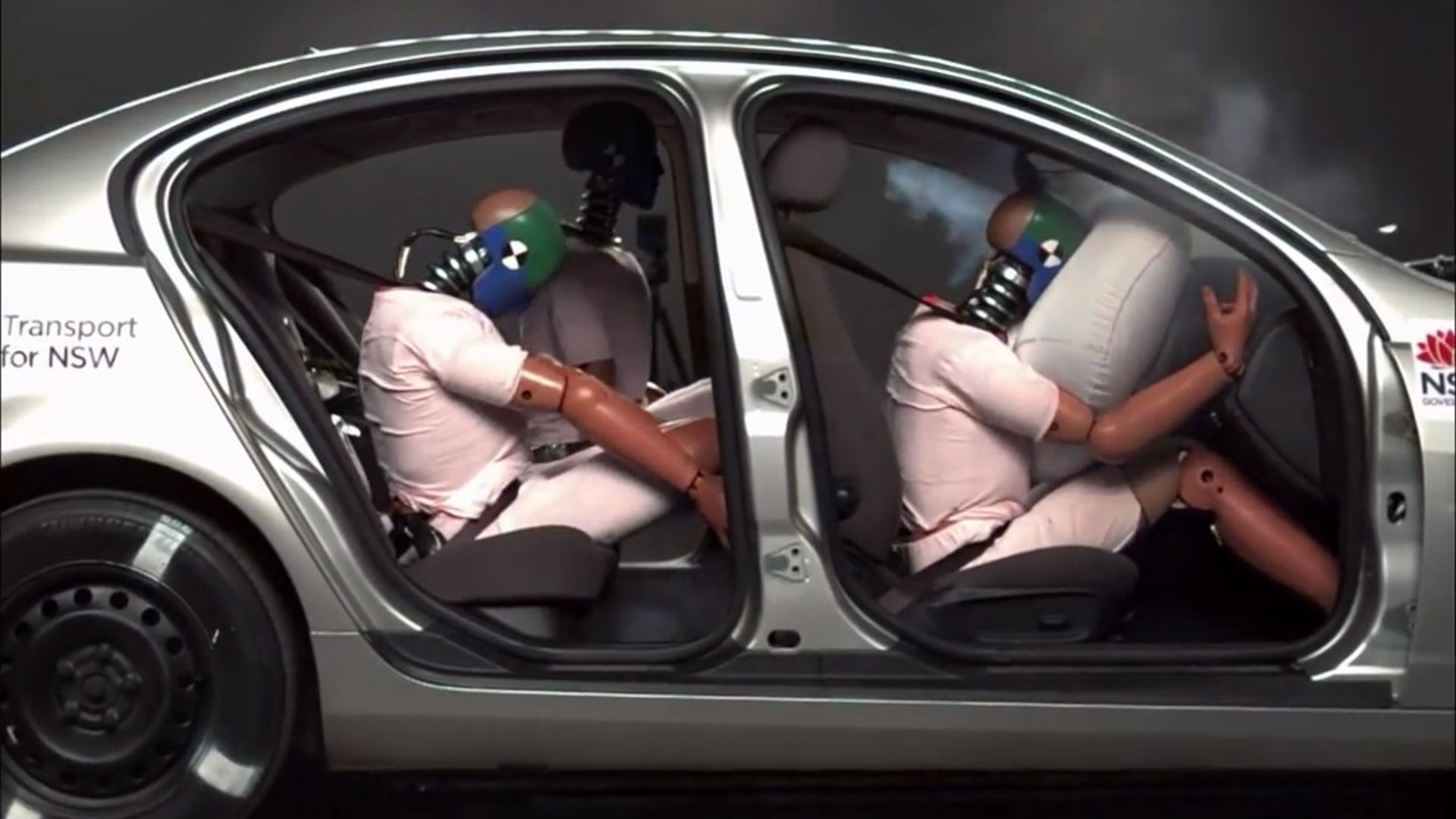
The dummy strapped into a car at a test facility has a name and a very specific set of ancestors. Before anyone built one, the job it does now was done by the dead and by a small number of people who volunteered to be hurt on purpose. Most of what makes a modern car survivable came out of those bodies first. The plastic and steel version arrived afterward.
That history is still sitting inside the equipment. The standard dummy is built to one man's measurements, taken from a population that no longer exists. The industry has spent years arguing about what that leaves out. Nothing about the device is neutral, because somebody had to decide whose body it would copy. The origin story is more human than the word dummy suggests.
Before the Dummies, There Were Bodies
The foundational work happened at Wayne State University in Detroit, starting in the late 1940s. Researchers there used cadavers to test seat belts and collapsible steering columns, wiring them with accelerometers and running them into the fixtures that were killing drivers. The bodies were mostly elderly men, which is a detail that matters later.
Cadavers could not report everything the researchers needed. Lawrence Patrick, who ran the Wayne State program from 1946 to 1976, put himself in the rig instead. He took pendulum impacts to the chest and rode the crash sled, gathering the kind of data a dead body cannot supply. Living tissue has muscle tone, and a conscious person braces. Both change how force moves through a body, and neither shows up in a cadaver test.
The result was the Wayne State Tolerance Curve, built with his colleague Herbert Lissner, which still underpins Federal Motor Vehicle Safety Standard 208. Around the same time, Air Force colonel John Paul Stapp was riding rocket sleds to establish how much deceleration a human being could take. The annual conference where crash researchers present their work is named after him.
Building a Stand-In
The first purpose-built dummy was not made for cars at all. Sierra Sam appeared in 1949, built by Samuel Alderson for testing aircraft ejection seats, a job that was killing pilots at a rate the Air Force wanted to understand. Alderson had studied physics at Berkeley under Oppenheimer and Lawrence, then worked on motors and prosthetics before building artificial people for a living. He set up his own company for the work in 1952, and the automotive business came to him later.
Dummies won on repeatability rather than realism. A cadaver can be crashed once, and every cadaver is a different age and build, so the numbers wobble. A dummy gives you the same answer twice. Regulators can only write a number into law if a test produces that number reliably, and no human body has ever met that standard.
The payoff arrived fast. An American Physical Society history of the field estimates that for each cadaver used, nearly 300 people survived crashes that would otherwise have killed them. By the end of the 1970s, General Motors had produced the Hybrid III, which became the industry standard and eventually a family of sizes wired with sensors for neck torque and chest compression. One design turned into the reference point for every rating system that followed.
The Dummy Is a Specific Man
Hybrid III is a 5-foot-9, 171-pound man. That was close to the American male average in the 1970s and sits about 29 pounds under the average today. Engineers call it the 50th percentile male, which sounds like a statistical abstraction and is in practice a set of fixed dimensions. Every frontal crash rating you have ever read was generated by throwing that particular body at a wall, and the car was engineered to protect him.
The consequences show up in the injury data. Women are 73 percent more likely to be injured in a frontal crash. An NHTSA study attributes about 80 percent of that excess to anatomical differences in the neck, collarbone, pelvis, and legs. The female dummy in regular use is a scaled-down version of the male model with a rubber jacket standing in for breasts. It does not carry sensors in the places where women are injured differently.
Fixing this has been slow. The She Drives Act would require a more representative female dummy for federal testing and has picked up support from senators in both parties. Automakers have objected that advanced dummies may overstate injury risk, an objection that takes years to work through a rulemaking process. The equipment that saved a generation of drivers was shaped around one body, and the paperwork to add a second one is still moving.