 Unknown authorUnknown author on Wikimedia
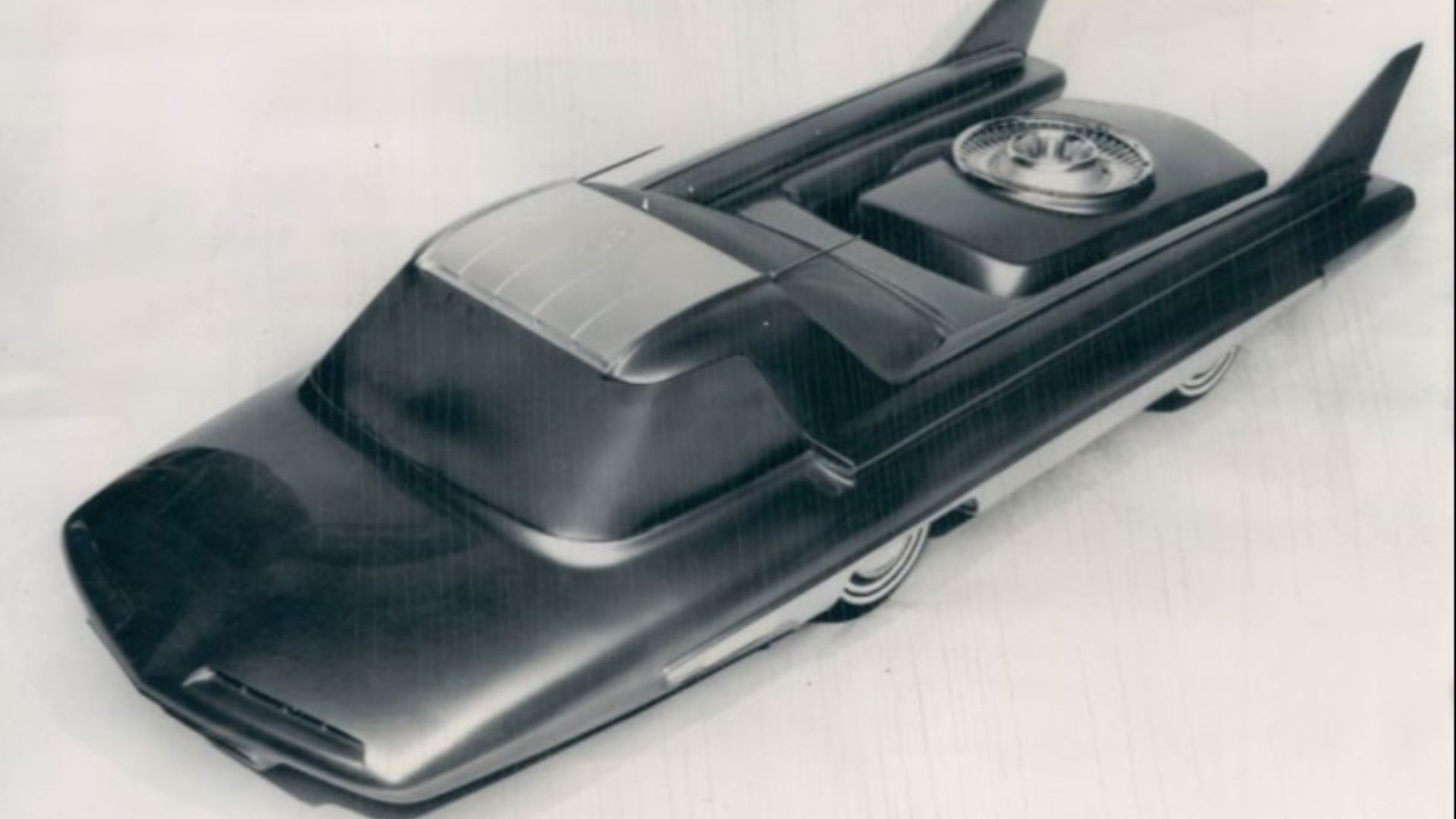
In 1958, Ford unveiled a red scale model with a short passenger cabin and a large housing behind it. The rear section was supposed to contain a nuclear reactor. Ford called the design the Nucleon and suggested it might eventually travel thousands of miles without gasoline. The model was made of plastic, with no working engine or drivetrain. Ford never built a drivable version.
The idea sounded more plausible in the late 1950s. The Navy's nuclear-powered submarine USS Nautilus had gone to sea in 1955, demonstrating that a reactor could power a vessel for long journeys. Ford's designers wondered what cars might look like if that technology became much smaller. They didn't claim the necessary reactor existed. They made the model to show where it might go.
A Car Designed Around A Future Reactor
The Nucleon model was built at three-eighths scale and measured 75 inches long. A full-size version would have stretched to about 200 inches, almost 17 feet. The cabin sat far forward, with a broad rear deck extending behind it. Two long fins framed the space intended for the power unit. That layout made the car look unusual even when automakers were putting fins on nearly everything.
Ford imagined a self-contained power capsule at the rear. The plan was to package the reactor and drivetrain together, so the whole unit could be changed. Designers drew the vehicle around machinery they hoped could one day be built. The proposed wheelbase was just 69.4 inches, unusually short for a car 200 inches long. The cabin had a wide windshield, with a low roof projecting over the glass.
The Nucleon borrowed its basic premise from nuclear ships. A reactor produces heat, which can generate steam to drive machinery. In principle, a smaller system could have powered a car, although Ford never demonstrated one. The model couldn't show how the reactor would be cooled or protected in everyday traffic. Those problems were left for engineers. Ford's styling team focused on finding space for the machinery.
Five Thousand Miles Between Stops
Ford suggested a range of 5,000 miles between visits to a special charging station. The figure was a projection, since there was no working Nucleon to test. The company's brochure pictured these stations largely replacing gasoline stops. Drivers would pull in when their nuclear cores needed attention rather than filling a tank. This meant handling the reactor core, not charging a battery. How long the work would take was never established, because the equipment existed only as an idea.
The power package was also meant to be interchangeable. Ford imagined owners selecting a version that suited the kind of driving they planned to do. A modest unit might serve everyday trips, while another could provide more performance. That would have meant choosing horsepower through a service station rather than buying a different engine with the car. The company's publicity made changing the package sound routine, although no one had built the machinery to do it.
A station handling nuclear cores would face problems a gas pump doesn't. Workers would need protection while removing used material, and the spent fuel would require secure storage. Every vehicle would also need equipment sturdy enough to survive ordinary road use. Ford offered the idea of a new roadside service industry without explaining how its safety procedures might work. The advertised driving range was attractive, but the refueling arrangement brought its own complications.
Shielding Was The Biggest Obstacle
Radiation shielding was the largest obstacle. A reactor needs protection around it to limit people's exposure, and shielding adds substantial weight. Scientists considering nuclear automobiles estimated that a properly shielded vehicle might weigh at least 50 tons. That's far beyond what a passenger car's tires and suspension are built to carry. Making a reactor compact wasn't enough if the protection around it still made the car impractical.
The risks of a collision were another unresolved issue. Cars crash, sometimes at high speeds, and a damaged nuclear power unit would require a very different response from a damaged gasoline engine. There were also questions about the cost of building thousands of reactors and managing their fuel over time. Ford's 1958 brochure acknowledged that reactor size and safety would have to improve before the Nucleon could become practical.
Ford didn't stop imagining atomic cars after the Nucleon. At Seattle's 1962 World's Fair, the company presented another three-eighths-scale design called the Seattle-ite XXI. It had six wheels, with four at the front, and a power unit that could supposedly be exchanged for a different one. Ford proposed fuel cells or a compact nuclear device as possible power sources. Like the Nucleon, it remained a display model with no working reactor.