
A dinner date is a controlled environment. You have chosen your outfit, your restaurant, and the version of yourself you plan to present for the next two hours. The lighting is flattering, the conversation has natural stopping points, and if things go sideways you can ask for the check and be home within the hour. It is, by design, a performance space, and both people know it.
A road trip strips all of that away. You are in a sealed metal box together, possibly for days, with no easy exit. The version of yourself you planned to present has been replaced by the actual one, usually somewhere around hour three, when the playlist causes the first disagreement and someone needs to use a gas station restroom that has not been cleaned since the previous administration. What happens after that is the real information.
Small Spaces Tell Big Truths
The confined geography of a car does something to people that a restaurant table never can. Personal space compresses to almost nothing, and habits that would be invisible across a candlelit table become impossible to miss. The person who drums on the dashboard, who narrates every passing landmark, who cannot sit with silence for more than four minutes, who needs the air conditioning at a temperature you find medically concerning will reveal all of that within the first hundred miles, whether they planned to or not.
Psychologists call this kind of unfiltered exposure a thin-slicing environment, a setting where rapid, accurate judgments form based on behavioral fragments rather than deliberate self-presentation. Research by psychologist Nalini Ambady, summarized in her foundational 1992 paper with Robert Rosenthal in Psychological Bulletin, showed that brief behavioral observations often predict personality and relationship quality more accurately than longer, structured interactions. A road trip is essentially that study running in real time, with snacks.
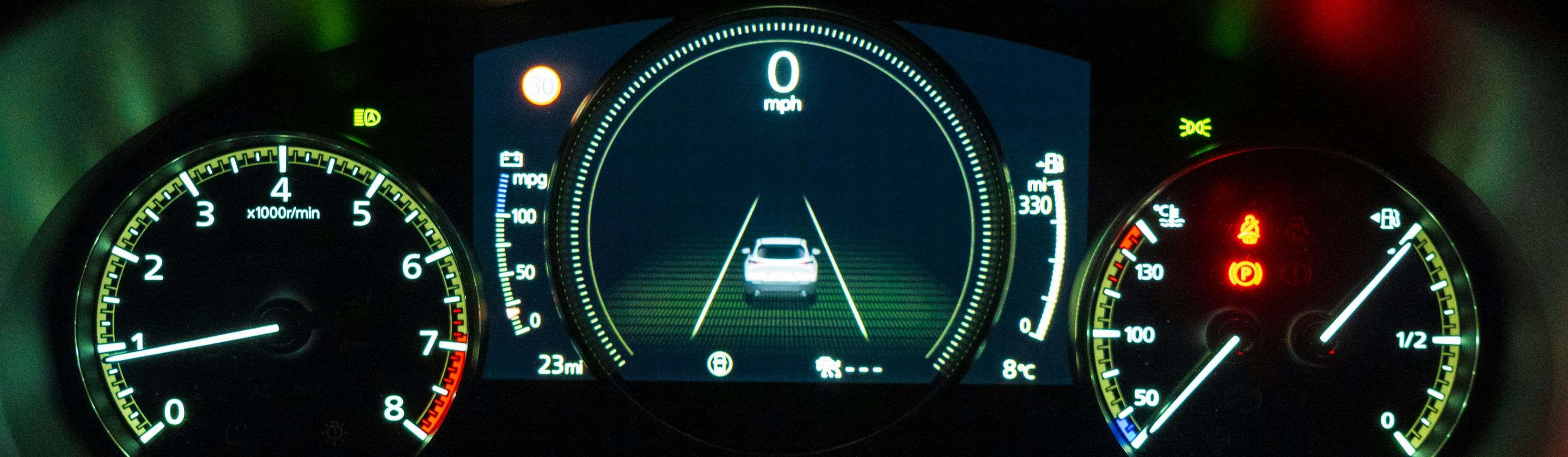
The mundane logistics alone carry diagnostic weight. Who handles the navigation and how do they handle being wrong about it. Who decides where to stop and how do they respond when the other person disagrees. Who notices that the gas gauge is low, and who has been ignoring it for the past forty miles. These are not romantic questions, but they matter enormously once a relationship moves past the dinner-date stage.
Conflict Without an Exit
Every long relationship will eventually have difficult moments, and a dinner date cannot tell you how someone fights. You can have a polished, gracious two-hour meal with someone and never once see them frustrated, interrupted, or stuck in a situation they did not choose. A road trip will show you all three, usually before you cross the state line.
The closed environment means that conflict has to be resolved rather than escaped. You cannot excuse yourself and not come back. You cannot change the subject by calling for the dessert menu. If there is a disagreement about the route, the music, or whether that was the right exit, you are going to work through it together in a space about the size of a large closet. How that goes tells you more about compatibility than almost anything a relationship coach would charge you to discover.
Research has consistently found that conflict resolution style is one of the strongest predictors of long-term relationship satisfaction, more reliable than initial attraction, shared interests, or values alignment. You learn someone's conflict resolution style slowly over months of careful dating, or very quickly on a nine-hour drive through a state with limited cell service.
What Boredom Reveals
Dinner dates are rarely boring. You have chosen a venue with stimulation built in: food arriving, wine to consider, ambient noise to fill the gaps. A road trip will eventually give you a long, flat stretch of highway with nothing to do but be in a car with another person. What happens in that space is revealing in ways no curated date experience can replicate.
Some people are genuinely comfortable in unstructured time with another person. They can sit in comfortable quiet, or let a conversation wander somewhere unimportant, or stare out the window without narrating what they see. Other people cannot tolerate unoccupied time and will fill every silence with noise, plans, or performance. Neither is necessarily a flaw, but compatibility in this dimension matters enormously over the course of a long relationship, and a dinner date will never surface it.
What road trips actually test, underneath the navigation and the snack logistics and the thermostat disagreements, is whether two people can share ordinary time together without requiring it to be anything special. That is a much harder test than whether you can have an excellent two-hour conversation in a place someone else designed to make everything go smoothly. Couples who pass it tend to know something the others are still trying to find out.