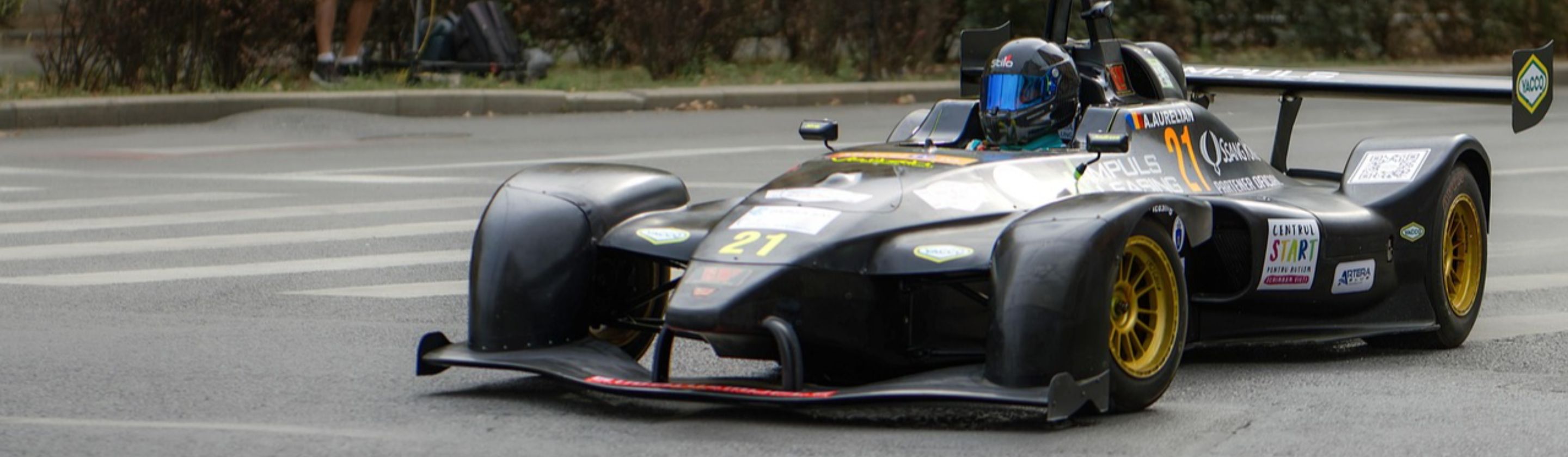
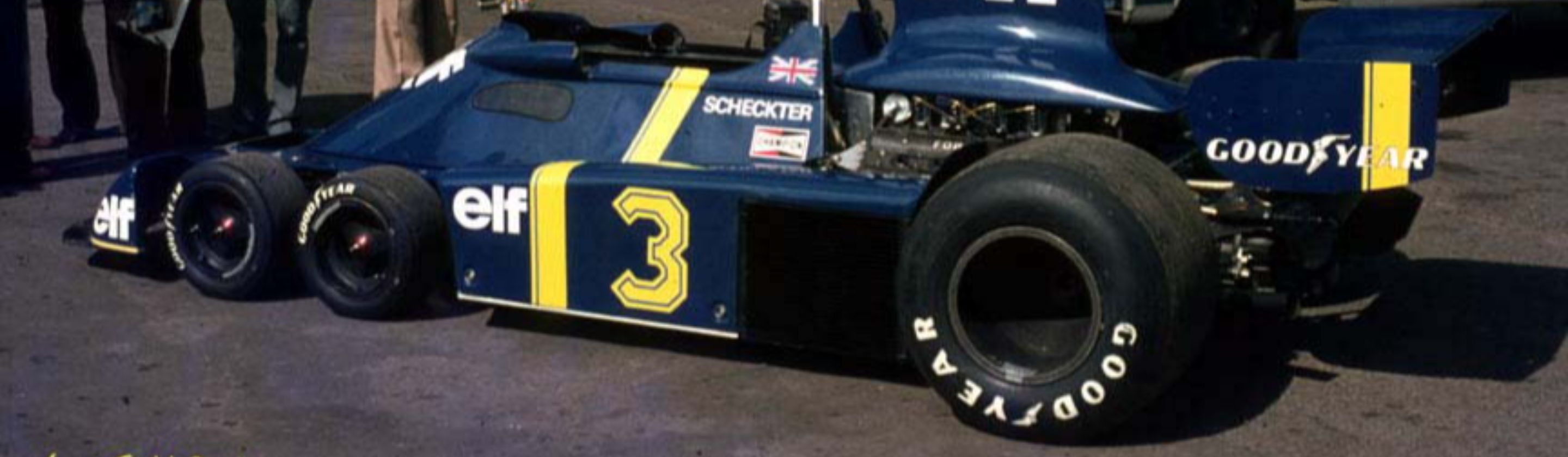
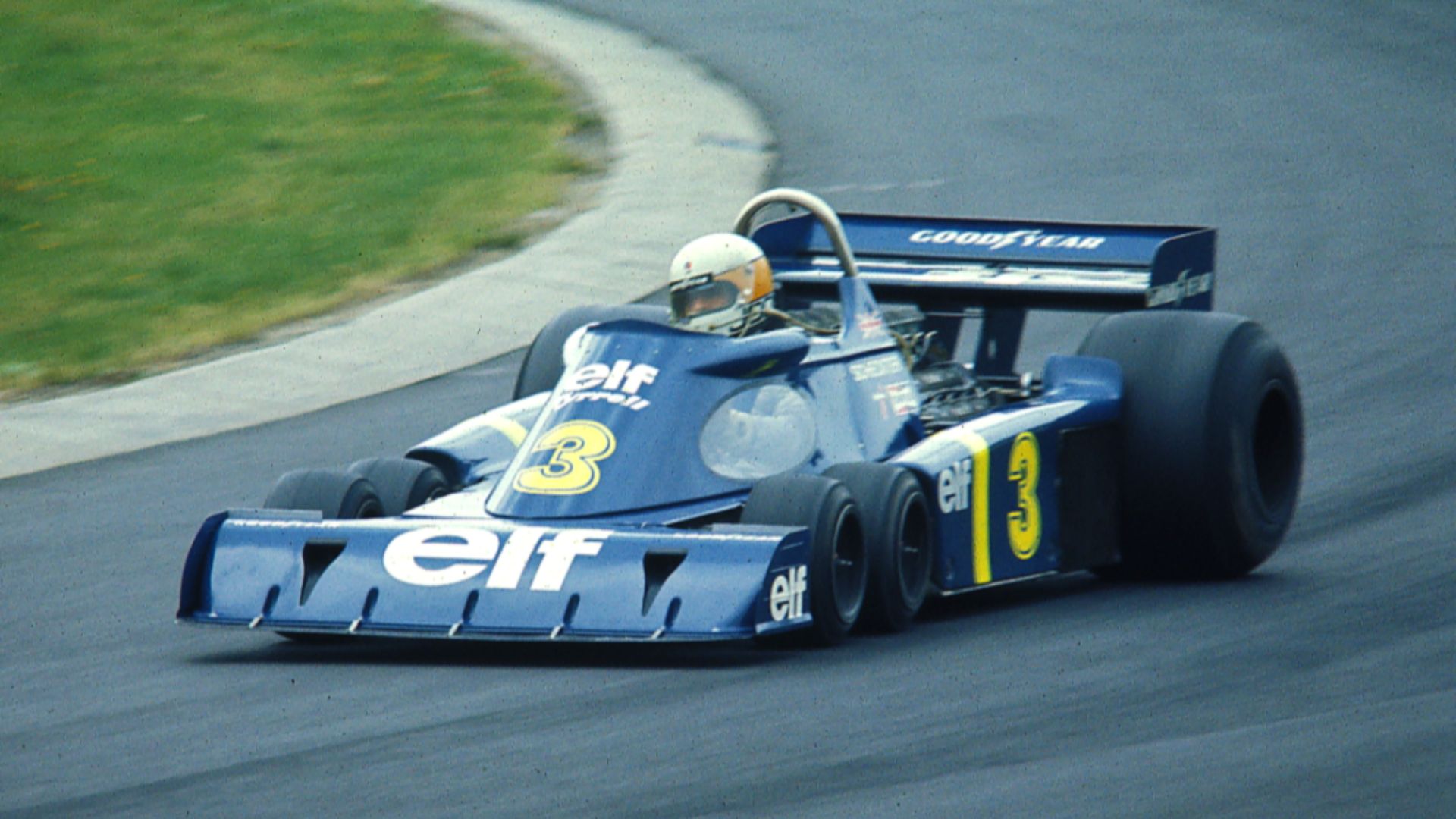
On June 13, 1976, something rather unusual happened at a racetrack in southern Sweden. A blue Tyrrell crossed the finish line in first place, followed closely by its teammate in an identical car. What made them special? Both had six wheels instead of four. The Tyrrell P34 used two regular-sized rear tires and four tiny ten-inch wheels up front, a design unlike anything else on the grid. And at Anderstorp that afternoon, the strange-looking cars finished first and second, beating every conventional Formula 1 car in the race.
It remains the only six-wheeled car to win a Formula One race. The idea sounds like a dare, and plenty of people at the time assumed it was a gimmick. The man who designed it had a much more practical reason, and for about a season the math worked in his favor.
Looking for an Unfair Advantage
By the mid-1970s, most of the grid ran the same Cosworth engine on the same Goodyear tires, which made it hard for any team to find an edge. Tyrrell's designer, Derek Gardner, had first toyed with six wheels while working on a Lotus gas turbine car for Indianapolis in 1968. He pitched it to Jackie Stewart on a flight home from the 1975 South African Grand Prix, and Stewart reportedly nearly choked.
Team owner Ken Tyrrell approved a prototype anyway. It was tagged Project 34 rather than given a normal chassis number, and Goodyear agreed to build the tiny front tires without saying a word about it. Even the drivers didn't know what the team was working on until it was ready.
When journalist Denis Jenkinson first saw the car in Tyrrell's garden, he admitted his mouth fell open. He wasn't alone. The six-wheeled design caused quite a stir when the rest of the Formula 1 paddock got a look at it. After testing at Silverstone, the P34 made its racing debut at the 1976 Spanish Grand Prix, where Patrick Depailler qualified an impressive third. By Monaco, the team had two six-wheelers on the grid, and they finished second and third behind Niki Lauda's Ferrari. Clearly, those extra wheels weren't just for show.
Why the Front Wheels Were So Small
Onlookers figured the point was to shrink the car's frontal area. Gardner said otherwise. Conventional front wheels stick out into the airflow and generate lift, so teams pile on front wing to hold the nose down, and that wing costs speed. Tucking four small wheels behind the bodywork cut that lift, which let him run less wing. By his own estimate, the drag saved was worth around 40 horsepower, at a time when he reckoned Tyrrell was short about 50.
The layout had a cost. Tiny wheels left little room for brakes, and Gardner later admitted that heat built up around the brake fluid until the drivers simply lost their stopping power. He believed the car should have stopped brilliantly on paper, but the heat got in the way.
Drivers also couldn't see their front tires from the cockpit, so the team cut small portholes into the sides. Dirt caked over them more often than not. During practice at Anderstorp a front-left wheel came off Jody Scheckter's car, and he looked through the porthole to find a brake disc sitting there with nothing attached. Later versions swapped the portholes for clear panels in the bodywork, which at least stayed cleaner.
The Win and What Came After
The Swedish Grand Prix was only the P34's fourth race, and Jody Scheckter put it on pole position. When Mario Andretti's Lotus retired with engine trouble, Scheckter took the lead and brought teammate Patrick Depailler home for a remarkable one-two finish. You'd think that would make him a fan of the car, but Scheckter spent much of the season complaining that the little front wheels slid through corners. He still finished third in the championship. Depailler, meanwhile, loved how sharply the car turned. Apparently, even the drivers couldn't agree on whether six wheels were a good idea.
The advantage faded fast. Goodyear kept improving its standard tires through 1976, while work on the mini fronts nearly stopped, since Tyrrell was the sole customer. Weight was a problem early on as well, until heavy glassfibre bodywork gave way to lighter Kevlar. Gardner said his front tires just got left behind, and the car grew more unbalanced with every update to the rears. Ronnie Peterson, who replaced Scheckter for 1977, never got on with the car either. A wider P34B raced that season without a win, and Tyrrell dropped the concept at the end of that year.
Other teams tried the idea from the opposite end. March and Williams both built prototypes with four driven wheels at the back, Ferrari tested one too, and none of them ever started a race. The rulebook closed the door on six wheels in the early 1980s. The P34 still races in historic events on specially made tires, and it has picked up a few wins there too.