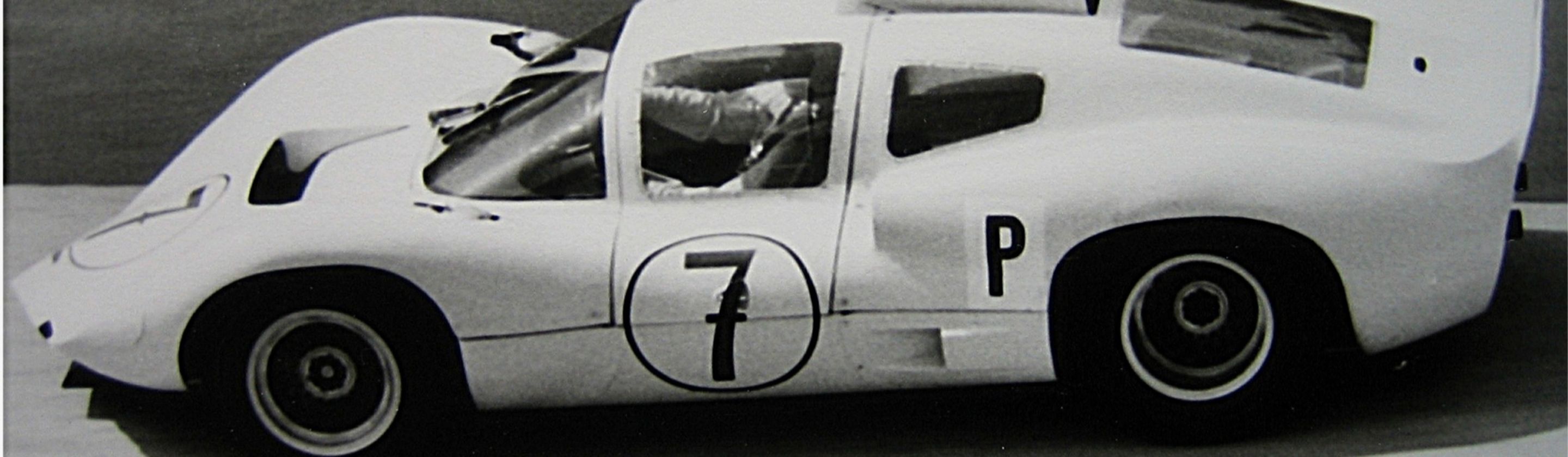
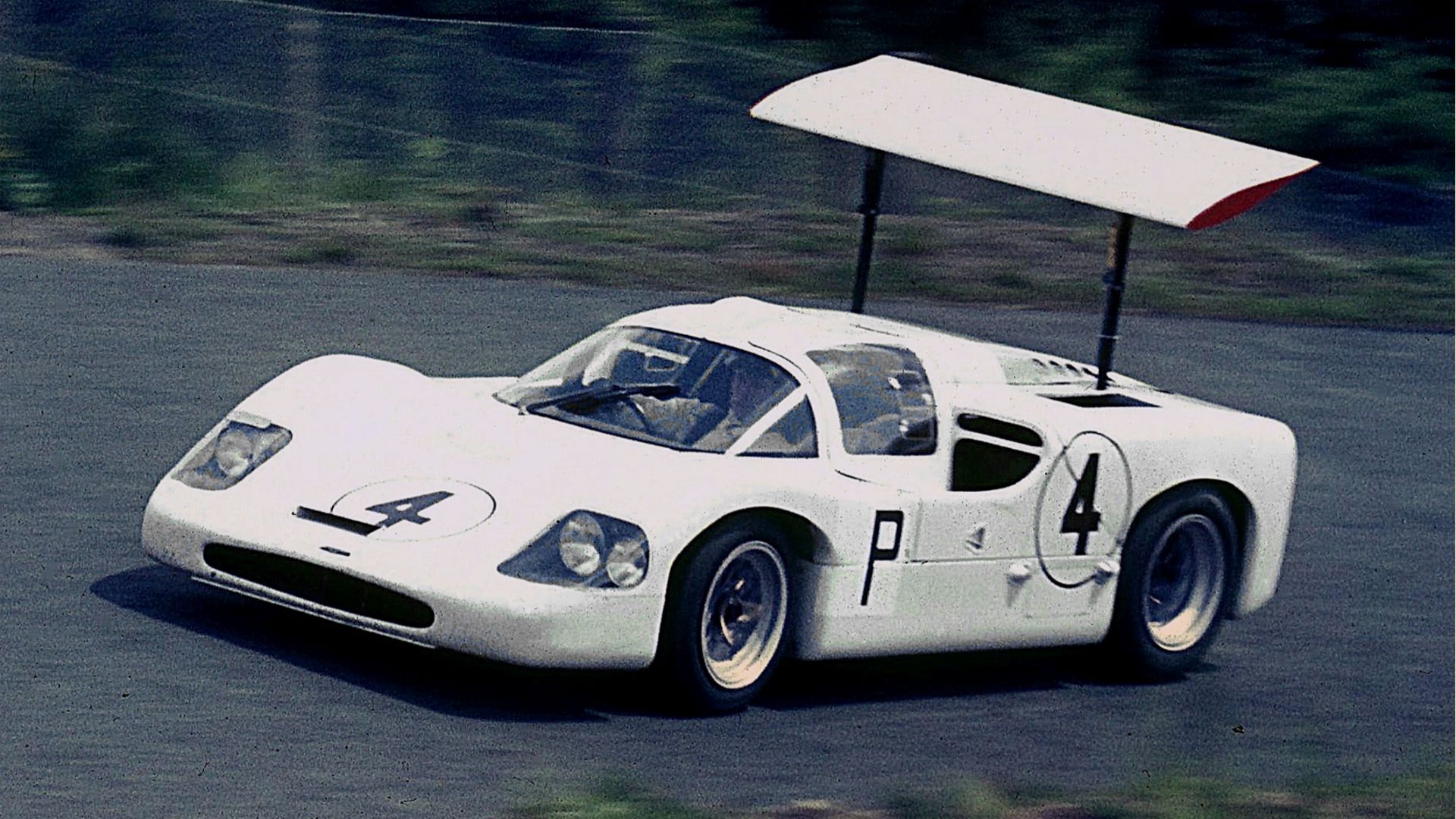
Picture a Can-Am starting grid in 1970, packed with sleek orange McLarens, and then a white car that looks suspiciously like a shoebox. Before setting off, the driver fires up a second, smaller engine at the back. Racer Vic Elford recalled hearing a noise like "Shhhp" as the car dropped about two and a half inches toward the pavement. And no, something hadn't broken. That was exactly what it was supposed to do.
The car was the Chaparral 2J, built by Jim Hall's team in Midland, Texas. Two powerful fans sucked air out from underneath, helping pin the car to the track even when it was standing still. It was quick enough to upset the competition, and rival teams challenged the design until it was banned after just one season. Eight years later, a Formula One team tried the same idea and actually won a Grand Prix with it.
A Second Engine Just for Grip
According to Elford, the whole idea started with a letter from a 12-year-old fan. The child had drawn a car fitted with a helicopter rotor and wanted to know why nobody had tried using one to suck a race car down onto the road. It was a pretty wild suggestion, but Jim Hall apparently saw the potential. Working with engineers at General Motors and his collaborator Don Gates, he turned the idea into one of the strangest-looking racing cars ever built.
The Chaparral 2J had two engines doing very different jobs. A big Chevrolet V8 powered the wheels, while a smaller two-stroke engine, similar to those used in snowmobiles, drove a pair of fans borrowed from a military tank. Spinning at around 6,000 rpm, the fans sucked air from beneath the car and blasted it out the back. Flexible skirts made from Lexan plastic helped seal the gap between the car and the road, keeping outside air from rushing underneath. The result was a race car that could practically vacuum itself onto the track.
The clever part was that the Chaparral didn't need speed to grip the road. Unlike wings, its fans produced downforce even in slow corners, reportedly generating more than 2,000 pounds of it on a car weighing about 1,800 pounds with its driver. The museum that now houses it describes immense downforce independent of speed. Elford said the handling stayed consistent throughout the lap because the grip never faded when he slowed down. While other cars needed speed to stick to the track, the Chaparral brought its own suction.
Fastest on the Grid, When It Ran
The timing made the Chaparral's debut even more impressive. McLaren had won 19 straight Can-Am races and hadn't missed a pole position since 1967. At Watkins Glen in July 1970, reigning Formula One world champion Jackie Stewart put the 2J third on the grid and set the fastest lap before brake trouble ended his race. Not bad for a car that looked like a shoebox with fans attached.
Elford took over for the rest of the season and put it on pole every time he raced it. At Road Atlanta he was the first non-McLaren driver on pole in three years. In Monterey he beat the field by 1.8 seconds, and at Riverside by 2.2, which is an enormous margin over a single lap. He later said no other car had ever gone around a corner as fast.
Finishing races was the problem. The ignition failed in Georgia, a connecting rod punched through the engine block at Laguna Seca, and the fan engine quit on the second lap of the last race. Elford believed that if the car had been reliable from the start, it would have won every race it entered.
Banned, Then Revived in Formula One
Rival teams didn't wait to find out. McLaren lobbied the sanctioning body, arguing that the fans and skirts were movable aerodynamic devices, and with a lawsuit threatened, the 2J was outlawed for 1971. Hall later recalled a terrible outcry from the other competitors. The car is on display today in the Chaparral gallery at the Petroleum Museum in Midland.
Gordon Murray brought the idea back in 1978 with the Brabham BT46B, built as an answer to the ground-effect Lotus 79 that was dominating that season. Its single rear fan was officially there to cool the engine, though it plainly sucked the car down too. At the Swedish Grand Prix, Niki Lauda qualified it on the front row behind Mario Andretti, then drove it around the outside of Andretti's Lotus during the race and won by more than 30 seconds. Brabham withdrew the car after that one race, mostly for political reasons, so it retired with a perfect record of one start and one win.
Murray never let go of it. In 2019 he revealed his T.50 supercar with a 400mm fan in the tail, working alongside active aerodynamics underneath. Like the one on the BT46B, it draws air from beneath the car and fires it out the back. Murray said he had dreamed of building a road car with one ever since the BT46B.