 Thomas Vogt from Paderborn, Deutschland on Wikimedia
Audi usually gets the credit for bringing all-wheel drive to the road car, and the Quattro earned most of it. A British grand tourer beat it to the showroom by fourteen years. The Jensen FF went on sale in 1966 with power running to all four wheels and a mechanical anti-lock system on the brakes, at a point when that hardware mostly lived on airliners.
Jensen Motors was a small operation in West Bromwich that bought its engines from Chrysler and had its bodies styled in Italy. It built 320 FFs, against several thousand of the rear-drive car they were based on, and the FF was the most complicated thing the company ever put together. The reasons it didn't catch on have little to do with how it drove.
The Four-Wheel Drive Came From a Racing Experiment
The initials stand for Ferguson Formula, after Ferguson Research, the British engineering firm behind the system. The company had spent years looking for a manufacturer willing to build it. Ferguson had already put four driven wheels under a Formula 1 car, and the P99 won the 1961 International Gold Cup at Oulton Park with Stirling Moss driving, a result that gave the system a racing pedigree no road-car maker could match at the time.
Jensen licensed the setup and bolted it under a luxury coupe, showing a prototype in 1966 built on its outgoing C-V8. A center differential sent about a third of the torque forward and the rest to the back, feeding separate differentials at each end. The transmission came to roughly 180 pounds, and there was no manual option, since the Ferguson gear was tied to the automatic.
Under the hood sat a Chrysler V8 of about 6.3 liters making near 325 horsepower, the same unit Jensen used in the Interceptor. All that extra hardware cost about three miles an hour off the top end. The FF ran out just under 130. Writing in 1969, Bill Boddy could barely tell the system was there in ordinary driving, and he reported no transmission noise from it.
The Anti-Lock System Came Off an Airplane
The brakes ran through a Dunlop Maxaret unit, a mechanical device already in service on aircraft and heavy trucks. Nothing about it was electronic. The unit weighed roughly 20 pounds. It sensed a wheel about to lock and eased the pressure before it could, working off the same principle Dunlop had built for aircraft landing gear. Jensen fitted it as standard and paired it with Mintex pads.
On a wet or greasy road, Boddy wrote, the driver could simply stamp on the pedal. The system came with rough edges of its own. On something as slick as wet grass it kicked back and clunked in a way that could alarm a driver who hadn't been warned, and on dry pavement it gave up a little stopping distance next to conventional brakes.
What the two systems did together showed up in the rain. Boddy could feed in power through a wet corner and have the car hold its line, with a trace of oversteer if he lifted off mid-bend. He drove the Interceptor on dry roads alone and still found its front grip wanting, with lurchy oversteer once pushed. In bad weather he rated the FF the quicker car by a wide margin.
The Price and a Design Flaw Finished It
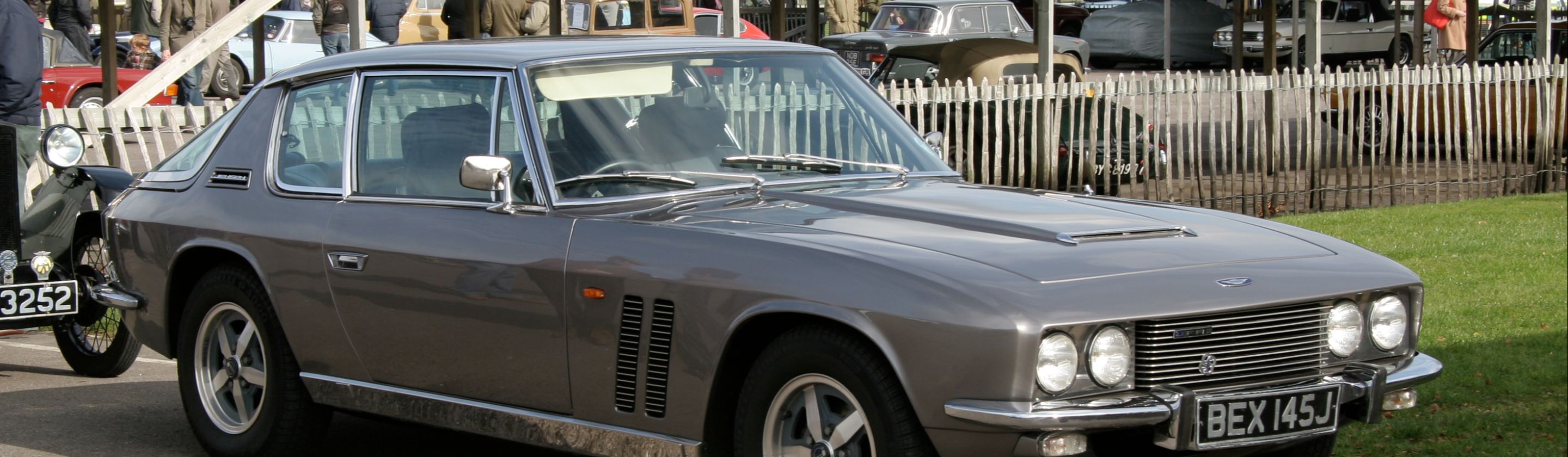
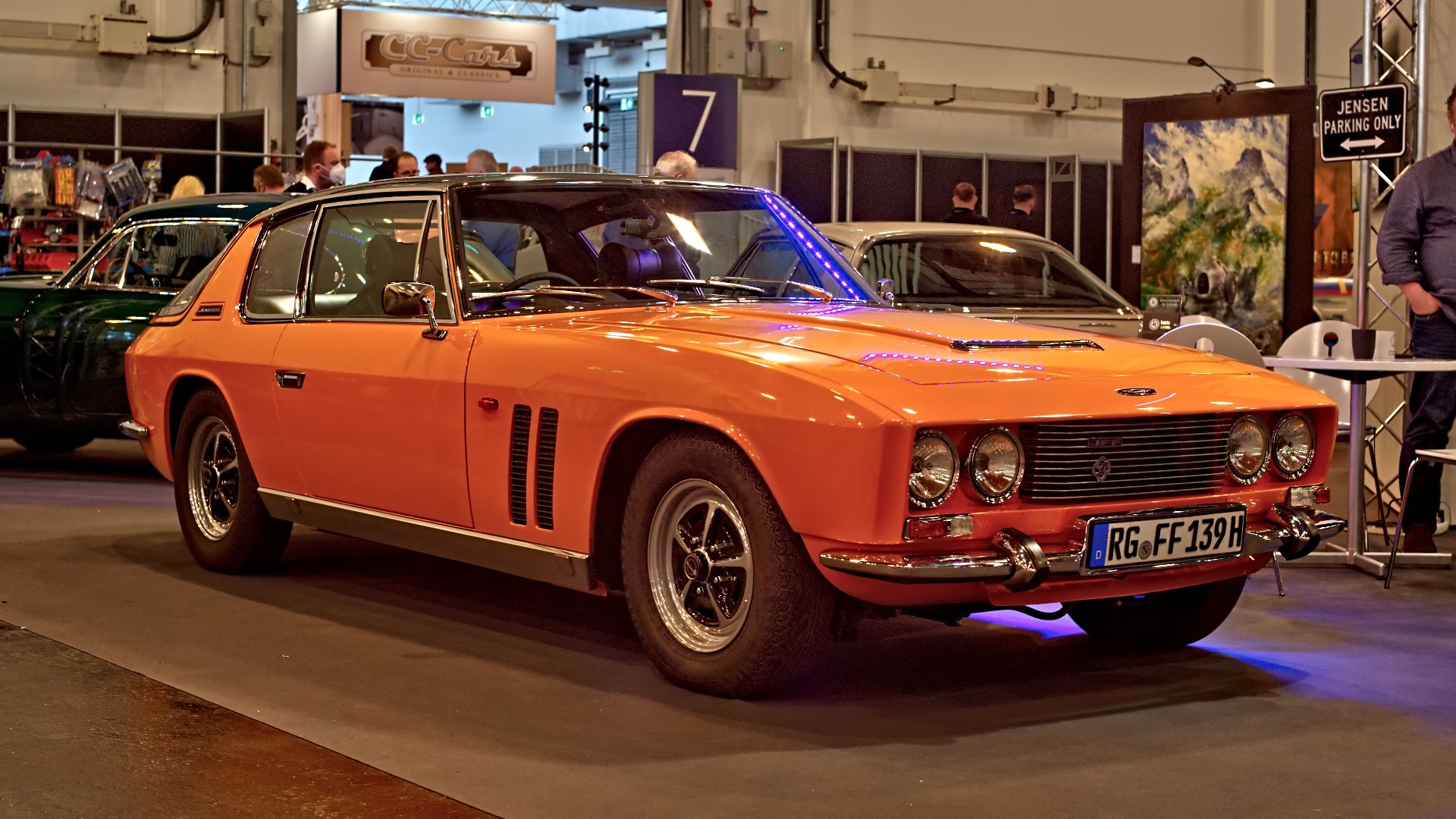
The FF was priced well above the car it resembled. In 1969 it listed at £7,007 against £4,728 for an automatic Interceptor, close to half again as much. Telling them apart took some study, since the FF ran five inches longer with two vents per side on the hood where the Interceptor had one. It also drank more, under 11 miles per gallon on a long run against about 14.
The Ferguson hardware ran through the space the steering would need in a left-hand-drive version, and nobody had allowed for that. A big V8 grand tourer with no path to American showrooms had lost its best market before it went on sale, and export sales elsewhere stayed thin for the same reason. Jensen sold the rear-drive Interceptor in the States by the thousand.
Buyers who did pay found the car less finished than the price suggested, and Boddy griped about a jerky window lift and a passenger seat he couldn't get comfortable in. Production stopped in 1971, and the replacement went back to driving two wheels with a hotter engine. Jensen itself was gone by 1976, and a good FF now trades at roughly double what a comparable Interceptor brings.