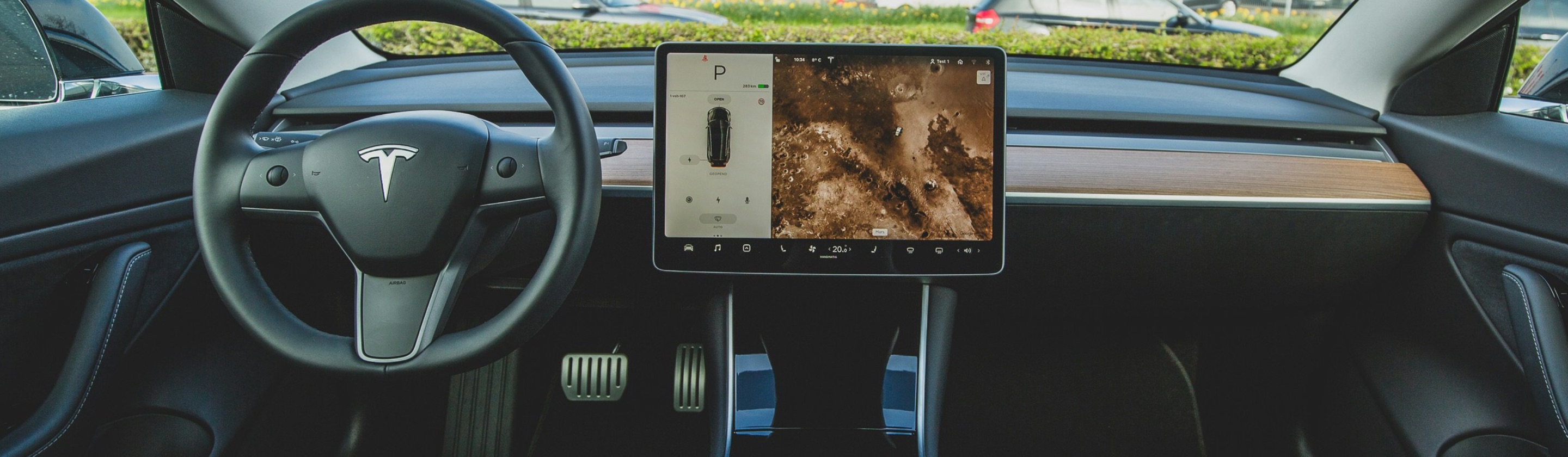
Just a few years ago, cars that could drive themselves seemed like something out of a fantasy. Sure, they sounded interesting and futuristic, but realistically, how well would they even be able to drive? How would they judge safe or unsafe distances, or know when to change lanes or merge on a highway? Could we really trust them to get us to our destination without any human help?
Fast forward to our current era, and self-driving cars are no longer just science fiction. Companies like Tesla and Waymo are racking up millions of miles without a human driver behind the wheel, and the technology keeps getting more sophisticated by the month. Still, the question of how much faith you should place in these systems isn't simple, since trust depends on understanding both what the technology does well and where it still falls short.
What the Safety Data Actually Shows
Waymo has published extensive safety research comparing its vehicles to human drivers in the same operating areas, and the numbers are genuinely encouraging. Through March 2026, Waymo has driven over 220 million rider-only miles without a human driver behind the wheel, giving researchers a substantial dataset to work with. The company's own research points to a meaningful reduction in police-reported crashes compared to human benchmarks on the same streets. That said, you should know this comparison comes from the company itself, so it's worth weighing alongside independent sources.
Government data tells a more nuanced story. Since the NHTSA began official reporting in July 2021, the agency has tracked 508 crashes involving vehicles driving autonomously, a number that keeps climbing as more vehicles hit the road. Comparing these figures directly to human crash rates is tricky, though, because autonomous vehicles face far stricter reporting requirements than human drivers do, and they're often restricted from driving on certain roads like highways. You're essentially comparing two different datasets collected under different rules, which makes sweeping conclusions risky.
There's also a real distinction between fully autonomous systems and the driver-assistance features you might already have in your own car. NHTSA data through April 2026 shows only two deaths linked to fully self-driving vehicles, compared to 56 deaths involving Level 2 driver-assistance systems that still require an attentive driver. This gap matters because it suggests the danger often comes from drivers over-trusting partial automation rather than from the fully autonomous systems themselves. You can't treat lane-keeping assist and a true robotaxi as the same category of risk.
Where the Technology Still Struggles
Edge cases remain the biggest weakness for autonomous systems, and they tend to show up in unpredictable ways. One analysis found that of more than 2,000 AV incidents reported to the NHTSA, the autonomous vehicle was solely at fault in only about 4% of accidents involving other road users. That sounds reassuring until you consider the specific scenarios where failures do happen, since sensors can misread unusual conditions in ways a human driver typically wouldn't.
Weather and unusual obstacles continue to trip up even well-trained systems. Documented cases include a vehicle's lidar mistaking exhaust fumes for a solid object and braking hard as a result, and another instance where light snow caused a system to misclassify a speed limit sign as a pedestrian, triggering unnecessary braking. These aren't catastrophic failures on their own, but they show that the technology can still misread its surroundings in ways that create downstream risk for other drivers nearby.
High-profile incidents have also raised legitimate concerns about how these vehicles handle situations involving children, school zones, and emergency vehicles. In Austin, Waymo robotaxis were tied to two dozen violations near school bus stops, prompting the local school district to ask the company to stop operating near schools. Separately, an incident involving a self-driving car blocking an ambulance reignited public debate about how well these systems handle emergency response situations. These episodes don't necessarily mean the technology is unsafe overall, but they do highlight specific situations where caution is warranted.
How You Should Calibrate Your Own Trust
Your trust should scale with the specific system you're using rather than autonomous vehicles as a broad category. A Level 2 system in your own car still requires your full attention, no matter how capable it feels during normal driving. Treating any driver-assistance feature as if it can fully replace you behind the wheel is where most of the documented harm actually originates, so it's worth resisting that temptation even when the technology performs well for long stretches.
Public sentiment has been catching up with the data slowly but steadily. An AAA Foundation for Traffic Safety survey found that the share of drivers expressing trust rather than fear toward self-driving cars rose from 9% to 13% between 2024 and 2025, and people who felt more knowledgeable about the technology were considerably more willing to ride in a driverless vehicle than those who knew little about it. This pattern suggests that understanding how these systems actually work, rather than relying on gut instinct, leads to more reasonable expectations.
The smartest approach is to stay informed about which company and which level of automation you're dealing with before deciding how much to lean on it. Checking a company's published safety data, paying attention to local incident reports, and understanding the difference between assisted and fully autonomous driving will serve you far better than a blanket opinion in either direction.
Autonomous vehicles aren't a single, uniform technology, and your trust shouldn't be either. The data shows real safety gains in controlled environments alongside genuine limitations in specific edge cases involving weather, unusual obstacles, and situations near children or emergency vehicles. Rather than deciding once and for all whether self-driving cars deserve your confidence, it makes more sense to evaluate each system on its own track record, stay current as the regulations and technology evolve, and remain an engaged, attentive passenger or driver no matter how advanced the car in front of you claims to be.