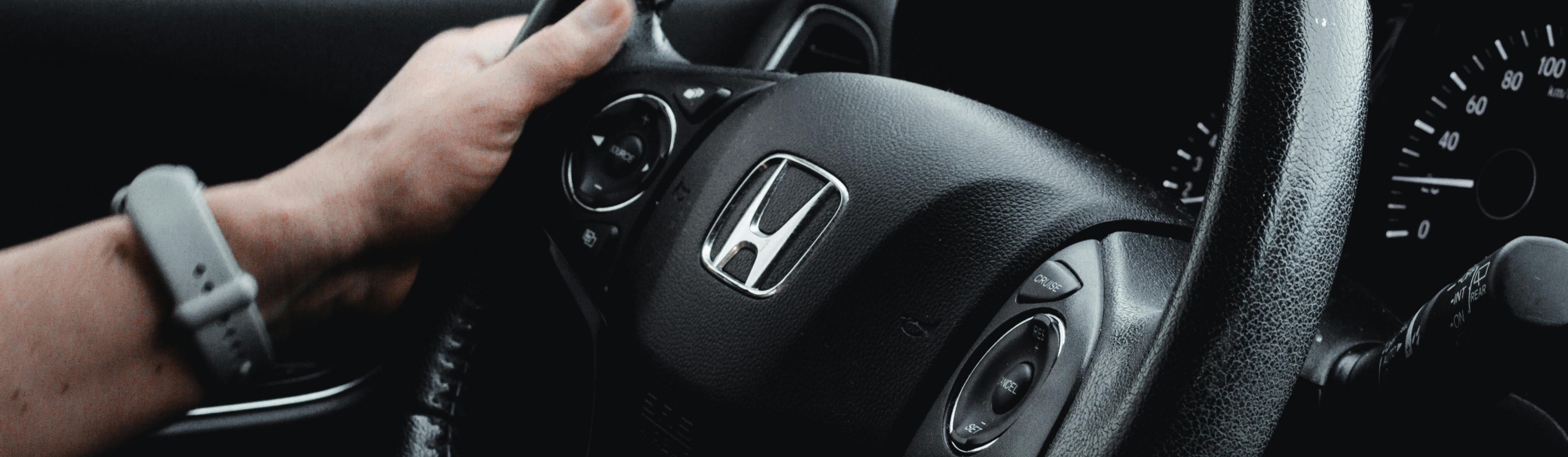

Given the landscape you'll encounter on any given day, most drivers have reached for the horn out of frustration at some point, whether it's in response to a bad shoulder check or an awfully slow driver going at snail's pace in front of you. It feels instinctive in the moment, almost like a reflex, and it's easy to assume that a quick blast of the horn is harmless enough. But the reality is a little more complicated than that.
The car horn was originally designed as a safety tool to alert other drivers or pedestrians to potential danger, and that purpose is still valid today. In fact, most drivers use it in the way it's intended to be used. But many drivers also blast the horn to express impatience, annoyance, or frustration rather than as a warning signal. When you look at the actual effects of honking on public health, road safety, and driver behavior, the case for using it more sparingly becomes hard to ignore.
It's a Significant Source of Noise Pollution
One of the first offences of constant honking isn't even actually the abuse of it; instead, it's the jarring sound it generates. Traffic noise is one of the most widespread environmental health concerns in urban areas, and honking is a major contributor to that problem. In fact, noise pollution is a serious public health issue: millions of people experience sleep disturbance, cardiovascular issues, anxiety, and cognitive impairment as a result of long-term exposure to traffic noise. Car horns, which can register anywhere from 100 to 110 decibels, are among the loudest sounds in an urban soundscape, and repeated exposure at those levels can cause lasting hearing damage over time.
You might not think much of it if you live in a quiet suburb, but for people who live or work near busy roads, particularly in lower-income urban neighborhoods, they're disproportionately exposed to traffic noise and its associated health risks. Children and elderly individuals are especially vulnerable, with studies linking chronic noise exposure to developmental delays in children and increased rates of hypertension in older adults. What might feel like a harmless honk to the person behind the wheel can be one of dozens or hundreds of similar sounds that a nearby resident has already endured that day.
The persistence of the problem points to how deeply habitual honking has become: many drivers simply don't connect their individual actions to the cumulative impact on those around them. Shifting that perception is one of the harder challenges in traffic noise reduction, which is probably why people just keep doing it.
It Can Escalate Tension Rather Than Resolve It
There's a common assumption that honking at another driver will prompt them to correct whatever they were doing wrong, but that's not always how people respond when they feel they've been called out in traffic. Research on aggressive driving behavior from the AAA Foundation for Traffic Safety found that 56% of fatal crashes are caused by the reckless behaviors we perform on the road. This also suggests that confrontational actions on the road, including horn use, can trigger retaliatory responses that make situations more dangerous rather than less. What starts as a frustrated honk can quickly become a back-and-forth that distracts both drivers and raises the risk of an accident.
Road rage incidents frequently begin with small provocations that escalate beyond what either party originally intended. A horn blast, even when it's well-intentioned, can be interpreted as aggressive or disrespectful by the person on the receiving end, especially in high-stress driving conditions. Once that perception takes hold, it can be difficult to de-escalate without one party completely withdrawing from the exchange.
The interpersonal dynamics at play here are worth taking seriously. Driving already puts people in a state of mild stress, and adding a sudden loud noise into that environment can trigger a fight-or-flight response that makes calm, rational decision-making harder. Choosing to hold off on the horn in ambiguous situations, then, is often the more tactically sound approach for keeping everyone on the road safer.
It's Rarely as Effective as Drivers Think
Part of what keeps honking so prevalent is the belief that it actually changes anything, but the evidence for that is weaker than most drivers would expect. A horn provides no specific information to the person hearing it; it can't communicate what the problem is, where the danger is coming from, or what the other driver should do in response. In many cases, driver reaction studies show that people are startled or confused by horn use rather than immediately correcting their behavior.
There are also situations where honking is genuinely counterproductive to safety. Sounding your horn near pedestrians, cyclists, or horses can cause sudden, unpredictable movements that create the very hazard you were trying to prevent. The horn is a blunt instrument, and it doesn't account for the varied ways different people and animals respond to sudden loud noise.
None of this, of course, is to say that the horn has no place in safe driving; there are absolutely moments where it's the right call, such as warning someone who's drifting into your lane or alerting a distracted pedestrian at an intersection. But the issue is the reflexive, habitual use of it in situations where it's unlikely to help and may very well only make things worse. If you need to send a warning signal, do so—just remember to be more intentional about when and why you reach for the horn.