In the spring of 1963, Henry Ford II had a deal on the table to buy Ferrari. His accountants had spent weeks in Maranello going through the books, and the price was settled. Then Enzo Ferrari read the contract and found a clause saying he couldn't enter the Indianapolis 500 without approval from Dearborn. He walked out of the room.
Ford had his own interest at Indy, where Lotus was running his engines, and he had no intention of funding a rival in the same race. For Enzo, racing was the whole point of the company and the road cars were how he paid for it. The deal died over one paragraph, and the two companies have been going at each other ever since, through the deaths of both men and into races run in the last few years.
The Deal That Died Over Indianapolis
Ferrari in 1963 was a small operation with a cash problem. Road car sales funded the racing program and never quite covered it. Enzo was 65 and starting to think about what would happen to the place after him. Selling to a company with Detroit money behind it wasn't necessarily a bad idea. He solved the same problem a different way six years later, handing Fiat half the company and keeping the racing team for himself.
Ford wanted what the money couldn't buy on its own, which was credibility at Le Mans. Ferrari had taken the last three runnings and would go on to take the next three as well. Buying the winner was faster than beating it, and for a few weeks in 1963 that looked like the plan.
The clause about Indianapolis ended it. Enzo saw a contract that put an American board between him and a starting grid, and he stopped negotiating on the spot. Henry Ford II went back to Michigan and told his racing people to build something that would beat Ferrari at Le Mans, whatever it took.
Four Years of Payback
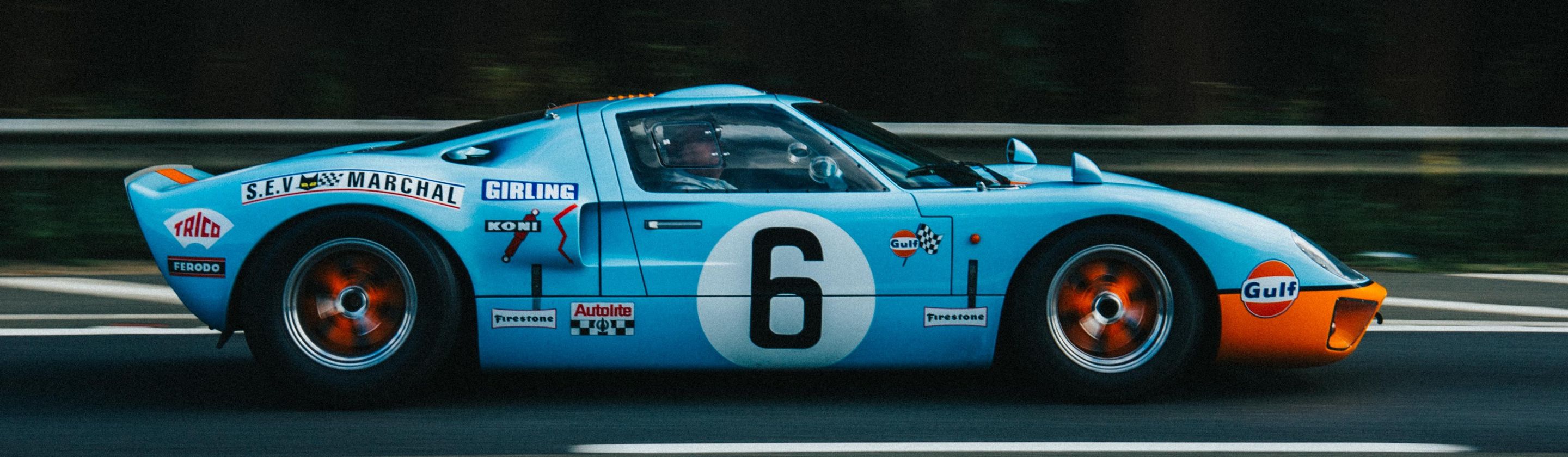
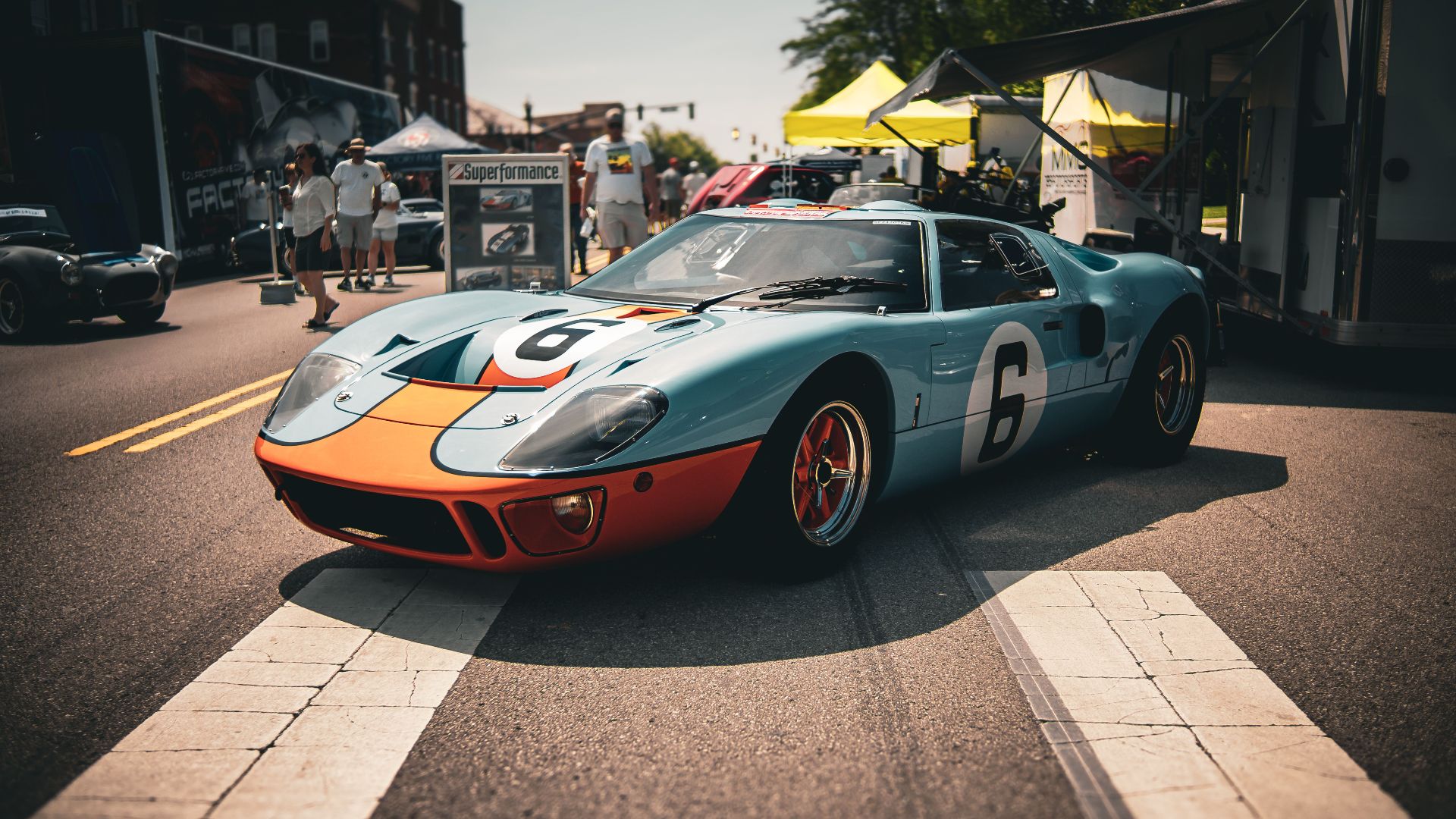
The GT40 was built in England and it was a disaster at first. Every car Ford entered in 1964 and 1965 broke or crashed, and the program burned through two seasons of gearbox failures and overheating while Ferrari kept winning. The name came from its height, forty inches at the roof, which tells you how much of the car was air intake and how little was cabin. Carroll Shelby was brought in to sort it out.
It came good in 1966. Ford finished 1-2-3 at Le Mans, and the win went to Bruce McLaren and Chris Amon after team management staged a photo finish that cost Ken Miles the race he'd led most of. McLaren's car had started further back on the grid, so a dead heat across the line meant he'd covered more ground in 24 hours. Miles had already won Daytona and Sebring that year and would have been the first driver to take all three in a season. He was killed two months later testing the J-car prototype at Riverside.
Ford won the next three as well. Dan Gurney and A.J. Foyt took 1967 in the Mk IV, then the older Mk I chassis won in 1968 and again in 1969 with different crews. Four straight victories at the race Ferrari had owned, and then Ford packed up its transporters and left. The point had been made and the budget had been spent.
Both Men Gone and the Fight Still Running
Henry Ford II died in September 1987. Enzo Ferrari died eleven months later, in August 1988, at 90. Ford was 70 and Enzo was 90. Between them they'd spent a quarter century on a grudge that started over a single contract clause, and neither had shown much sign of letting it go.
Ford came back for the fiftieth anniversary. A new GT won the GTE Pro class at Le Mans in 2016, fifty years to the weekend after the 1966 result, with Ferrari cars finishing behind it. Nobody at Ford pretended the timing was a coincidence, and the marketing department made sure nobody else missed it either.
Ferrari answered by returning to the top class for the first time in half a century. The 499P won the 2023 race outright, the centenary running of Le Mans and Ferrari's first overall victory there since 1965, taking the marque to ten, and the car won again in 2024 and 2025. Sixty years after a man walked out of a meeting, the scoreboard is still being argued over.