
Few things are more frustrating than turning your key or pressing the start button and getting absolutely nothing in return. Whether you're heading to work or running errands, a car that won't start can throw your entire day off course. Thankfully, the issue is often more manageable than it seems, especially if you know what to look for and what to do in the moment.
Before you panic, it helps to have a basic plan in place. There are a few immediate steps you can take that may either solve the problem on the spot or at least give you a clearer picture of what's going on under the hood. Here's what to do the next time your car refuses to cooperate.
Check the Battery First
The battery is the most common culprit when a car won't start, so it should always be your first point of investigation. According to the American Automobile Association (AAA), the battery or alternator is the most frequent reason a car fails to start, making it the logical first thing to check. Signs of a dying battery include dim dashboard lights, a clicking sound when you turn the key, or complete silence when you try to start the engine.
If you suspect the battery is dead, your best immediate option is a jump-start. You'll need a set of jumper cables and another vehicle with a functioning battery; connect the red (positive) cable to your dead battery first, then to the working battery, followed by the black (negative) cable to the working battery and then to an unpainted metal surface on your own car. It's recommended to attach the final black clamp to a metal strut or grounded surface rather than directly to the dead battery, as it reduces the risk of sparks near the battery.
Once the jump-start is successful, don't shut your engine off right away; drive around for at least 15 minutes to allow the battery to recharge. If the car won't start again the next time you use it, the battery likely can't hold a charge and needs to be replaced. It's also worth keeping in mind that car batteries typically last between three and five years, so if yours is approaching that range, a replacement may be overdue.
Run Through the Basics Before Assuming the Worst
Before you call anyone or open the hood, it's worth running through a quick checklist of simple issues that are surprisingly easy to overlook. First, check your fuel gauge; it sounds obvious, but an empty tank is one of the most common reasons a car won't start, and it's also one of the easiest to miss when you're in a hurry. If the gauge reads empty, that's your answer right there.
Next, take a look at your gear position, particularly if you drive an automatic. Your car won't start if it's in drive or reverse because of a safety feature called the neutral safety switch, which prevents the engine from starting unless the transmission is in Park or Neutral. Try shifting the gear to Neutral and see if the car starts there; if it does but won't start in Park, you may have a faulty neutral safety switch that needs attention from a mechanic.
Don't forget to check your key fob, either. If your car uses a push-button start, a weak or dead key fob battery can prevent the vehicle from recognizing the signal it needs to start. If that's the case, try holding the fob directly against the start button; it may work as a workaround if the fob battery is running low, since some vehicles have a backup sensor built in for exactly this situation.
Know When to Call for Help
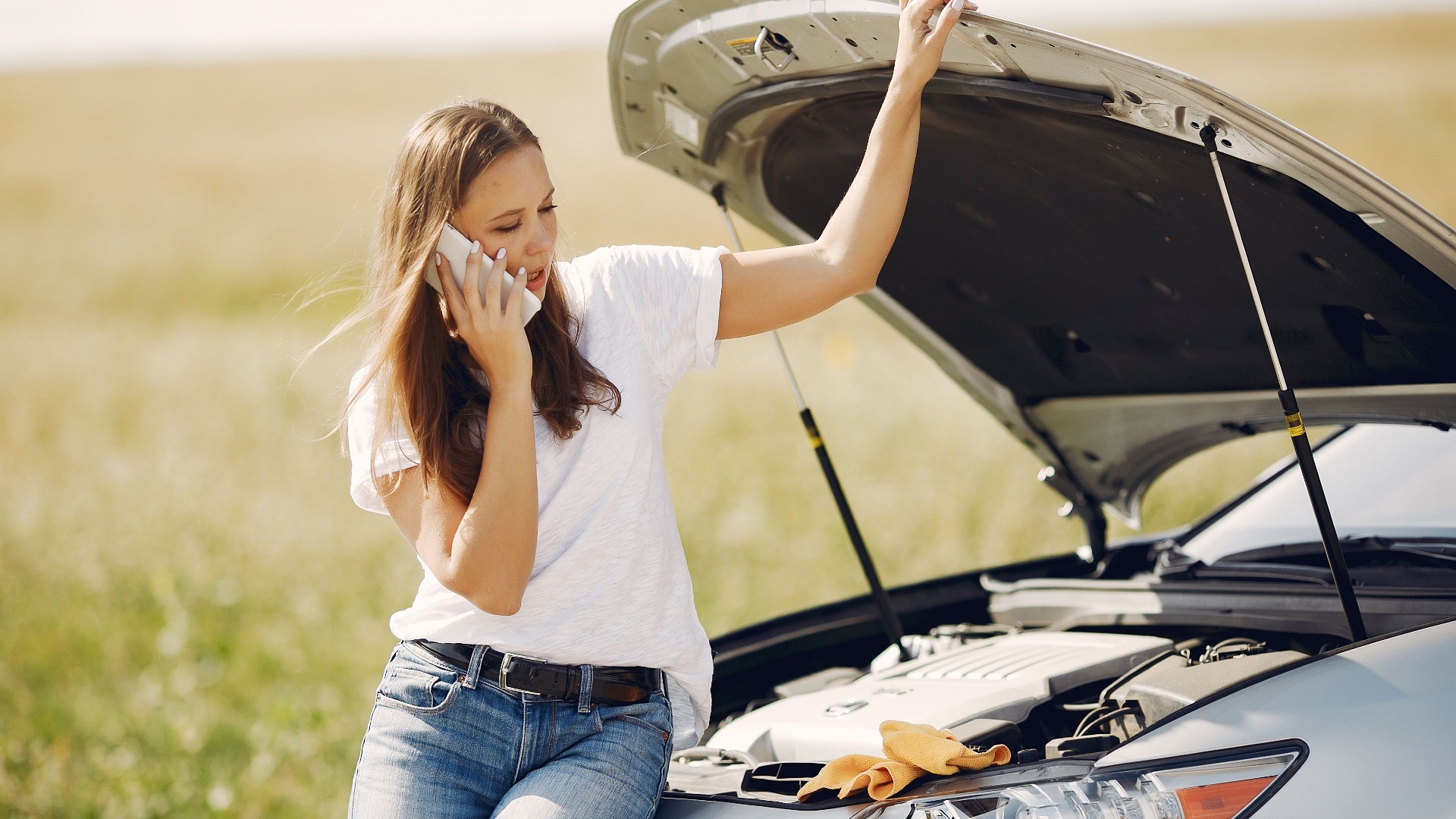
If the basic checks don't get you anywhere, it's time to reach out for professional assistance. Understanding the difference between roadside assistance and a full tow is useful here, since the right call depends on what's actually wrong with your car. According to industry guidance, roadside assistance is best suited for quick fixes like dead batteries, a flat tire, or an empty fuel tank—problems that can be resolved on the spot without transporting the vehicle.
If the problem is more serious (think engine failure, a broken starter, or a faulty alternator), a tow to a repair shop is typically the better route. A car that starts after a jump-start but stalls within minutes is often a sign of a failing alternator, since the alternator is what keeps the car running and the battery charged once the engine is going. AAA explains that if a jump-start doesn't work or the vehicle dies shortly afterward, the alternator may no longer be doing its job, which requires a mechanic's attention.
It's a good idea to check whether your auto insurance policy includes roadside assistance before you ever need it. Many policies offer this coverage as an add-on, and some credit cards also include it as a perk, which can save you the cost of calling a private service. Knowing what's covered in advance means one less thing to figure out when you're already stressed on the side of the road.
The bottom line is: don't panic just because your car won't start. Stay calm and go through the checklist of testing the battery and running through a quick list of simple fixes first, and if you know you won't be able to fix it right there and then, call for professional help. The more familiar you are with these basic steps, the better equipped you'll be to handle the situation smoothly and efficiently whenever it comes up.