If Your Brakes Start Making This Sound, It’s Already Too Late
Uh-oh. When you step on the brakes, you hear a noise that probably isn't supposed to happen. And as annoying as it might sound, you should never ignore it. In fact, you should be alarmed; the noise you hear is one of the few safety warnings your car delivers in pretty plain language, so you definitely want to pay close attention.
So, what exactly should you be listening for? The most urgent noise is a harsh, gritty grinding that seems to come from one wheel and gets louder when you press the pedal. Sometimes, it can sound more like squeaking or squealing. Either way, it's a sign you need to go get your brakes checked out by a professional right away, or it might be too late.
The Grinding Noise That Signals Real Damage
As mentioned, a high-pitched squeal is often your early warning, because many pads include a small metal “squealer” designed to contact the rotor when the friction material is near its limit. The sound is inconvenient and can even be jarring or irritating, but it’s also the point where a straightforward pad replacement can still be the main repair. If you act quickly, you can often prevent the cost from snowballing.
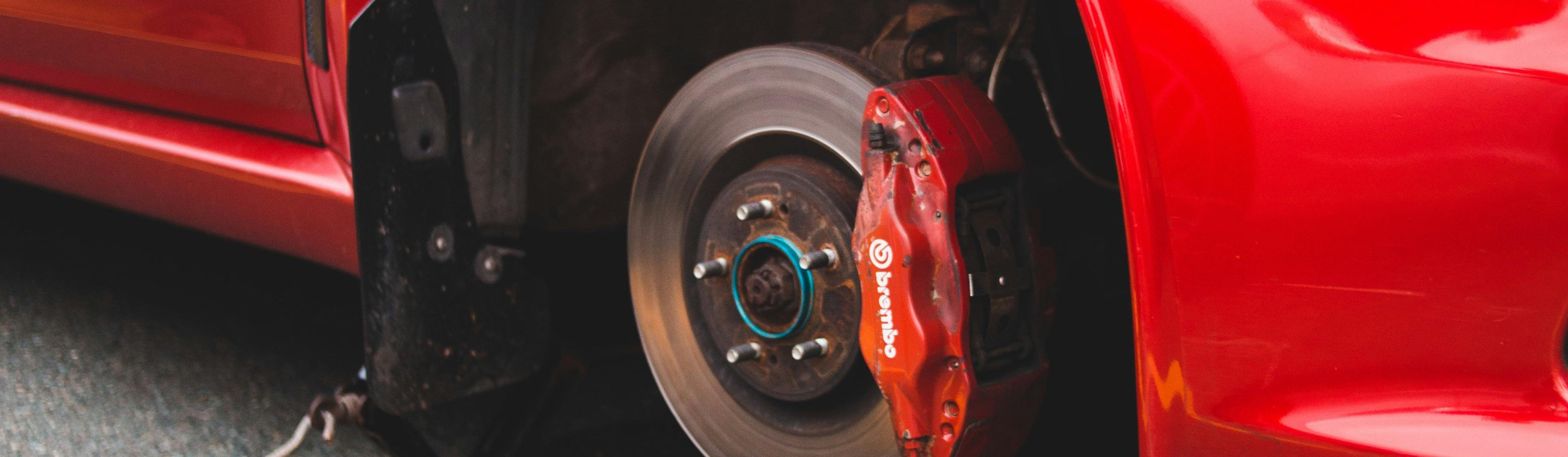
A grinding sound, however, is a little different. This typically indicates that the friction material is already worn and metal is contacting metal. At that stage, the pad’s backing plate can scrape the rotor face, which accelerates wear and can carve grooves or hot spots into the rotor surface. Your stopping distances can worsen, and the pedal can feel rough or inconsistent as the damaged surfaces grab unevenly. If you continue to risk or ignore it, the best-case scenario is an increase in the amount of hardware that needs replacement. The worst-case scenario? Well.
It’s also common for grinding to show up with other symptoms that people dismiss as normal quirks, like vibrations or a warning light that flickers. But again, if you continue to dismiss the problem, you might pay a bigger fine for it later, so it's always best to get things checked out as soon as they emerge.
How “Just a Sound” Turns Into a Bigger Repair
Once the rotor has been scored or overheated, the repair scope can expand quickly. Even if the car still stops, you may need new rotors in addition to pads, because resurfacing isn’t always possible or cost-effective on modern, thinner rotor designs. When it's too late, that means you missed the window where pads alone would’ve solved it. The longer the metal-on-metal contact continues, the higher the odds you’ll be paying for more than one component.
Heat is the hidden multiplier here, because damaged friction surfaces can generate unpredictable temperatures. Under repeated braking—highway exits, hills, stop-and-go traffic—excess heat can contribute to fade and inconsistent pedal feel. In a hydraulic system, that matters because the system depends on stable fluid performance to transmit force.
Brake fluid maintenance often gets ignored until something feels wrong, and that’s a bad habit. Many common brake fluids are hygroscopic, meaning they absorb moisture over time, which can reduce boiling performance and compromise braking under heavy heat. You don’t need to memorize boiling point numbers to understand the takeaway: old fluid and overheated brakes are a risky pairing, especially when the rest of the hardware is already damaged.
What to Do the Moment You Hear It
First, treat grinding as an immediate sign to stop driving; don’t test it for a few more days to see if it eventually goes away. Find a safe place to pull over, and if you must move the vehicle, keep speeds low and braking minimal. If the sound is loud, persistent, and clearly tied to pedal pressure, arranging a tow is often the smartest call. It’s cheaper to tow once than to replace rotors, pads, and potentially additional parts after more damage.
Next, give the shop useful information so the diagnosis is faster and more accurate. Tell them whether the sound happens only while braking or also while rolling, whether it’s tied to one corner of the car, and whether the steering wheel shakes or the vehicle pulls. Mention any warning lights that are on, even if they seem unrelated; modern brake systems can integrate with stability control and other safety systems. Clear details can help reduce troubleshooting time.
Finally, don’t settle for a quick fix that ignores the cause, because the noise is just the symptom, not the root problem. A proper brake service should include checking pad thickness, rotor condition, caliper operation, and the condition of related hardware; it should also include confirming the fluid’s condition when there are heat-related symptoms. Once the system is repaired, stick to a realistic inspection schedule so you catch wear at the squeal stage rather than the grind stage. That’s how you keep braking maintenance predictable, instead of letting it become an emergency.