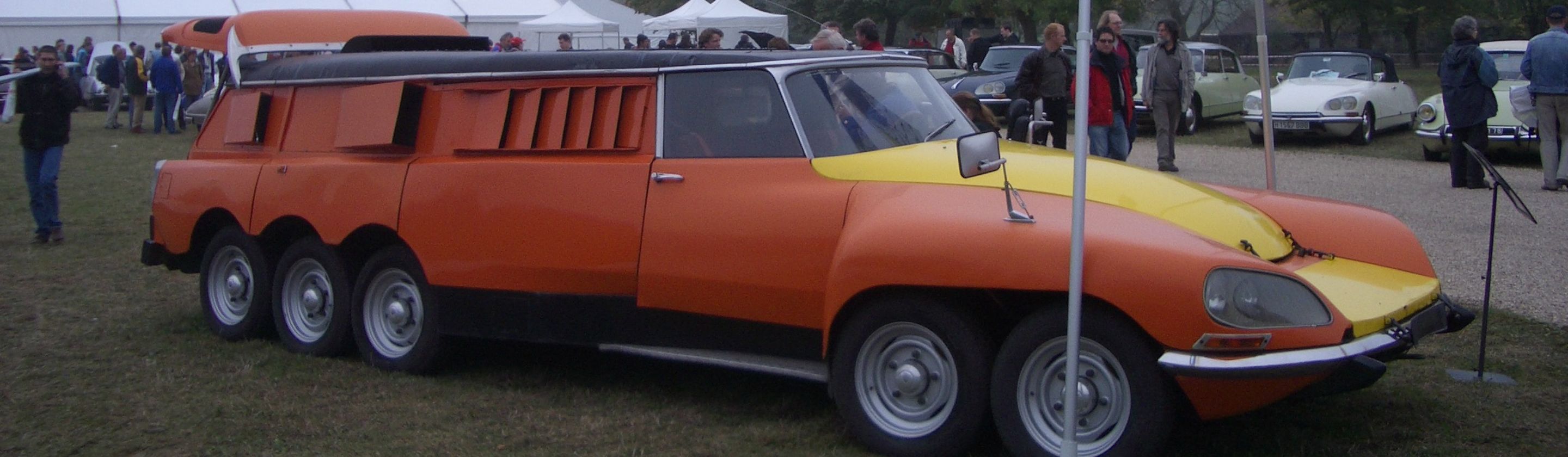
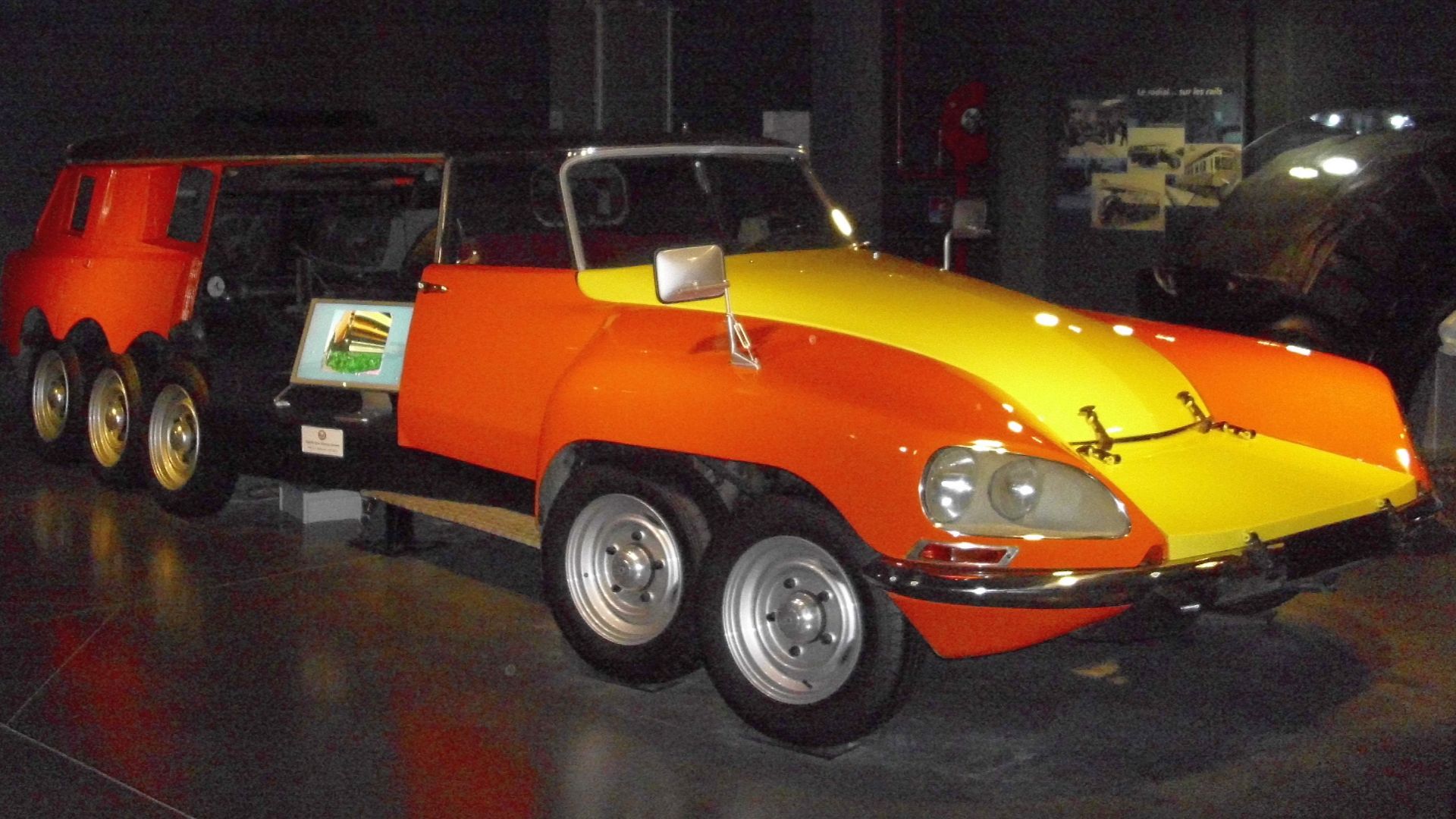
Picture a Citroën DS wagon stretched to a wheelbase of nearly 23 feet, riding on ten wheels, weighing about ten tons, with two American V8s in the back. Michelin built exactly one of them in 1972 and called it the PLR, short for Poids Lourds Rapide. Everyone else called it the Mille Pattes, which is French for centipede.
It wasn't a concept car or a publicity stunt, and it never wore a license plate. The whole machine existed to carry a single truck tire, press it into the road with several tons of force, and run it at highway speed until the engineers had the data they wanted or the tire came apart.
A Problem The Lab Couldn't Reproduce
Trucks and buses got substantially faster in the early 1970s, and tire development had to keep up with vehicles that were now covering long distances at sustained speed. A commercial tire that behaved well at 50 mph was a different object at 90, carrying heat it had never been designed to shed. Heat is what kills a truck tire, and heat is a function of how long the thing has been working, not how impressive it looks when new.
Bench rigs could spin a tire against a drum, which is useful and not the same as a road. Real asphalt delivers camber and braking loads, along with a surface that changes constantly and a temperature that climbs as the miles go by. Getting usable numbers meant putting a truck tire on an actual road and running it hard enough to hurt it.
The obvious approach, bolting it to a truck, had a flaw. A truck that fast with a tire deliberately pushed to failure is a truck about to have a very bad afternoon. Michelin wanted the tire to come apart on schedule, with the vehicle around it still upright and the instruments still recording.
Ten Wheels, Two V8s, One Tire That Matters
The donor was a Citroën DS Safari, which made sense because Michelin was a Citroën shareholder at the time. What came out the other end had four steering wheels at the front and six driven wheels at the back, all of them lifted from the Citroën H van. The original bodywork was stretched over the result, serving as a shell for the driver more than as a structure.
Power came from two Chevrolet 5.7-liter V8s mounted at the rear, each rated at 250 horsepower at 4,800 rpm. One moved the vehicle. The other did nothing but spin the test tire, which sat on its own rim in the middle of the machine, just behind the front row of seats. Five radiators stacked vertically kept both engines alive.
The test wheel hung on a swing arm that could be lowered hydraulically and angled mid-run, so engineers could feed in drift and braking without stopping. A hydraulic cylinder pushed down with loads of up to 3,500 kilograms, around 7,700 pounds on one contact patch. Tires from 8 R 22.5 up to 12 R 22.5 went under there, and a deep fender sat around the wheel to catch the rubber when one let go.
Fast, Then Obsolete
The PLR would reach 180 km/h, a little over 110 mph, and ran its programs on the test track at about 155. Those numbers mattered because the whole point was duration. A truck tire that survives a fast lap and fails after a long stint at the same speed is a tire that fails on a motorway in August, which is the failure that actually kills people.
Having ten road wheels was the safety argument. When a test tire disintegrated at speed, the vehicle still had plenty of rubber underneath it and a driver who could bring the thing to a stop, which a six-wheeler with a destroyed tire might not have managed. Sensors on board recorded each run, and the readings went back to the laboratory for analysis rather than being read live. The driver's job was to hold a speed and a line while the machinery behind him destroyed something expensive.
It lasted about a decade. By the early 1980s, lab machinery had caught up enough to do the same work indoors, and the one-off centipede was retired rather than replaced. Michelin has never said what it cost to build or exactly how many tires died inside it. It sits today in the company museum at Clermont-Ferrand, a fifty-year-old answer to a question that tire companies now settle indoors with a drum and a thermometer.