Wood-paneled cars are one of those automotive trends that seem almost impossible to explain without knowing where they came from. Covering the sides of a perfectly good vehicle in something resembling the floorboards in your house doesn't exactly sound like an obvious design choice today, but the look survived in the U.S. for decades.
The strangest part is that wood paneling didn't begin as decoration at all. Early "woodies" used genuine timber as part of their construction, only for automakers to eventually replace the wood with steel while carefully preserving its appearance. What started out of necessity slowly became a symbol of luxury, suburbia, and the classic American station wagon.
When the Wood Was Actually Real
The earliest station wagons were essentially commercial vehicles built to transport passengers and luggage between railroad stations, hotels, and country estates. Independent companies were fitting wooden wagon bodies to automobile chassis as early as the 1910s, while Ford introduced its first factory-produced station wagon for the 1929 model year. Wood was useful because coachbuilders already knew how to work with it, making it a practical material for these relatively specialized vehicles.
Ford became especially associated with the style. Henry Ford's company even controlled forests and operated a lumber facility in Iron Mountain, Michigan, helping provide material for its wooden-bodied wagons. By the 1930s and 1940s, these vehicles had developed an upscale reputation, partly because they were often connected with resorts, wealthy estates, and recreational travel.
That elegance came with some serious drawbacks, however. Wooden bodies required considerably more maintenance than steel ones, and exposure to rain, snow, sunlight, and changing temperatures could cause deterioration. Building them was labor-intensive as well, making genuine wood increasingly difficult to justify as mass-market automobile production became more efficient.
After World War II, manufacturers began moving toward all-steel station wagons. Plymouth's steel-bodied Suburban helped demonstrate that families could have the usefulness of a wagon without dealing with an expensive wooden body. Yet customers had become so accustomed to associating wagons with wood that automakers weren't quite ready to abandon the appearance.
Fake Wood Becomes the Real Attraction
Ford's Country Squire perfectly captured the transition. The Country Squire name appeared in 1950, and the earliest versions still featured genuine wood exterior construction and trim. By 1952, however, Ford had switched the model to an all-steel body to cut production and ownership costs.
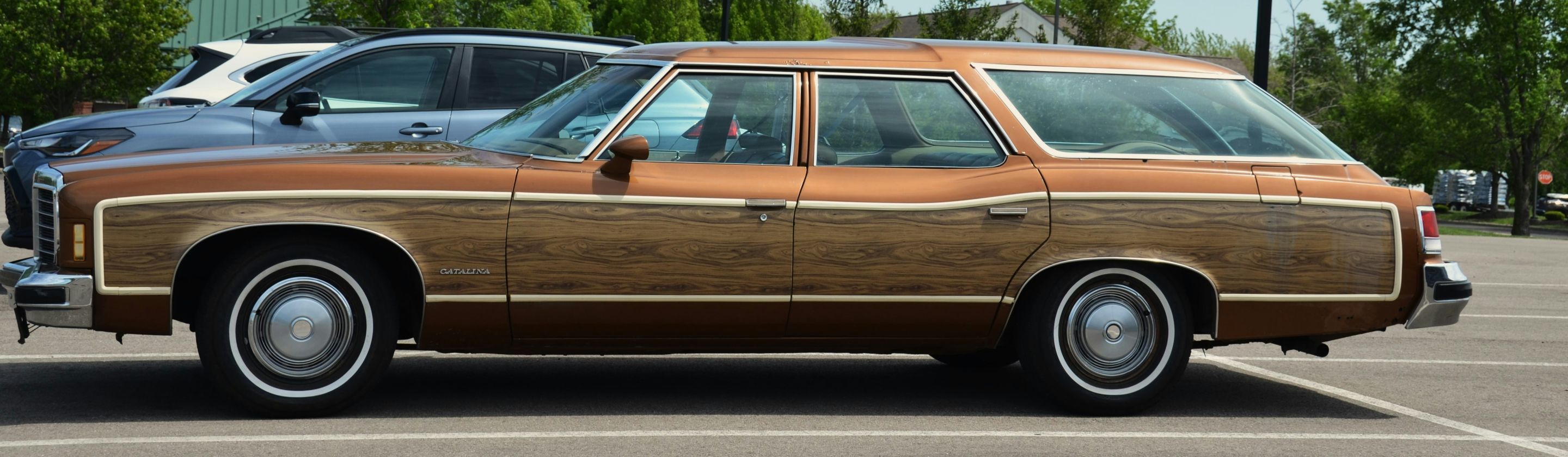
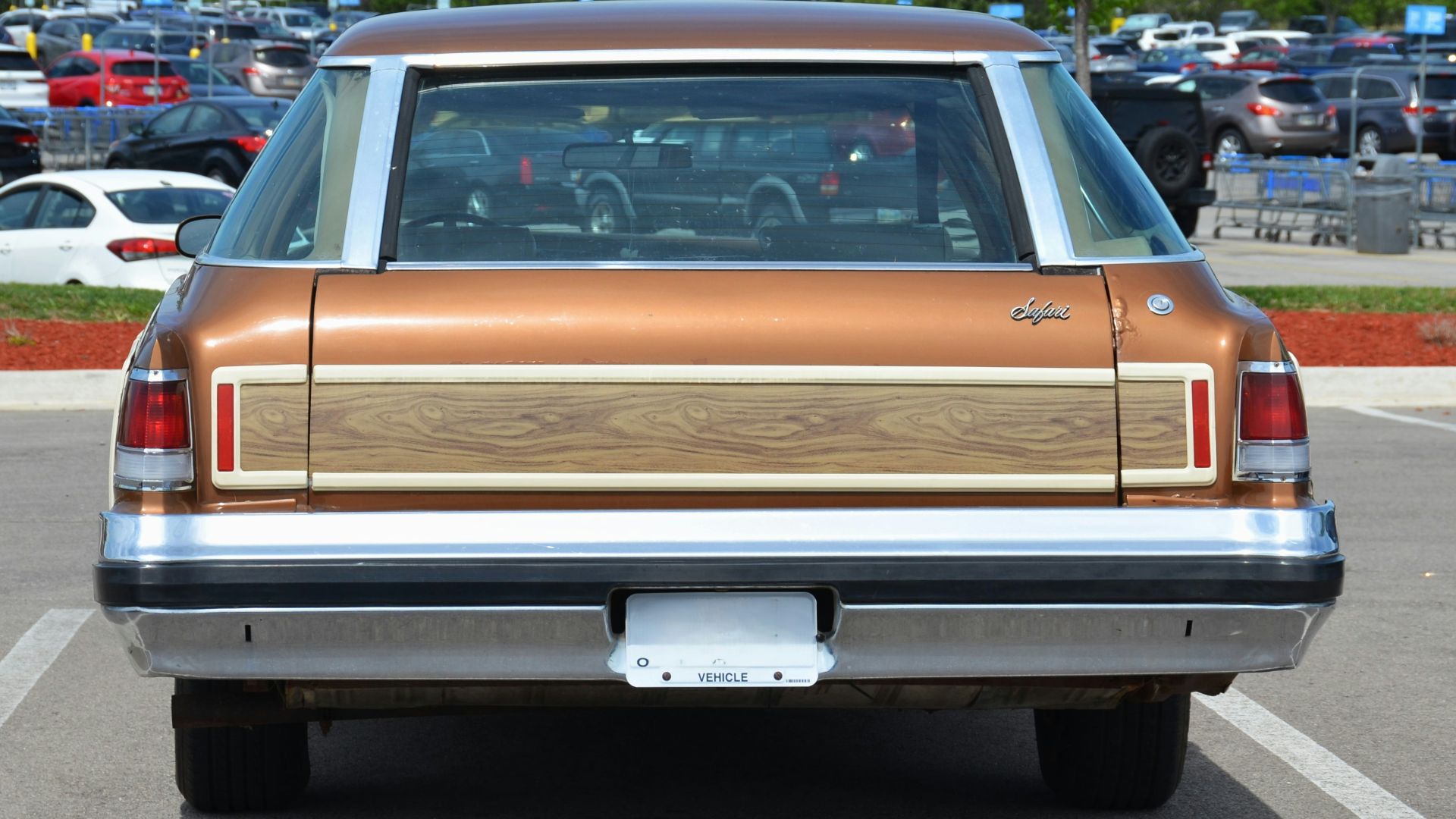
Rather than simply sending the wood look into retirement, Ford recreated it with simulated woodgrain panels. Vinyl transfers could imitate the appearance of mahogany, while surrounding trim helped maintain the traditional woodie style. The result was wonderfully peculiar: technology had made wood unnecessary, but manufacturers immediately began developing new ways to make metal cars look wooden anyway.
Other automakers followed the same idea, and faux wood eventually became closely associated with premium station wagons. Models including the Mercury Colony Park, Chrysler Town & Country, Buick Estate, Oldsmobile Custom Cruiser, and several Chevrolet wagons wore some variation of simulated woodgrain. What had once been a structural material had officially turned into automotive decoration.
By the 1960s and 1970s, woodgrain siding fit perfectly with America's booming suburban family-car culture. A large wagon could carry children, groceries, luggage, and seemingly half the contents of a house, while its fake timber trim made the more expensive version look distinct from an ordinary model. Ford became especially enthusiastic, applying its "Squire" treatment to vehicles ranging from the Falcon and Fairlane to the Pinto.
From Suburban Status Symbol to Retro Curiosity
Woodgrain eventually escaped the station wagon altogether. Car manufacturers experimented with faux timber on hatchbacks, sedans, pickup trucks, and sport utility vehicles, proving there apparently wasn't much that couldn't be improved, or at least made stranger, with a wood-patterned sticker. The Jeep Grand Wagoneer became one of the most recognizable later examples, wearing simulated wood trim through much of its celebrated run.
For decades, the appearance carried an unusual suggestion of luxury. Fake wood connected modern vehicles with those expensive handcrafted wagons of an earlier generation, even when buyers knew perfectly well that nobody had carved their family car from a tree. The effect was similar to decorative wood inside a luxury vehicle: practicality mattered far less than the associations the material created.
Eventually, tastes changed. Minivans and SUVs increasingly replaced traditional family station wagons during the 1980s and 1990s, while exterior woodgrain began looking dated rather than sophisticated. Ford finally discontinued the Country Squire after the 1991 model year, ending a nameplate that had spent more than four decades closely connected with the wood-paneled wagon.
However, woodies never completely disappeared from automotive culture. Genuine examples from the early years became desirable collectibles, while later faux-wood wagons gained nostalgic appeal precisely because they're so unmistakably products of their era. Few automotive trends have followed such an unusual path: real wood became fake wood, fake wood became fashionable, and something originally chosen for practical reasons ended up remembered mainly because of how delightfully impractical it looked.