
It comes as no surprise to us that buying a car is a full production. The back-and-forth on price, the trade-in dance, the interest rate that suddenly appears after all is said and done. And just when you think you've got a handle on the numbers, a second sticker shows up. Dealers often put extra charges on a supplemental sticker right alongside the factory one, and because it looks just as official, a lot of people assume it's just a part of the deal. It's not.
Now, nobody's saying floor mats are evil, but a long list of add-ons can make a good deal into something less than favorable, especially once those extras get rolled into your financing and start collecting interest. So they deserve the same hard look you'd give the sticker price on the car itself, even when the salesperson is being very enthusiastic and very friendly about all of it.
Why Dealers Love These Things So Much
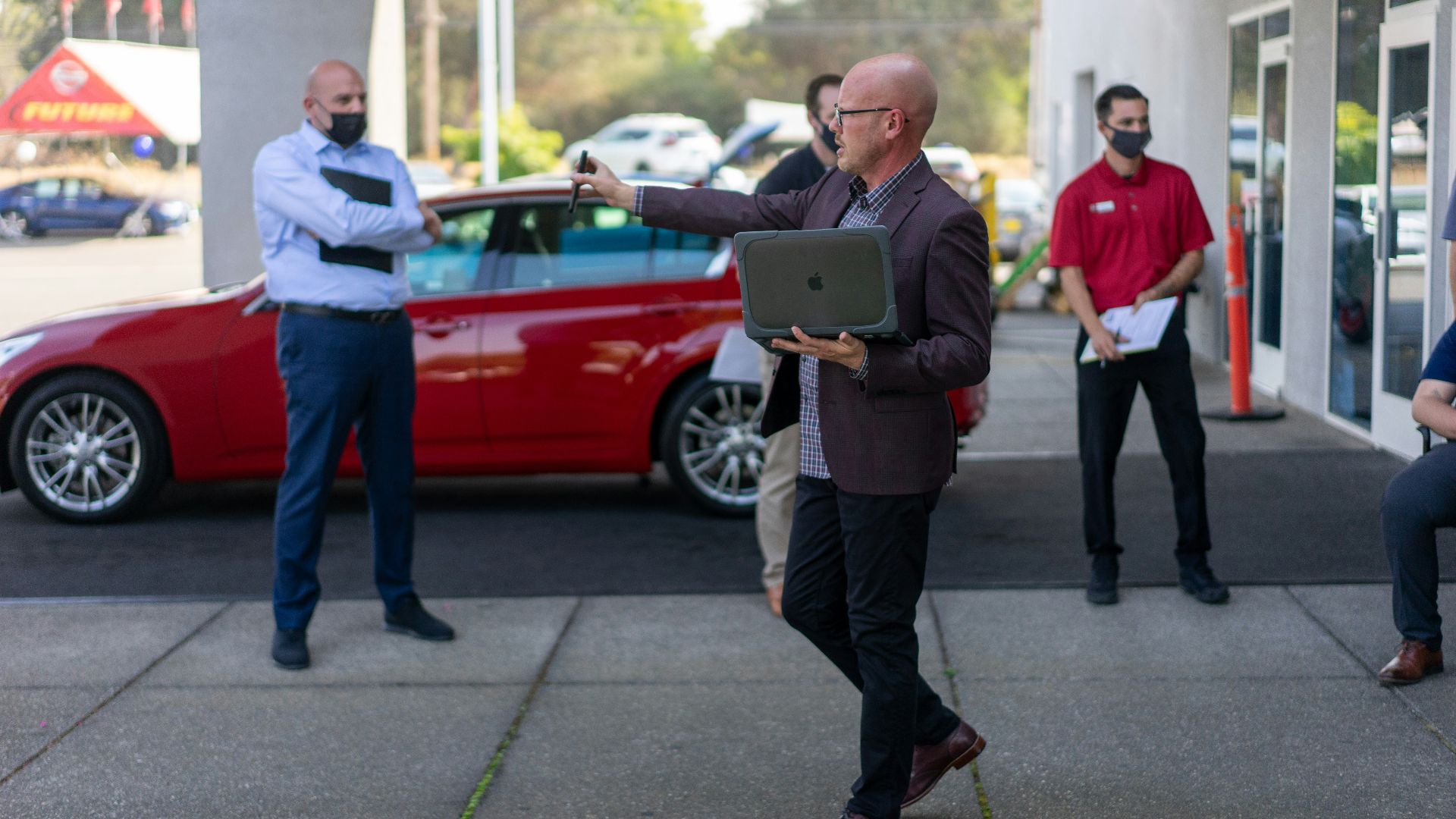 Clayton Cardinalli on Unsplash
Here's the truth about why add-ons exist: they make dealers a lot of money. The National Consumer Law Center found that products like service contracts, GAP coverage, and window etching make up a huge chunk of dealer profits, and the pricing on all of it is way less transparent than the car itself. Two people buying the same product on the same day can get quoted completely different prices. There’s no rhyme or reason; it just seems to be how things go.
Unfortunately, it’s going all around the world. NCLC's 2017 analysis covered 1.8 million car transactions, nearly 3 million add-on products, and more than 3,000 dealers across the country. In all that data, 33% of products sold were service contracts, 26% were GAP, and 9% were etching products.
And the financing piece makes it all feel smaller than it is at the moment. When something costs $400, but it's buried in a 60-month loan, it doesn’t necessarily register that you’re paying such an exorbitant amount of money. It’s really the interest that’s the kicker. NCLC also notes that pricey add-ons can push up both the amount you're financing and your loan-to-value ratio, essentially meaning you may end up paying more than your car is worth. The sneaky part is that a lot of these hidden fees are only brought up after you’ve already spent hours trying to negotiate a price.
The Ones That Rarely Pull Their Weight
Some of these extras are famous for sounding much better than they are. Edmunds documented dealers charging $395 for window tinting that you could get done elsewhere for $145, and $495 for paint protection that was essentially a wax job. Which, again, is not useless, but it is severely overpriced.
Protection packages in general tend to get more credit than they earn. AAA points out that paint and fabric protection on a new car is mostly unnecessary because modern cars are already built to hold up under normal conditions. VIN etching often runs $200 to $300 and may not actually save you anything on insurance unless you've specifically confirmed a discount with your insurer first. Also, you don’t need the nitrogen-filled tires, we promise.
That said, not every add-on deserves to be thrown out entirely. All-weather floor mats, cargo trays, wheel locks, and a trailer hitch can make a lot of sense when they fit the vehicle as well as your lifestyle. Even Edmunds acknowledges some buyers are happy to pay a reasonable fee for this stuff— but the keyword here is “reasonable.”
How to Not Pay for Stuff You Don't Need
The simplest thing you can do is ask about add-ons before you ever walk through the door. Edmunds recommends calling ahead to find out whether the specific car you're looking at has dealer add-ons, what they are, and what they cost, and asking whether you can see a vehicle without them. Because that supplemental sticker is designed to look like it belongs there, knowing what you're looking at before the test drive makes a world of difference.
Once you're looking at actual numbers, InfoRide is clear that optional add-ons can be declined. You can ask for things to be removed, discounted, or taken out of the deal entirely before you sign anything. Going through the out-the-door price line by line is a much better move than trying to argue your way out of vague verbal promises.
When you really get down to brass tax, a lot of this stuff is just cheaper and easier to buy elsewhere. NCLC recommends arranging your own financing through a bank or credit union when you can, while AAA suggests checking with your insurer or a local locksmith before buying things like VIN etching or key protection from the dealer. The money you save is better spent on one of the many other fund-sucking elements of owning a car, like gas, buying a license plate, car insurance, and the like.