Why China Can Build Cheap EVs and Everyone Else Is Panicking
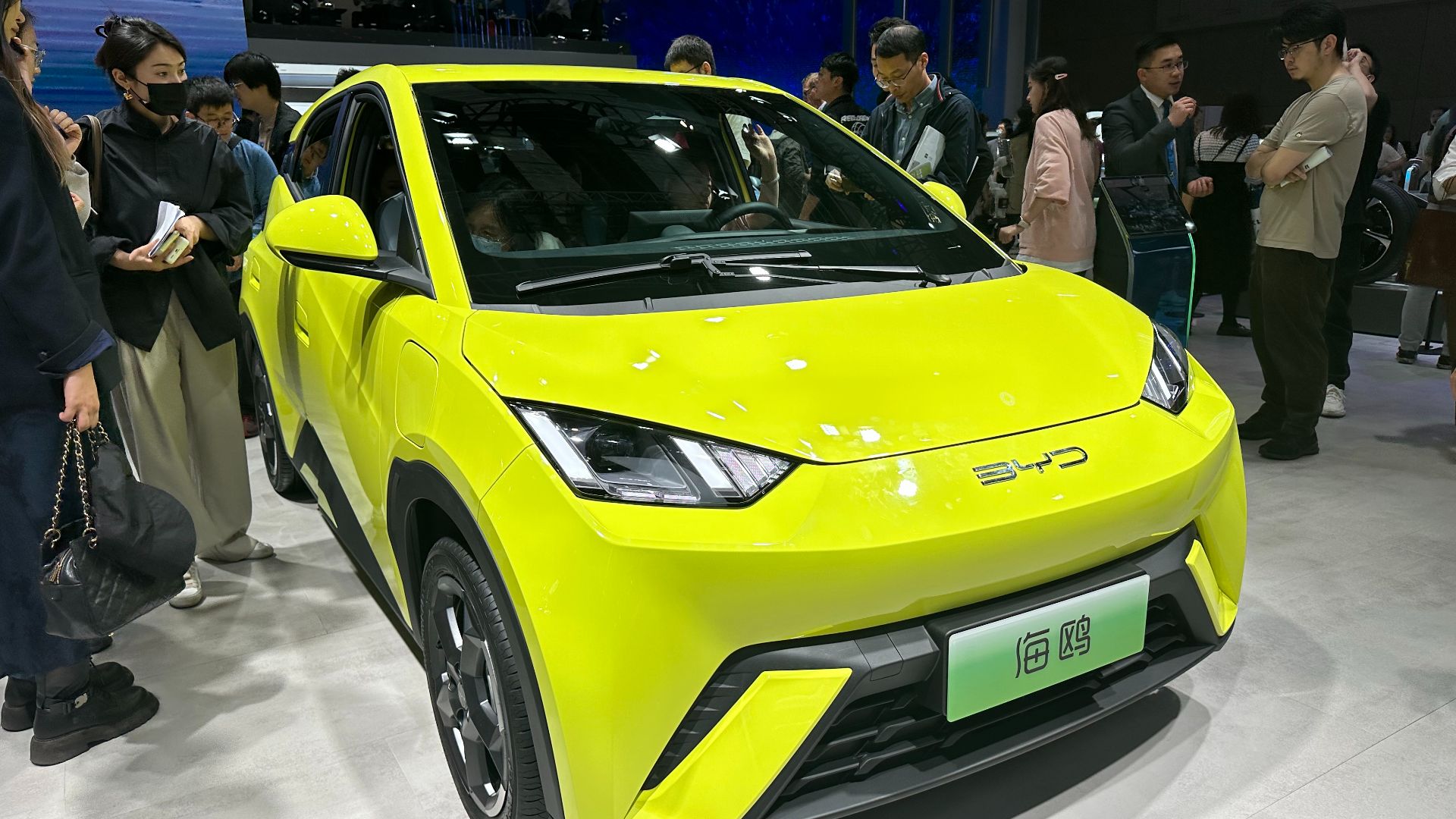 JustAnotherCarDesigner on Wikimedia
BYD's Seagull, a fully electric hatchback, sells for the equivalent of around $10,000 in China. A comparable Tesla Model 3 starts at roughly $38,990 in the United States. These are not different categories of car the way a Kia and a Porsche are different categories of car. They are both functional, modern electric vehicles with batteries, touchscreens, and usable range. The price gap between them is the thing that's making trade ministers lose sleep from Brussels to Detroit.
What China built in the electric vehicle sector over the past two decades is not an accident or a fluke of cheap labor. It is the result of industrial policy executed at a scale and consistency that most Western democracies are structurally unable to replicate. Understanding why the gap exists requires looking at the full stack, from raw materials to factory floors to government balance sheets.
The Battery Advantage Is the Whole Story
You cannot separate Chinese EV pricing from Chinese battery dominance. Contemporary Amperex Technology Limited, known as CATL and headquartered in Fujian province, held approximately 37% of the global EV battery market as of 2023. The next largest player, BYD's battery division, held around 15%. Together, two Chinese companies control more than half the world's EV battery supply, and that is before accounting for the dozens of smaller Chinese battery manufacturers feeding domestic production.
The cost advantage starts further upstream. China refines approximately 60% of the world’s lithium and controls around 60% of global cobalt refining capacity, according to the International Energy Agency’s recent critical‑minerals analyses. These are the materials that go inside every battery pack, regardless of where the car is assembled. A European or American automaker buying battery cells is, in most cases, buying from a supply chain that runs through China at some point, which means they are paying Chinese-set prices while also paying for the logistics of having the finished cells shipped elsewhere.
Battery pack costs have fallen dramatically across the industry, dropping from over $1,000 per kilowatt-hour in 2010 to around $139 per kilowatt-hour globally. Chinese manufacturers have consistently landed below that global average, hitting prices that Western producers have not matched, partly because of scale and partly because of integration. BYD, for example, makes its own batteries, its own chips, and its own electric motors, collapsing the supplier markup that inflates costs everywhere else.
How a Decade of Subsidies Built an Unbeatable Position
The Chinese central government provided an estimated $230–231 billion in support to its EV industry between 2009 and 2023, including rebates, tax exemptions, infrastructure, R&D, and government purchases, according to research by the Center for Strategic and International Studies. That figure covers direct consumer purchase subsidies, manufacturer grants, research and development funding, and preferential loans extended to battery and EV companies through state-owned banks. The subsidies were not a secret, and they were not subtle. They were a deliberate industrial policy designed to capture a market before anyone else had built the infrastructure to compete.
Consumer purchase subsidies, which at their peak reached around 60,000 yuan per vehicle, helped China develop the largest EV market in the world by volume. That scale fed back into manufacturing. When you are producing more units than anyone else, your per-unit costs fall, your engineers accumulate more problem-solving experience, and your supply chain tightens. By the time China began exporting EVs seriously, domestic manufacturers had already run through the learning curve that Western competitors were still at the beginning of.
The United States and European Union have both responded with tariffs designed to slow Chinese EV imports. The Biden administration raised tariffs on Chinese EVs to 100% in 2024. The European Commission imposed additional duties ranging from 17% to 35.3% on major Chinese manufacturers including BYD, Geely, and SAIC the same year, following an anti-subsidy investigation. The tariffs are a defensive measure that buys time, but they do not close the underlying cost gap.
Why Western Automakers Cannot Just Copy the Playbook
The honest answer for why Ford and Volkswagen cannot simply replicate what BYD did is that the conditions that made it possible do not exist in the same form elsewhere. China's political system allowed sustained, multi-decade industrial commitment without the electoral cycle interruptions that complicate long-term industrial policy in democracies. State-directed lending meant capital flowed toward strategic priorities rather than toward whatever offered the best short-term return.
Western automakers are also carrying legacy costs that Chinese EV startups never accumulated. Union contracts, pension obligations, and the fixed costs of maintaining internal combustion engine production lines all weigh on the balance sheet in ways that a company founded specifically to make electric vehicles never has to manage. BYD was building electric buses before most American consumers had heard of a lithium-ion battery.
None of this means the gap is permanent. South Korean manufacturers like Hyundai and Kia have closed substantial ground on Chinese EV pricing in recent years, and significant battery manufacturing investment is flowing into the United States through the Inflation Reduction Act. The panic in Detroit and Wolfsburg is not irrational, but it is also not the end of the story. What it is, without question, is the beginning of an uncomfortable reckoning with how thoroughly one country thought ahead.