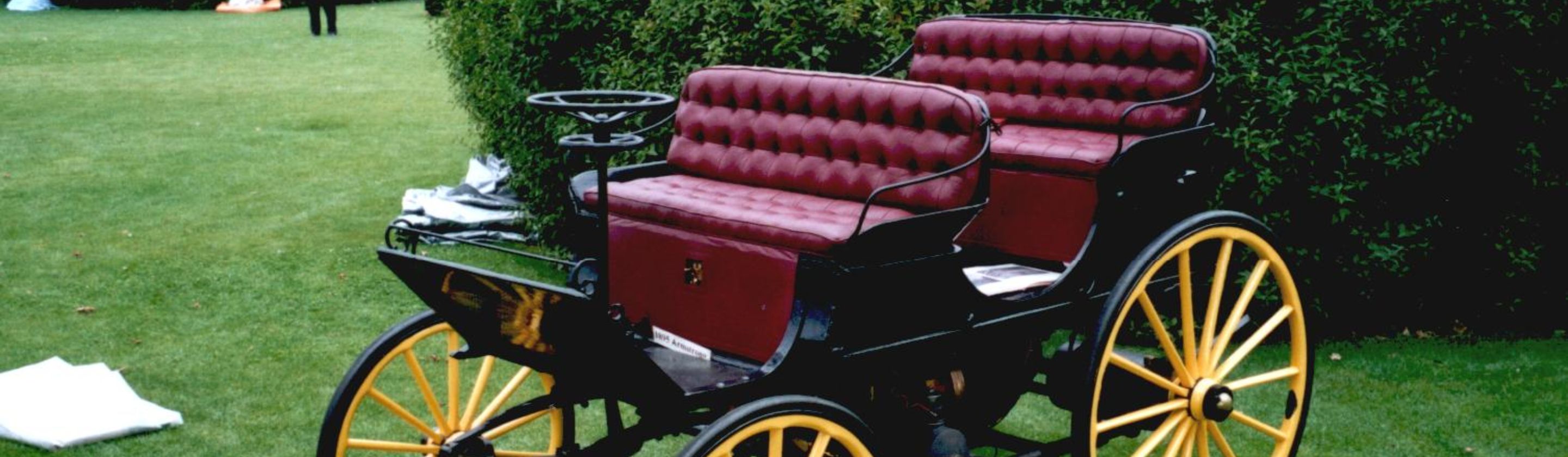
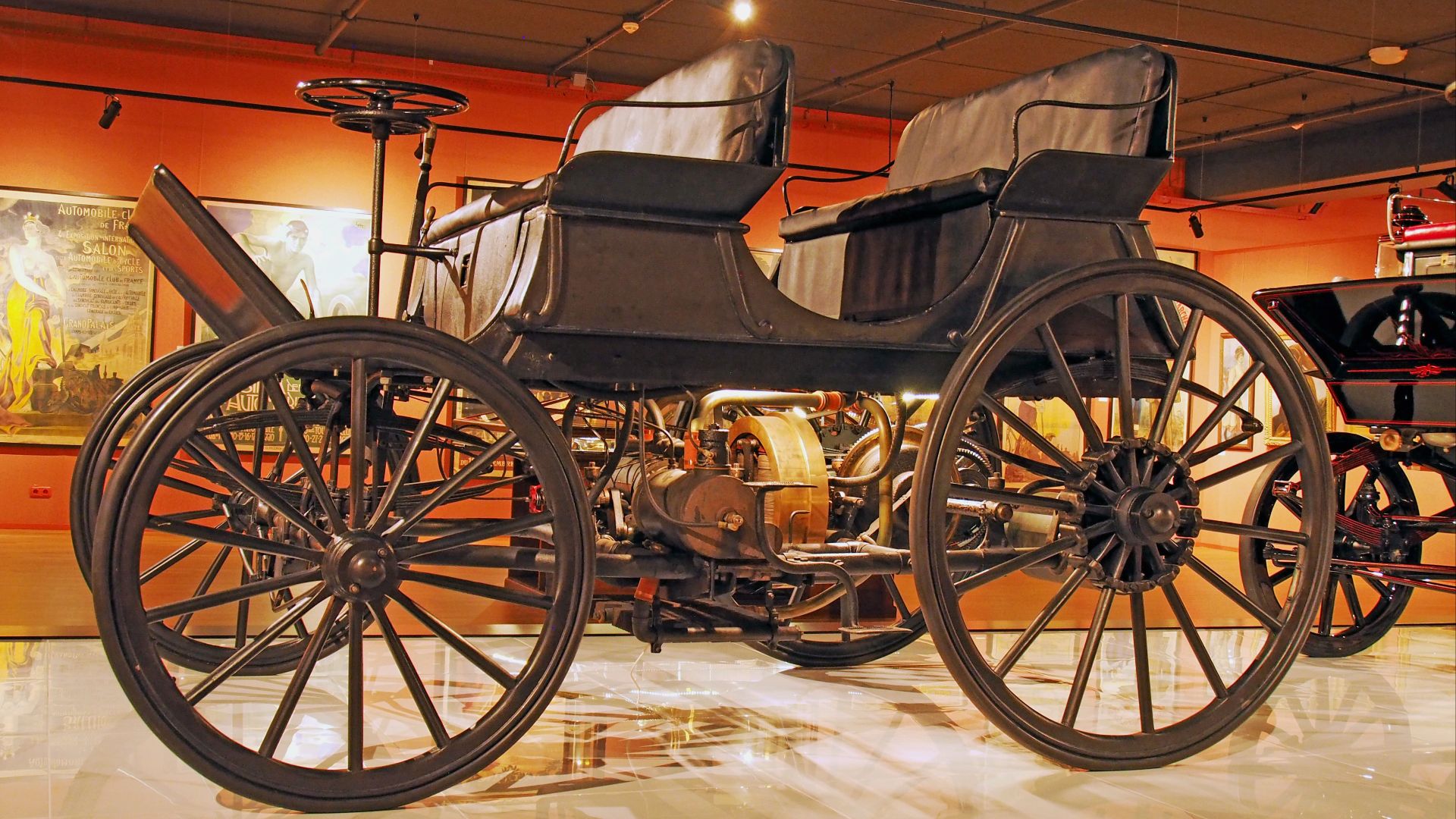
In 1896 a Connecticut machine shop better known for pipe-threading equipment finished a carriage that ran on gasoline and electricity, either separately or together. The Armstrong Phaeton started itself with a motor and shifted gears with no clutch pedal. It recovered energy under braking, and it ran its own lamps and ignition off an onboard dynamo. The Toyota Prius went on sale in Japan in December 1997, a hundred and one years later.
The part that gets lost in the retelling is the reason anybody built it. Nothing about the Armstrong was aimed at fuel economy, a phrase that would have meant little in 1896 when gasoline was cheap and nobody was counting. The electric hardware was there to make an electric car usable over distance, and the gasoline engine was the accessory bolted on to achieve it.
What Was Actually In The Car
Harry Dey, who had finished his first electric car design the year before, replaced the engine's flywheel with a direct-current motor-generator. In motor mode it cranked the 6.5-liter opposed twin into life, then switched to generator mode to charge the batteries and operate an electrically controlled clutch and a transmission with three forward speeds and reverse. The design was written up in Horseless Age that same year, and that contemporary paper trail is why the 1896 date survives scrutiny.
That one component did the work of about five later inventions. Cadillac is usually credited with the electric self-starter, and the Armstrong beat it by sixteen years. The dynamo also fed the ignition coil and the lamps, and a trade magazine of the day noted this meant "doing away with the necessity of going to a charging station." The electric drive reportedly made enough torque to split the wooden carriage wheels.
One was built. The Roger Mechanical Carriage Company had commissioned it, and the firm meant to market the design folded before the end of 1896, so the prototype stayed in a corner of the Bridgeport factory. It survived a flood and went home with a factory employee in the 1960s. It sold at auction in 2016 for $483,400 and still runs, good for over twenty miles an hour.
Range Anxiety, 1896 Edition
Dey had wanted to build electric cars all along. Roger Mechanical was importing French machines and wanted an American design of its own, and it would not accept a pure electric because the range was not good enough. The hybrid was the compromise that let Dey keep his electric drivetrain and gave the client something that would not strand its owner.
In 1900, Ferdinand Porsche developed an electric car for Viennese coachbuilder Jacob Lohner, placing a 2.5-horsepower motor inside each front wheel. The car could reach 32 kilometers per hour and was displayed at the 1900 Paris World's Fair. The biggest drawback was its enormous battery, which contained 74 cells and added considerable weight to the vehicle.
Porsche addressed the battery problem by adding two small De Dion-Bouton engines to power generators, allowing him to use a much smaller battery. He called the resulting hybrid Semper Vivus, Latin for "always alive." Guinness World Records dates the car to January 1901 and credits it as the first hybrid vehicle, without mentioning the earlier Armstrong. Even Bonhams was more cautious about Dey's invention, describing it as the first known modern hybrid rather than definitively the first.
Why It Took Another Century
The engines in the Semper Vivus never turned a wheel. They existed only to make electricity for the hub motors, which puts the car nearer to a Chevrolet Volt or any modern range-extender. A Prius works the other way around, since it drives its wheels mechanically most of the time and uses the motor to assist. The comparison in the title holds on dates and comes apart on layout.
Porsche's version reached customers in a way that Dey's never did. Roughly 300 vehicles were built on the Lohner-Porsche system, with the Vienna fire service taking forty of them and others going out as taxis. They also carried the first use of the Porsche name on a production vehicle. Accounts differ on when production stopped, with some putting it at 1906 and others as late as 1915.
The technology worked, but the cost made early hybrids impractical. Carrying an engine, generator, battery, and electric motors made them far more expensive than ordinary gasoline cars. Gasoline engines also kept improving, while lead-acid batteries made little progress. When Toyota introduced the Prius nearly a century later, the technology was hardly new. Its achievement was making hybrids practical for mass production, not inventing them.