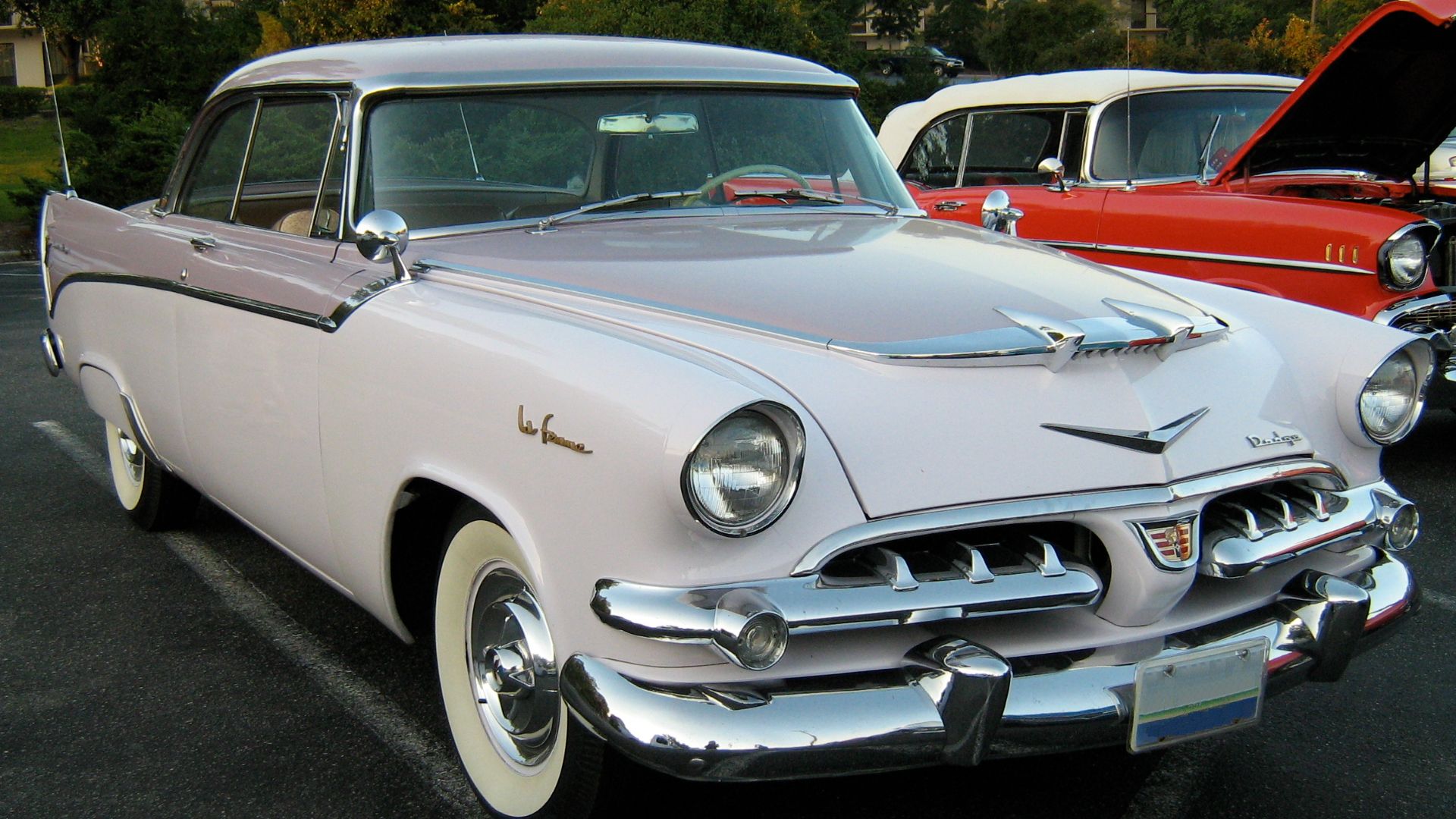
The 1955 Dodge La Femme came with a handbag. The bag was pink calfskin, cut to match the upholstery. It rode in a compartment of its own in the back of the front seat, and inside were fitted items made to live in the car rather than in a drawer at home. Dodge pitched the result as the first fine car created exclusively for women, and ran the campaign under a line about serving Her Majesty the American Woman.
The car lasted two model years and then went away. Oddly, the record of what was in that purse is far more complete than the record of how many people bought one. The accessories are the part everyone remembers now, and they're also the part the company dropped first. It arrived as a trim option on a car that already existed, a detail most retellings leave out.
What Came With the Car
The purse held a compact and a lipstick case, both finished to match. A cigarette lighter and its case went in beside them, along with a change purse. Some accounts add a comb to the list. The small items were made by an Evans firm in Chicago rather than by Dodge itself, in finishes that ran from tortoise shell to gold-trimmed pink leather.
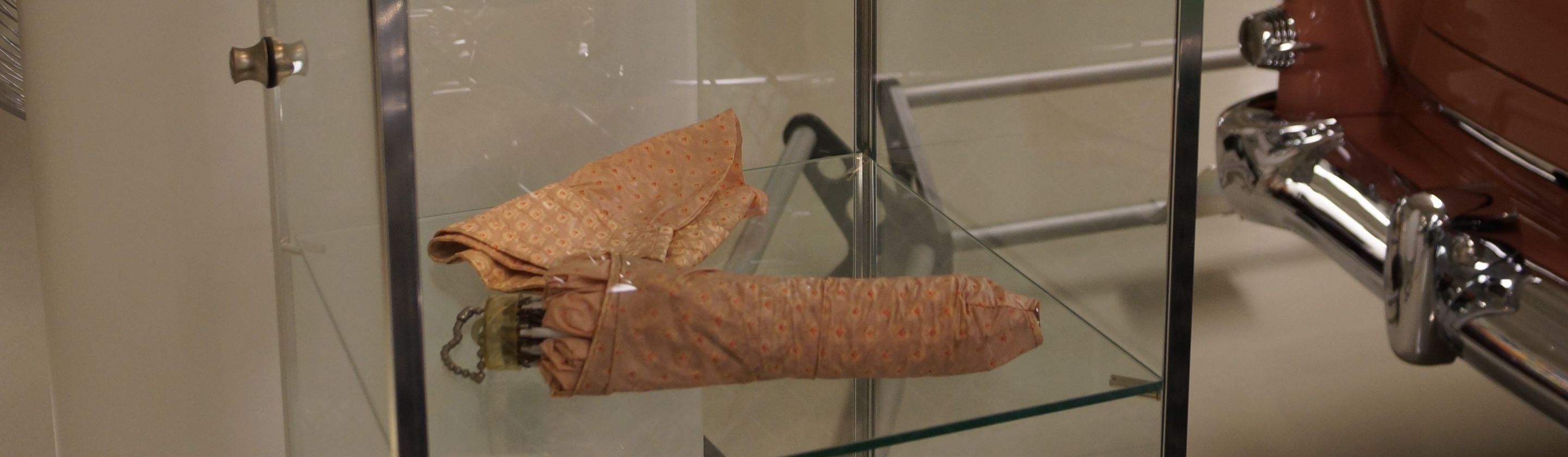
Rain gear came separately and stayed on for both years. A matching cape and rain hat rode behind the front seat, cut from the same fabric as the interior. The umbrella got a holder to itself. Every piece had a designated home somewhere in the car, which was more thought than most option packages of the period received. Keeping the set together over the years was the owner's problem.
The 1955 interior paired pale pink vinyl with cloth woven in a rose pattern. Dodge had originally planned Heather Rose leather for the seats and door panels but switched to vinyl before production. For 1956, the La Femme came in just one exterior color combination: Misty Orchid over the darker Regal Orchid. Inside, a new jacquard fabric replaced the rosebud pattern, alongside lavender loop-pile carpeting and gold accents in the headliner. Dodge also dropped the matching purse for the second year but kept the rain gear.
It Was an Option, Not a Model
La Femme was never a separate car. It was a $143 package on the Custom Royal Lancer two-door hardtop, and that model started at $2,543, so the trim added close to six percent to the sticker. What the money bought was paint and cloth, plus the accessory set. Being an option rather than a model also meant it never got a line of its own in the production records, and that matters further down.
Mechanically nothing moved. The engine and running gear were whatever the Custom Royal shipped with, and nothing underneath was altered for the intended buyer. A woman who wanted a car that drove differently was buying the same Dodge as everyone else in a different color. Power steering and the push-button transmission were available to anyone who ticked the boxes.
The pitch and the product sat some distance apart. Advertising spent more time on the compact and the umbrella than on anything the car did, and the 1955 brochure led with the claim about a fine car made exclusively for women. Anyone reading it closely would have noticed that the engineering was untouched. The exclusivity lived in the trim catalog.
Nobody Knows How Many Sold
Dodge didn't count La Femme separately from the Custom Royal, so no production figure exists. Estimates put the two-year total under 2,500, and other accounts run lower still, with fewer than a thousand built in the first year. The spread between those figures is a fair measure of how little paperwork survived. Anyone quoting a precise total is guessing.
The numbers point the same direction either way. A package counted in the low thousands at best, spread across two model years, was never going to cover its own accessories and tooling. Dodge canceled it for 1957 and put nothing in its place. Chrysler was heading into a stretch where executives had little patience for products that couldn't find their buyers.
The usual explanation is that women found the idea insulting, and some certainly did. The simpler problem was that the package asked a premium and returned trim, while the people selling it led with the handbag instead of the car. Dropping the purse after a single year suggests the company had reached much the same conclusion. The rain gear stayed on, and that says something about which half of the idea was working.