

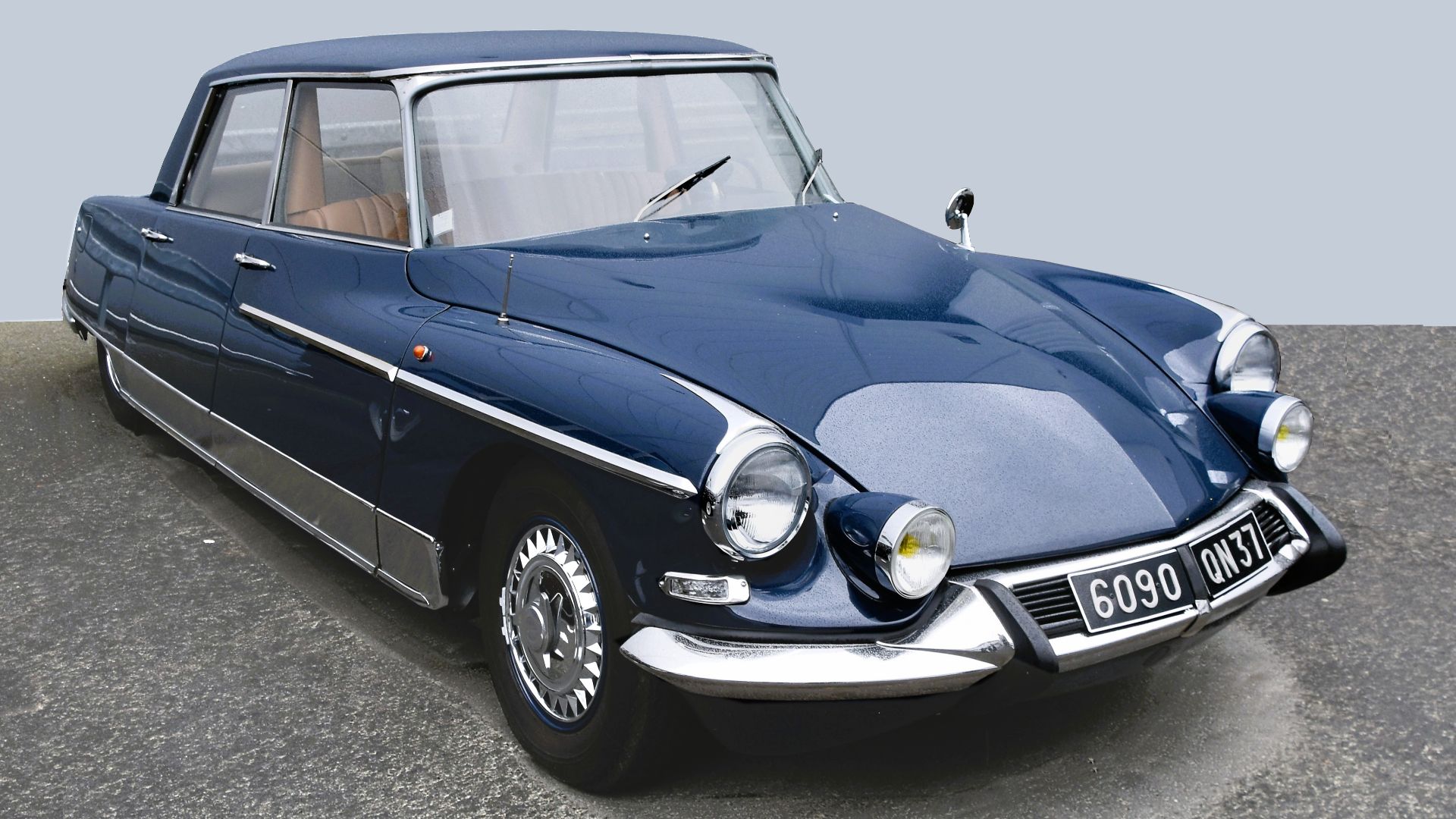
When the Citroën DS debuted in 1955, it introduced technology that seemed almost impossible for an ordinary family car. Its futuristic appearance immediately turned heads, but the engineering underneath was even more impressive. With innovative suspension, hydraulic controls, and advanced braking technology, the French automaker had created something years ahead of many competitors. Unfortunately, all that innovation came with one significant complication: it was extremely challenging to repair.
While drivers praised the DS for its exceptional comfort and sophisticated features, mechanics encountered an unfamiliar set of engineering challenges. Many traditional repair techniques simply didn't work, and specialized knowledge became essential for proper maintenance. The vehicle eventually earned a reputation for being both an engineering masterpiece and a particularly difficult car to service.
A Revolutionary Car Arrives in 1955
Citroën unveiled the DS 19 at the Paris Motor Show on October 6, 1955, impressing visitors with its aerodynamic body and strikingly modern appearance. Developed with contributions from engineer André Lefèbvre and stylist Flaminio Bertoni, the vehicle looked nothing like the conventional sedans of its time. Its popularity was immediate, with reports suggesting approximately 12,000 orders were placed on the first day alone. Clearly, the public was excited about Citroën's ambitious new direction.
The DS's most impressive feature was its hydropneumatic suspension system, developed by engineer Paul Magès. Rather than relying on traditional steel springs, the suspension used pressurized hydraulic fluid and nitrogen-filled spheres to support the vehicle and absorb bumps. This clever arrangement delivered an exceptionally smooth ride while automatically adjusting the car's height to accommodate changing loads. Drivers could even manually raise or lower the vehicle, a particularly unusual feature during the 1950s.
Along with its exceptional suspension, the DS offered power steering, hydraulically assisted brakes, and a sophisticated semi-automatic transmission. The latter allowed drivers to shift gears without using a traditional clutch pedal. Front disc brakes also delivered impressive stopping performance at a time when most cars still relied on much slower drum brakes. Combined, these innovations made the DS exceptionally advanced, but they also introduced mechanical systems that many technicians had never worked with before.
Why Mechanics Struggled With the Technology
The biggest headache involved the DS's extensive hydraulic system, which handled several important functions throughout the vehicle. Unlike conventional automobiles, where suspension, braking, and steering systems operated largely independently, the Citroën relied on a shared source of hydraulic pressure. An engine-driven pump supplied the pressure needed for multiple components to function properly. As a result, a problem with hydraulic pressure could affect several systems rather than just one.
Maintaining this setup required an understanding of specialized valves, pressure regulators, seals, and hydraulic connections that weren't commonly found in competing vehicles. Mechanics familiar with conventional suspension systems couldn't simply use their usual repair techniques on the DS. Diagnosing certain issues required the right equipment and a thorough understanding of how the interconnected components worked. Without that expertise, even a seemingly routine maintenance appointment could turn into a much bigger job.
The original hydraulic systems also had reliability concerns, especially during the DS's early production years. Leaks and component failures could result in costly repairs, while incorrect servicing sometimes made existing problems worse. Changes to the hydraulic fluids used over the years created another complication, as incompatible fluids could damage seals and other components. For owners living far from experienced Citroën specialists, finding someone who actually understood the vehicle wasn't always easy.
An Engineering Masterpiece With a Complicated Legacy
Realizing that some customers preferred simpler mechanical arrangements, Citroën introduced the ID 19 in 1956. This more affordable alternative kept the famous hydropneumatic suspension but did away with several of the DS's more complicated hydraulic features.
Depending on the version, buyers received a conventional manual transmission and simpler steering and braking systems. The ID proved that Citroën could retain much of the original vehicle's appeal without making every component quite so complicated.
Despite its challenging maintenance requirements, the DS enjoyed an impressive production run that continued until 1975. Nearly 1.5 million examples of the DS and related ID models were built, making the design one of France's most recognizable automobiles. Its unconventional engineering also showed that comfort, handling, and advanced suspension technology could work together in an everyday vehicle. Over time, the car became closely associated with French innovation and even served as presidential transportation.
Today, surviving Citroën DS models are highly sought after by collectors who appreciate unusual engineering. Experienced specialists can keep their hydraulic systems working properly, although finding knowledgeable technicians and the correct replacement parts is still a challenge. The DS demonstrated that being ahead of your time isn't always a positive thing, as it can create some frustrating practical challenges that render a state-of-the-art machine tragically undesirable.