
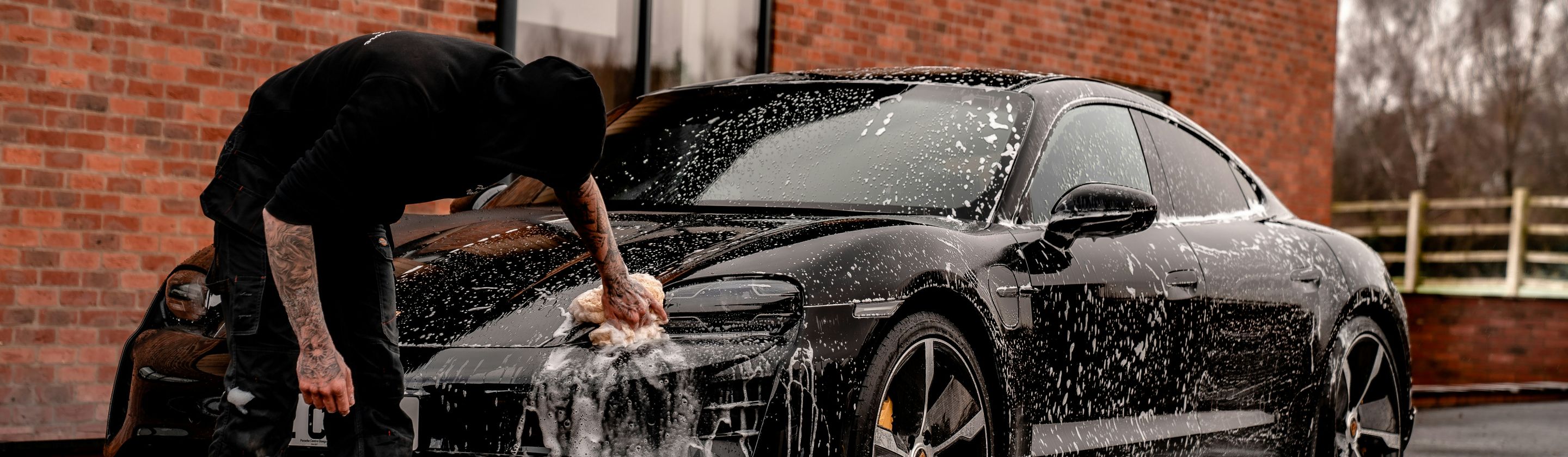

For some car owners, a quiet weekend morning begins with buckets, microfiber towels, and the soft hiss of water running over the paint. From the sidewalk, it may look like someone’s taking car cleaning a little more seriously than usual. For the person holding the wash mitt, though, the process can offer a welcome break from screens, schedules, and the steady hum of everyday responsibilities. Their attention settles on one wheel, one panel, or one stubborn mark at a time.
That steady rhythm helps explain why detailing can feel meditative. The work brings together present-moment attention, repeated movements, clear goals, and visible progress, all while the owner cares for a vehicle that may carry plenty of personal meaning. There’s no need to sit still or try to clear every thought from the mind. Instead, detailing provides a practical job that gives the hands something to do and the mind one clear place to settle.
How Detailing Turned Cleaning Into A Ritual

A basic car wash removes loose dirt, while detailing follows a much more methodical process. The International Detailing Association describes detailing as the step-by-step cleaning and reconditioning of a vehicle’s interior and exterior to improve its appearance and protect its surfaces. That work can include cleaning wheels, treating trim, vacuuming tight spaces, polishing paint, and applying protective products. Each part has its own purpose, so the job feels less like a quick rinse and more like a routine that’s been planned from start to finish.
Enthusiasts often care just as much about the order of the work as they do about the final shine. They lay out their tools, choose products made for specific materials, and move through the vehicle section by section instead of tackling everything at once. The exact routine may change depending on the car’s condition, since a dusty daily driver won’t need the same work as a vehicle with marks in its paint. Even so, the familiar sequence gives every session a clear beginning, middle, and end.
Repetition adds to that sense of ritual. A towel moves across the glass in overlapping strokes, a brush works between the spokes of a wheel, and a vacuum follows tidy lines across the carpet. Research published in Scientific Reports found that repetitive, rigid, and predictable actions were associated with reduced anxiety after an anxiety-inducing task, although the reduction was only slightly greater than it was in the comparison conditions. The study didn’t look at car detailing, but its findings help explain why moving through a familiar series of physical tasks can feel steadying rather than boring.
Why The Work Holds An Owner’s Attention
Mindfulness centers on being aware of what’s happening in the present moment. The American Psychological Association explains that mindfulness includes attention and acceptance, which means noticing thoughts, feelings, and physical sensations without immediately judging or reacting to them. Detailing gives the senses plenty to notice, including the feel of a towel, the sound of water running from a rinsed panel, and the faint haze that shows a window needs another wipe. Small details like these keep the owner’s attention close to the car and the job at hand.
Mayo Clinic explains that mindfulness can be practiced during everyday activities, including eating, brushing your teeth, walking, or paying close attention to whatever you’re doing. Car care can work in a similar way when an owner slows down and moves through each step without rushing. The mind may wander toward work, bills, or tomorrow’s plans, which is completely normal. A streak on the glass, a patch of leftover residue, or dirt tucked into a narrow seam gives that attention somewhere clear to return.
A small study involving 51 college students showed how an ordinary cleaning task could feel different when people approached it with close attention. Participants who received mindful dishwashing instructions reported greater state mindfulness, more inspiration, less nervousness, and a tendency to overestimate how long they’d spent washing dishes. The study, published in Mindfulness, dealt with dishwashing rather than car detailing. Still, both activities involve repeated movements, attention to physical sensations, and a visible result that develops as the work continues.
Why The Finished Car Feels Personally Rewarding
 Swansway Motor Group on Unsplash
Detailing provides quick and easy-to-see feedback. A dusty air vent becomes clean, faded-looking trim appears richer, and cloudy glass turns clear within a few minutes. Each small improvement shows that the effort is paying off, which makes it easier to stay involved in the next part of the job. A broad review published in Frontiers in Psychology describes clear goals, immediate feedback, concentration, a sense of control, and a match between challenge and skill as central parts of flow, a state of deep involvement in an activity.
Detailing can provide those conditions at several skill levels. A beginner may concentrate on completing a safe hand wash without leaving marks, while someone with more experience may work on correcting paint with a machine polisher. The task can become more challenging as the owner’s skills improve, but the basic pattern stays familiar: inspect the surface, complete the work, check the result, and move on. That steady progress can make a long session pass without the usual urge to check the time every few minutes.
The vehicle itself can make the work feel even more rewarding. Transportation research based on interviews with car owners found that vehicles can provide feelings of autonomy, protection, comfort, and prestige, according to a study published in Transportation Research Part A. A separate study of commuters in New York City and Houston found that cars can carry symbolic and emotional meaning connected with personal image and social status. For an owner, cleaning a vehicle may carry more weight than simply removing dirt from a useful machine.
The meditative quality of detailing comes from that mix of structure, movement, and attention. The hands remain occupied, the senses stay engaged, and progress appears directly in front of the owner as each section improves. There’s no need to rush through the work or chase a permanently flawless finish, especially when the car will soon be back on the road. By the time the final towel is folded, the vehicle looks cleaner, and the day may feel a little less cluttered as well.