Believe it or not, reversing a car is one of those skills that many drivers never fully feel confident about, even years after passing their test. Unlike driving forward, where your sightlines are clear and the steering responds in the direction you'd naturally expect, reversing introduces a set of challenges that your brain and body simply aren't wired to handle as easily. It's a task that demands more from your spatial awareness, your coordination, and your ability to process visual information from unfamiliar angles.
What makes it even trickier is that most drivers don't reverse often enough to build real fluency. Short driveway maneuvers and the occasional parallel park don't give you the kind of repetitive practice needed to make the skill feel second nature. Understanding why reversing is so difficult, and what's actually happening in your brain and body when you attempt it, can go a long way toward helping you become more comfortable behind the wheel.
Your Brain Processes Reverse Differently
When you drive forward, your brain uses a combination of visual cues, muscle memory, and spatial reasoning that it's had years to refine. The moment you shift into reverse, though, that entire system gets disrupted, because the relationship between your steering input and the car's movement inverts. It's not hard to see why: backing up places greater demands on spatial transformation and motor control than forward driving.
There's also the matter of divided attention. When reversing, you're simultaneously trying to check your mirrors, glance over your shoulder, monitor your steering, and gauge your distance from obstacles all at once. That strains your cognitive load; the more tasks requiring the simultaneous management of multiple spatial inputs, the more your working memory has to, well, work, which makes errors more likely. For newer drivers especially, this overload is one of the most common reasons reversing feels so overwhelming.
Your body's orientation also plays a role. Reversing often requires you to twist your torso and look back over your shoulder, which changes your relationship to the car's controls and can make your steering feel less precise. After all, not only are you constantly scanning your surroundings thoroughly and keeping your head facing out the back windshield, but you're also steering the vehicle without being able to watch what your hands are doing. It's no wonder why your signals may sometimes mix.
Mirrors and Camera Aids Create Their Own Confusion
Most drivers rely heavily on their mirrors when reversing, and while mirrors are certainly helpful, they also introduce a layer of visual complexity that takes time to decode. A mirror image is a laterally inverted view of the world behind you, which means that moving left in the mirror corresponds to moving right in reality. This inversion is subtle enough that many drivers don't consciously register it, but their spatial processing still has to work harder to translate what they're seeing into the correct action.
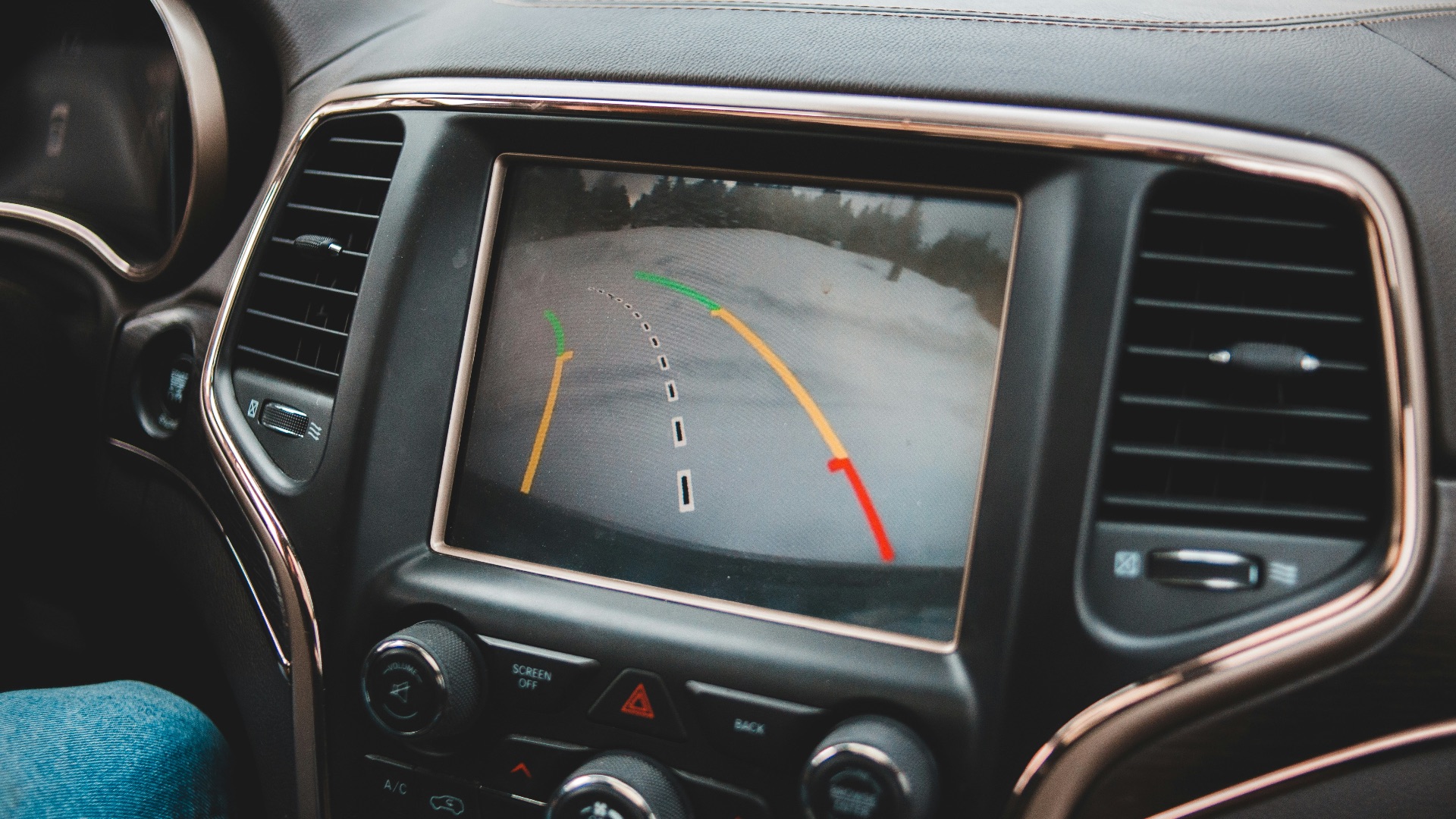
Backup cameras have become standard in modern vehicles, and while they do offer a direct view of what's behind you, they come with their own set of perceptual limitations. The camera's wide-angle lens distorts depth perception, making objects appear farther away than they actually are, for one. Drivers who rely too heavily on backup cameras without also using their mirrors and direct sightlines are also typically more prone to misjudging distances. On top of that, the more you become accustomed to cameras and sensors doing the brunt of the work for you, the less you'll need to think on your own about how to properly reverse without these guides.
There's also the issue of where you look when reversing. Experienced drivers tend to shift between multiple reference points, from mirrors to camera screens and over-the-shoulder checks, to build a composite picture of the space around them. Less experienced drivers often fixate on one source of information, which leaves them with an incomplete understanding of their surroundings and a higher likelihood of clipping something they didn't account for.
Limited Practice Keeps the Skill From Developing
Reversing is one of the few driving skills that most people only learn to a functional minimum during their lessons, and then rarely push beyond that threshold. The driving test assesses basic reversing ability, but it doesn't require the kind of precision or variety of scenarios that would truly build competence. Once drivers pass, they tend to avoid challenging reversing situations altogether if it's already a maneuver that causes stress for them, which means the skill stays at roughly the same level it was on test day—or worse, the longer it's not practiced.
That goes to show that deliberate practice is what separates drivers who feel comfortable reversing from those who don't. Skills that involve spatial coordination and motor learning respond well to consistent, focused repetition; without it, your brain never gets the chance to build the automatic responses that make a maneuver feel easy. If you only reverse when you have no other option, you'll continue to find it anxiety-inducing because you're always operating without a reliable base of experience to draw from. Over time, you'll avoid it until the skill completely atrophies.
But there is some good news. Reversing is actually far easier than you might think: swing your steering wheel left, and your car goes left. Swing it right, and it goes right. No matter whether you're driving forward or backward, your car will move in the direction you're telling it to go. As long as you keep that in mind, you won't panic whenever you need to back up. Set aside time to practice in empty car parks, work on parallel and back-up parking in low-pressure environments, and vary the types of reversing maneuvers you make when you drive. Over time, as you keep practicing, you'll realize that it's not so hard after all.