
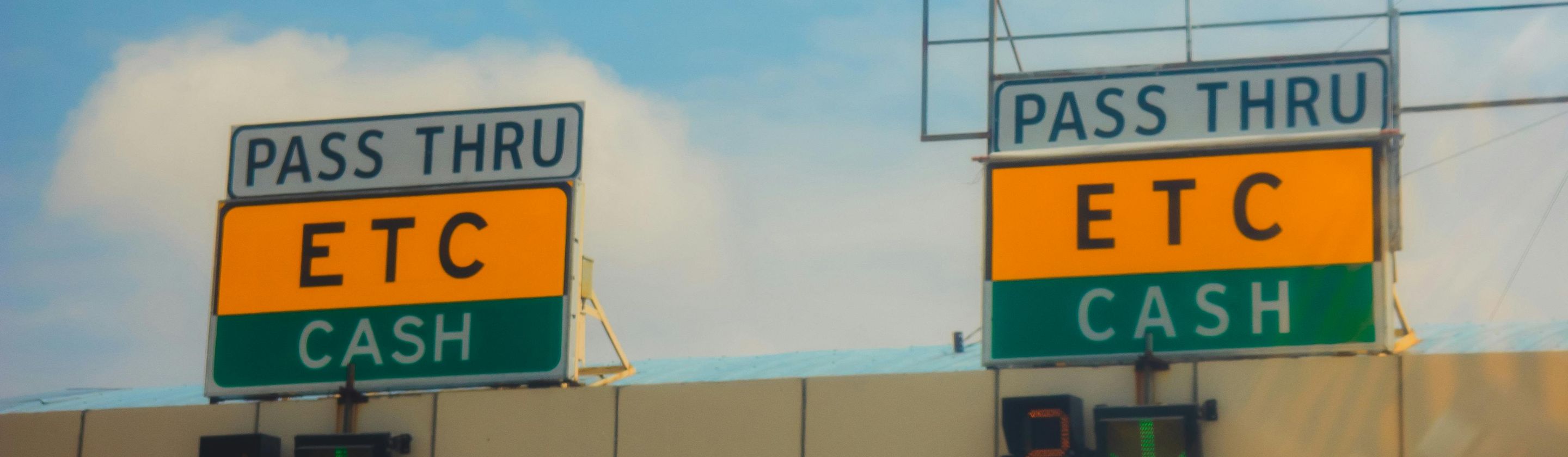
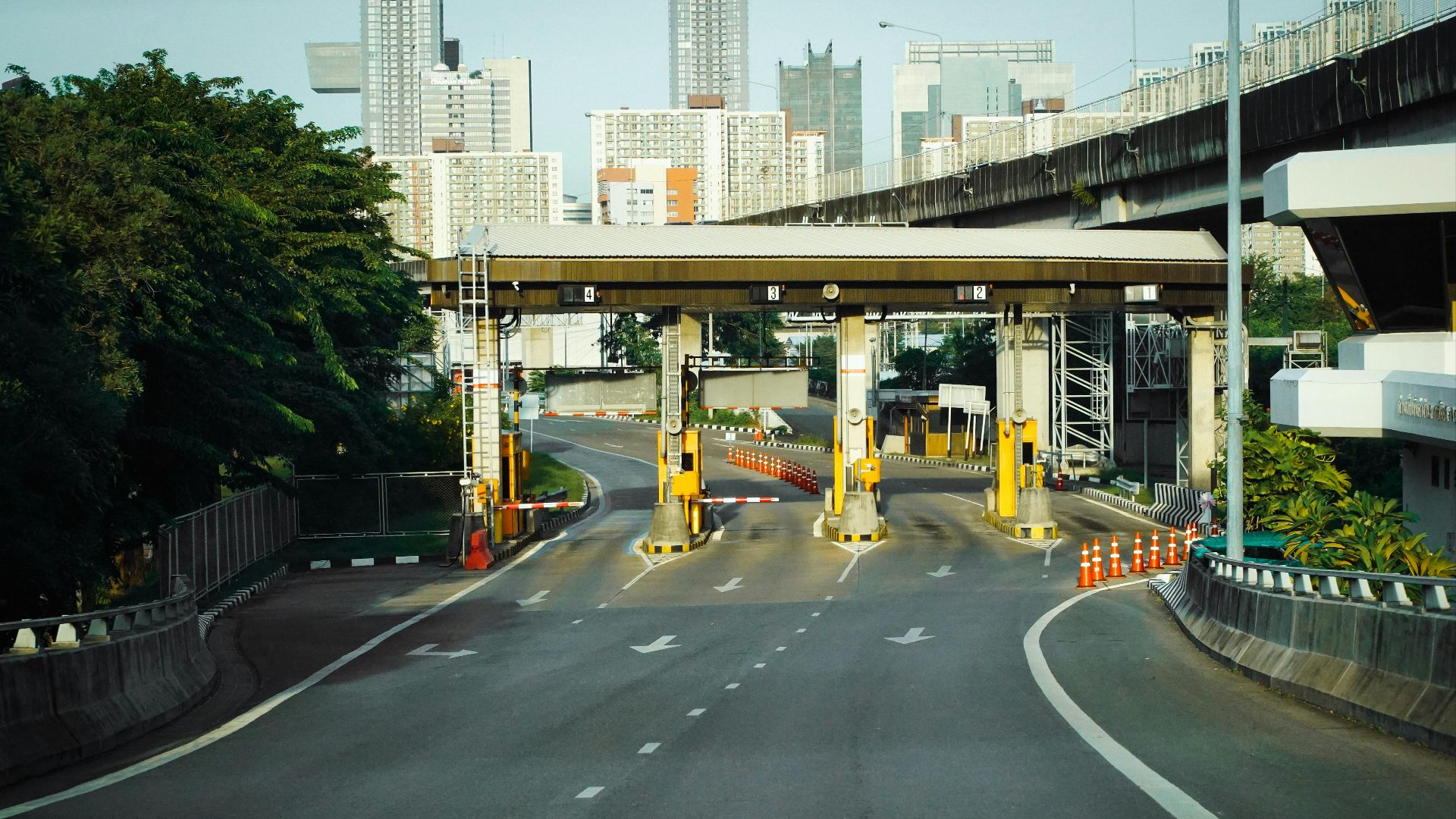
The original pitch for toll roads was straightforward and reasonable. You build a road, you charge drivers to use it, and once the construction bonds are paid off, the tolls go away. The road becomes public infrastructure, free to use, maintained by tax revenue like everything else. This is not revisionist history or a reframing: it was the explicit legislative intent behind most of the toll roads built in the United States throughout the twentieth century.
That's not what happened. What happened instead is that toll roads became one of the most durable revenue mechanisms in American public finance, instruments that started as temporary financing tools and quietly became permanent, then got handed to private corporations on multi-decade leases, then started charging rates calibrated not by construction debt but by how much traffic would bear at rush hour on a Tuesday morning. The road didn't change. The arrangement around it changed completely.
The Promise That Was Always Optional
The Pennsylvania Turnpike, which opened in 1940, is the oldest major toll road in the country and also one of the clearest illustrations of how this goes. The bonds that financed its original construction were paid off decades ago. The tolls did not go away. They have increased every single year since 2009, with drivers now paying rates that are several multiples of the road's opening-era fares even adjusting for inflation. The Turnpike Commission carries roughly $14 billion in debt as of recent reporting, largely because Pennsylvania state law has for years required it to transfer over $450 million annually to the state's public transit agency, a practice known as toll diversion.
Toll diversion is common and rarely discussed. Federal law imposes some limits on how revenue from Interstate highways can be spent, but state-level toll roads operate under their own rules, and many legislatures have treated toll revenue as a general fund supplement rather than a dedicated infrastructure account. The Reason Foundation, which publishes annual analyses of highway policy, has documented toll diversion across numerous states, with diverted funds going toward transit systems, general transportation budgets, and in some cases non-transportation purposes entirely. The driver paying the toll has no practical way of knowing where that money ends up.
What made this especially durable as a system is that toll roads occupy a psychological category separate from taxes. A tax increase requires political capital and public debate. A toll increase requires a commission vote, often by an appointed body with limited public accountability, and rarely becomes the kind of political crisis that a comparable income or property tax hike would produce. The Pennsylvania Turnpike raised its rates for fifteen consecutive years before the issue received sustained legislative scrutiny, and even then the tolls kept going up.
When Private Corporations Bought The Roads
The privatization wave that hit American toll roads in the mid-2000s changed the incentive structure fundamentally. In 2005, Chicago sold the operating rights to the Chicago Skyway to a consortium of Spanish and Australian investors for $1.83 billion on a 99-year lease. The following year, Indiana sold the rights to the Indiana Toll Road to the same Cintra-Macquarie consortium for $3.85 billion on a 75-year lease. Both deals were framed as fiscally responsible moves that gave states immediate cash while transferring infrastructure risk to private operators.
What the deals also transferred was accountability. A state agency running a toll road has at least some political exposure to the drivers using it. A private consortium holding a 75-year lease has a contractual obligation to maximize revenue across that period, and many of these agreements included noncompete provisions restricting states from improving nearby free routes in ways that might divert traffic. Indiana's lease agreement contained language limiting the state's ability to build competing roads for a defined window. The road didn't become private in the sense of being fenced off, but the financial interest in it moved entirely out of public hands.
The Indiana Toll Road's original private operators went bankrupt in 2014 and the lease was sold again, eventually landing with IFM Investors, an Australian infrastructure fund. The road is still there, still regulated in basic operational terms, still traveled by Midwestern commuters who have no particular awareness that their toll payments flow to a fund managed in Melbourne. This is not an unusual arrangement. Significant portions of American toll infrastructure are now owned or operated by foreign institutional investors, a reality that receives almost no attention in the political conversations about infrastructure spending.
What The Bill Actually Looks Like
Dynamic pricing has added another layer to what toll roads extract from regular drivers. The I-66 Express Lanes inside the Capital Beltway in Northern Virginia use real-time congestion pricing that has reached as high as $47 for a roughly ten-mile stretch during peak periods. These are not anomalies designed to generate outrage. They are the system working precisely as intended, with price functioning as a rationing mechanism that reserves fast travel for people who can afford to pay on any given morning.
The consequences for lower-income drivers are severe in a specific way. Drivers who miss tolls can accumulate violations, and in many states the fee structure escalates rapidly. A small initial toll can become a large administrative penalty, then a suspended vehicle registration, then an inability to renew a license until the full debt is resolved. Investigative reporting by The Boston Globe documented cases in Massachusetts where low-income drivers had accumulated thousands of dollars in toll debt from relatively modest initial violations, entering a cycle where the growing balance prevented them from addressing the underlying problem through normal means.
The trap is structural, not incidental. Toll roads in their current form are optimized for revenue extraction, whether through appointed commissions with limited accountability, private operators with contractual incentives to raise rates, or dynamic pricing systems calibrated to peak-hour demand. Drivers who rely on those roads to get to work have no meaningful alternative except to pay, and the people who designed these systems understood that from the beginning. The road is public in name. The revenue it generates increasingly is not.