Toyota Doesn't Just Build Reliable Cars, They're Nailing The Housing Industry Too
 Chandler Cruttenden on Unsplash
When you think of Toyota, you picture a Camry or a Corolla cruising past 200,000 miles. You don't picture a house. But the company has spent decades building homes in Japan, and they approach construction the same way they approach cars: with obsessive attention to detail, long-term thinking, and a focus on what actually works. It's not a gimmick. It's a full-scale operation that challenges assumptions about what an automaker can do.
Here's how Toyota became a serious player in housing and why it matters beyond Japan.
From Cars To Homes: Toyota's Surprising Expansion
Toyota Home started in the 1970s as a small venture, but it grew into something much bigger over the decades. The division now operates across Japan with multiple home models tailored to different climates and lifestyles. As demand grew, Toyota expanded beyond standalone houses into apartment buildings and urban housing complexes. They didn't do it alone. They partnered with construction firms to scale production and reach more buyers.
Their capital alliance with Misawa Homes in 2005, culminating in a majority stake acquisition in 2016, gave them deeper expertise in prefabricated construction. From there, the company pushed into new territory. They developed disaster-relief housing that can be deployed quickly after earthquakes or floods, addressing Japan's urgent need for emergency shelter. This steady expansion shows that Toyota treats housing as a long-term business, not a side experiment. They continue investing in research facilities that test new materials and building methods for future projects.
Smart, Sustainable Living
Toyota builds homes designed to generate and manage their own energy. Solar panels, widely integrated with battery storage systems in premium models, keep electricity flowing during outages. Moreover, the company’s smart home platforms monitor energy use in real time, adjusting consumption automatically to save money.
Taking it further, Toyota has experimented with hydrogen fuel cells that power homes with zero emissions. Climate control systems learn how residents live and optimize heating or cooling without manual input. These features aren't isolated experiments. Toyota tested them at scale by developing entire eco-communities in areas like Toyota City's Higashiyama and Takahashi districts.
In these neighborhoods, shared energy grids connect multiple homes so residents generate power collectively and reduce waste through coordinated systems. The goal is clear: prove that sustainable living works in real life, not just on paper. And each home is part of Toyota’s broader push toward carbon neutrality by 2050.
What Toyota's Housing Efforts Mean For The Future
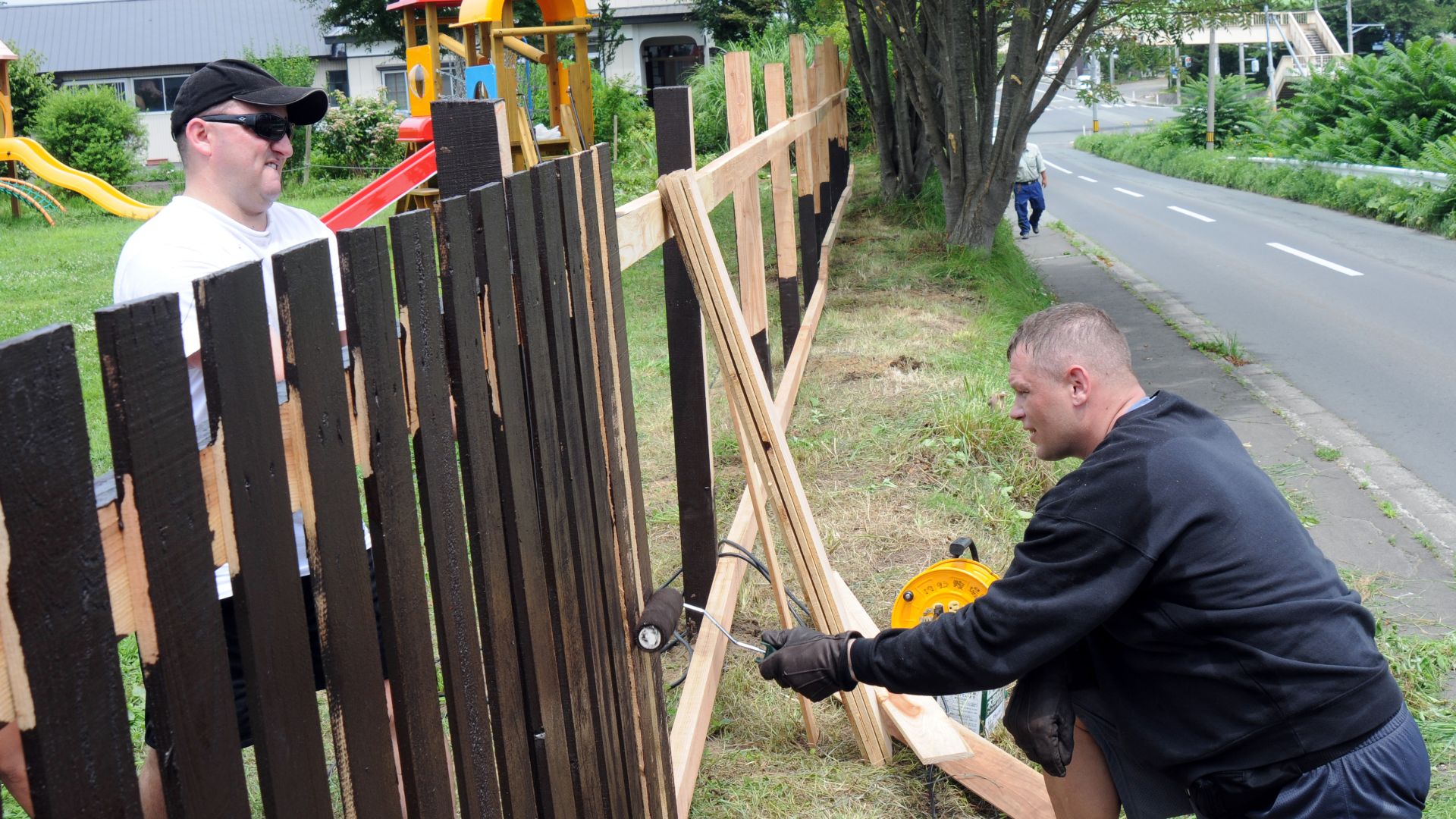 U.S. Navy photo by Mass Communication Specialist 2nd Class Matthew M. Bradley on Wikimedia
They’re rethinking where people live and how that connects to mobility. Woven City, their experimental smart city at the base of Mount Fuji, brings it all together. The project tests autonomous vehicles, robotics, and smart homes operating as one system. If it succeeds, the model could spread far beyond Japan.
Toyota’s housing vision tackles rising costs and climate pressures with factory‑built, energy‑smart solutions. More than homes, they’re designing integrated communities that connect mobility, energy, and living—reshaping how future societies will function worldwide.