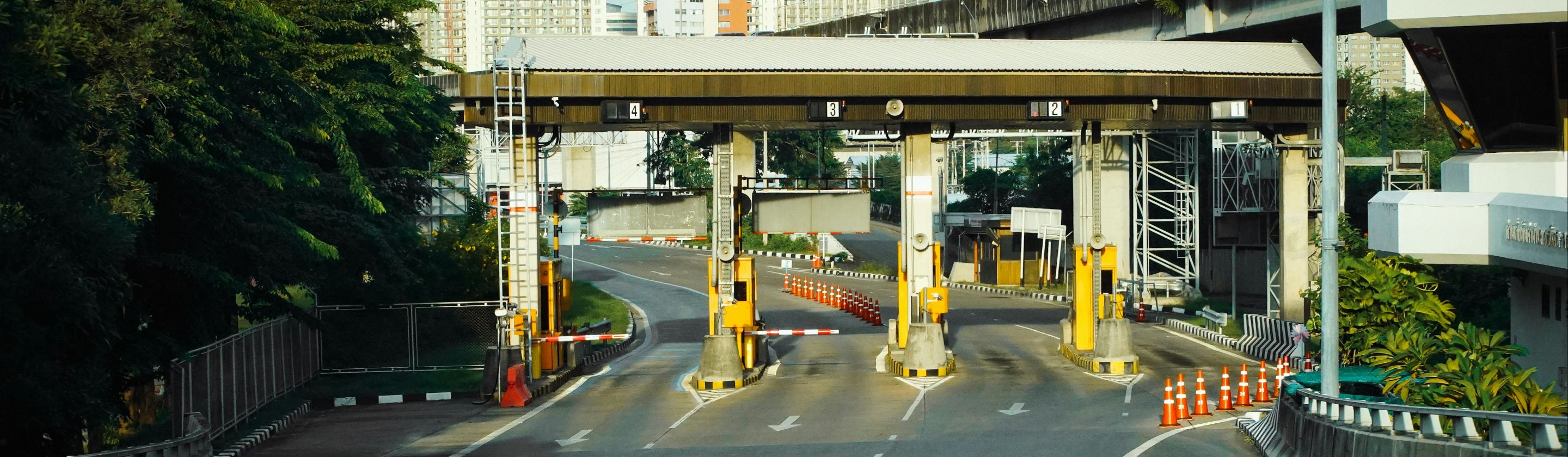
You drive through a toll gantry at highway speed, no booth, no attendant, no stopping, and somewhere between three and five seconds later a system has identified your vehicle, located your account, and charged you money. The whole transaction happens faster than most people take to change the radio station, and most drivers never think about the infrastructure required to make it work. That infrastructure is substantial, and it has been quietly getting more sophisticated for longer than most people realize.
The technology stack behind modern toll collection sits at an intersection of optical engineering, machine learning, and database architecture that would have seemed implausible on public roads twenty years ago. The United States collected approximately $15.5 billion in toll revenue in 2022, according to the Federal Highway Administration, and an increasing share of that was processed without any human involvement at any stage. Understanding how the cameras actually make the identification tells you something worth knowing, not just about toll roads, but about how automated recognition systems work at scale in the physical world.
The Camera Is Only Half the Story
The hardware mounted above a toll gantry typically includes two distinct imaging systems working in parallel. A standard high-resolution camera captures a visible-light image of the vehicle and its license plate, while an infrared camera operates simultaneously to handle low-light conditions, heavy rain, and the motion blur that comes with vehicles traveling at highway speeds. Most modern systems shoot at shutter speeds fast enough to freeze a plate on a vehicle moving at 75 miles per hour without significant degradation. The image quality requirements are stricter than they appear, because the downstream recognition software depends on legible characters, and a blurred or partially obscured plate pushes the transaction toward manual review, which costs money.
Optical character recognition, the software layer that reads the plate number from the image, has improved substantially over the past decade alongside broader advances in machine learning. Early OCR systems trained on license plates struggled with certain character combinations, regional plate fonts, and damage or dirt that obscured individual letters or numbers. Contemporary systems trained on neural networks perform considerably better, with accuracy rates that vary by vendor but routinely exceed 95 percent in favorable conditions. The remaining percentage sounds small until you apply it across millions of transactions daily, which is why every system also maintains a manual review queue for low-confidence reads.
The plate read, once confirmed, is matched against a registration database. In the United States, this happens through agreements between toll authorities and state departments of motor vehicles, allowing operators to look up the registered owner of any plate captured on their system. The specific legal framework governing these lookups varies by state, but the practical result is that your plate number functions as a direct link to your name, address, and billing information without requiring any prior enrollment in a toll program.
The Transponder Layer
The radio-frequency side of toll collection runs in parallel with the camera system and, for enrolled drivers, takes precedence. Transponders like E-ZPass, SunPass, and FasTrak communicate with antennas embedded in the gantry using dedicated short-range communications, a radio protocol operating at 915 megahertz in most North American implementations. The transponder broadcasts a unique identifier, the gantry reads it, and the system matches it to an account in a fraction of a second. The camera still fires on every transaction, because the image provides a redundancy check confirming that the plate on the vehicle matches the account associated with the transponder.
The interoperability question, meaning whether your E-ZPass works in Florida or your SunPass works in Massachusetts, took years to resolve and is still not universal. The E-ZPass Group, a consortium of 19 agencies across 17 states, standardized on a compatible protocol early enough to build genuine interoperability across the northeast and midwest. Other regions developed parallel systems, and the process of stitching them together has involved bilateral agreements, shared clearinghouse infrastructure, and considerable negotiation.
What most drivers do not realize is that the camera system is always running, regardless of whether you have a transponder. If you drive through an all-electronic toll facility without an account, the camera read becomes the primary identification method and the transaction routes toward a license plate billing process, sometimes called pay-by-plate, which mails an invoice to your registered address. The convenience fee attached to these invoices, which can be substantial on some systems, is partly a cost recovery measure and partly a deliberate incentive to push drivers toward transponder enrollment.
What the System Remembers
The data generated by toll transactions does not disappear after the charge processes. Toll records constitute a detailed log of where a vehicle was, at what time, and in which direction, and that data has a documented history of appearing in legal proceedings. The American Civil Liberties Union has flagged toll records in multiple reports on location data privacy, noting that they have been subpoenaed in criminal cases and civil litigation. In 2019, reporting by The Intercept and other outlets highlighted how law enforcement agencies had accessed toll data through formal and informal channels in ways that drivers who simply thought they were paying a road fee had no particular reason to anticipate.
The retention periods for toll transaction data vary significantly by agency and by state law. Some authorities delete transaction records within a few months of a cleared payment. Others retain them for years, and the policies are not always clearly disclosed to drivers at the point of enrollment.
None of this means the technology is nefarious in its basic function. Moving traffic through toll collection points without stopping vehicles is a genuine public benefit, and the accuracy of modern systems has reduced billing errors significantly compared to earlier generations of automated collection. What it does mean is that a transaction that feels momentary and routine is actually the visible surface of a system with considerable depth, one that knows where you were, charges you accordingly, and holds onto the record for longer than most people would guess.