
You did it: you finally got your license! Now, it's time for the other exciting part: figuring out what car you'll actually be driving. You might be tempted to jump into the first car available to you, but for new drivers, the decision of what vehicle to drive carries a lot more weight than it might seem on the surface. After all, the wrong vehicle can make an already steep learning curve even harder to manage.
While there's no single answer that works for everyone, since budgets, living situations, and personal comfort levels all play into the equation, there are a few key considerations that can help narrow down the options and point you in the right direction. Whether you're buying your first car or inheriting one from a family member, here are a few things you'll want to keep in mind before you grab the keys and take it for a spin.
Size Does Matter
One of the first things to consider is the physical size of the vehicle you'll be driving in. Sedans tend to be the go-to recommendation for new drivers, and for good reason: they're maneuverable, easy to park, and give you a relatively straightforward sense of the car's boundaries. When you're still getting used to judging distances and navigating tight spaces, a mid-size sedan keeps things manageable without feeling too cramped.
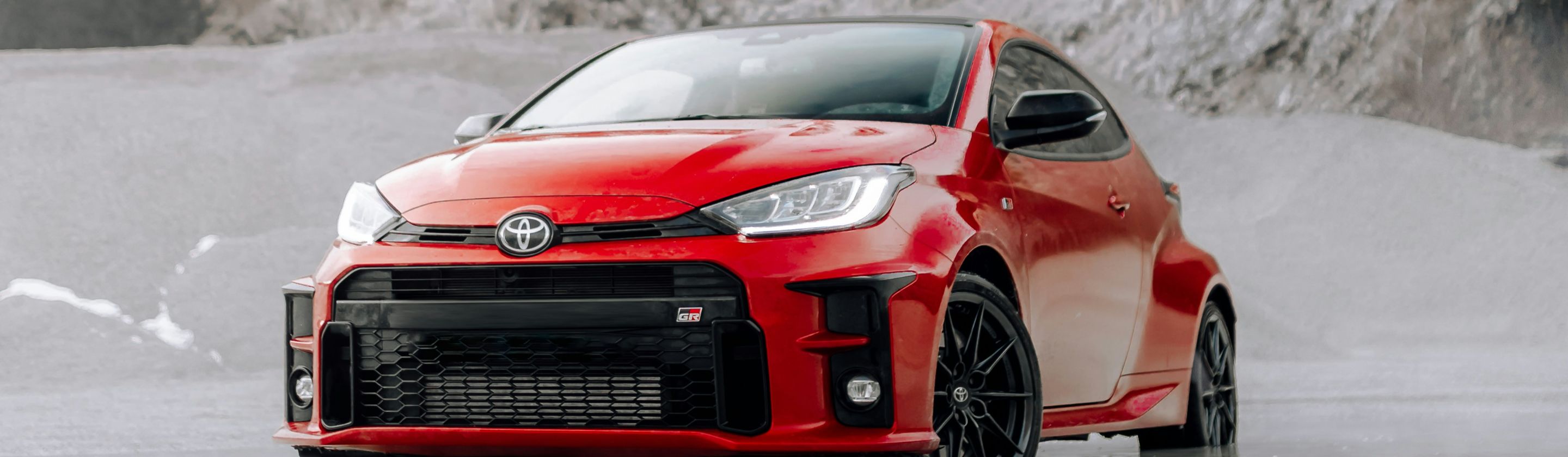
Ultra-compact cars, like the Honda Fit or Toyota Yaris, take that maneuverability even further and can be particularly useful in busy urban environments where parking is scarce. However, you should also keep in mind that their smaller size can sometimes make highway driving feel less stable, especially at higher speeds or in adverse weather conditions. It's worth testing one out on a variety of road types before committing.
SUVs, on the other hand, are a common household vehicle that many new drivers end up learning in simply because that's what the family owns. While they offer better visibility from a higher seating position, they also come with wider blind spots, a longer body to account for when parking, and a higher center of gravity that affects how they handle turns. If an SUV is your only option, spending extra time practicing in parking lots and on quieter roads before hitting busier streets is a smart move.
Older vs. Newer Models: Do Safety Features Help or Hinder?
Modern vehicles come loaded with driver-assistance technology: backup cameras, lane departure warnings, automatic emergency braking, and blind-spot monitoring, to name a few. For new drivers, these features can provide an added layer of protection while they're still developing their instincts behind the wheel. A backup camera, for instance, is now federally mandated in all new cars sold in the U.S. since 2018, precisely because of the safety benefits it offers.
Yet, for all its perks, the counterargument is that relying too heavily on technology can prevent new drivers from building the spatial awareness and situational judgment they need long-term. There's a real difference between checking your mirrors and surroundings constantly when reversing and only staring at a screen that tells you exactly what to do; the former builds a skill set that serves you across every vehicle you'll ever drive, while the latter might put you in trouble should your sensors and cameras ever fail. Experts often recommend using these features as a supplement to good driving habits rather than a replacement for them.
The practical takeaway is that, while a newer car with modern safety features is generally the safer choice for a new driver, you should still know how to drive without leaning on those systems as a crutch. If you're learning in an older vehicle without any driver-assistance tech, the upside is that you're being forced to develop solid fundamentals from day one. Both approaches can work, but each comes with trade-offs worth discussing with whoever is teaching you to drive.
Hand-Me-Downs vs. Buying New
There's a certain practicality to learning on a used car, especially one that's been passed down from a parent or older family member. The financial pressure is lower, and there's less anxiety about the inevitable minor scratches and parking lot dings that come with being a new driver. A hand-me-down also usually comes with a known maintenance history, which can be reassuring compared to buying a used car from a stranger.
The downside is that older hand-me-downs may be missing safety features that are now considered standard, from updated airbag systems to the electronic stability control that's been required in all new U.S. passenger vehicles since 2012. Before accepting a hand-me-down, it's worth having a mechanic inspect it and cross-referencing the make and model on the NHTSA safety ratings database to understand what you're working with.
Buying new isn't always a realistic option, but if the budget allows for it, a new or certified pre-owned vehicle does offer peace of mind that's hard to put a price on. Certified pre-owned programs through manufacturers typically include multi-point inspections and extended warranties, which can bridge the gap between the affordability of used cars and the reliability of brand-new ones.
Ultimately, the best car for a new driver isn't necessarily the most expensive or the most feature-rich; it's the one that fits their environment, builds their confidence, and keeps them safe while they find their footing on the road. Happy driving!