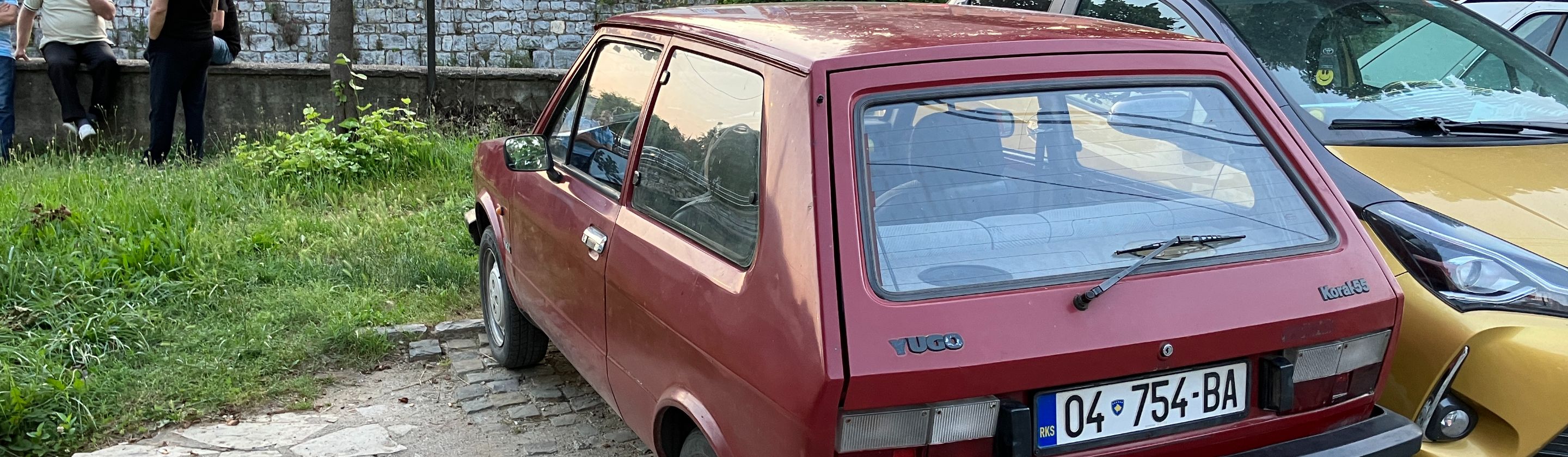
 Michael Gil from Toronto, ON, Canada on Wikimedia
In 1985, a scrappy little car rolled off the boat and into American dealerships with a price tag that made jaws drop: $3,990. The Yugo GV promised to be the cheapest new car in America, and for a hot minute, that promise worked like magic. Malcolm Bricklin, the entrepreneur behind the car's U.S. launch, sold nearly 50,000 units in that first year alone.
Americans were curious, cash-strapped, and ready to take a chance on this quirky Yugoslav import. But by 1992, the Yugo had vanished from American roads, leaving behind nothing but jokes, regrets, and a reputation as possibly the worst car ever sold in the United States. So what went wrong? Pretty much everything.
Built On A Shoestring, Held Together By Hope
The Yugo GV wasn't exactly engineered from scratch. It was essentially a licensed copy of the Fiat 127, a design that was already outdated by the time Yugoslav manufacturer Zastava got its hands on it in the late 1970s. While Fiat had moved on to newer models, Zastava was working with aging tooling, inconsistent quality control, and a supply chain that couldn't keep up with demand.
The result was a car that felt cheap because it was cheap. Panel gaps were inconsistent, paint jobs were thin and prone to chipping, and the interior plastics felt like they'd crack if you looked at them too hard. Under the hood sat a 1.1-liter engine producing a wheezing 55 horsepower, which meant merging onto highways became a white-knuckle experience.
As per sources, the carburetor was temperamental, the electrical system was prone to shorts, and the manual choke required a delicate touch that most American drivers simply didn't have. Quality control was practically nonexistent, with cars arriving at dealerships with missing parts, misaligned doors, and mysterious rattles that no mechanic could quite pin down.
The Perfect Storm Of Bad Timing And Worse Execution
 irina slutsky from san francisco, USA on Wikimedia
Even if the Yugo had been mechanically sound, it faced impossible odds. Zastava's factory workers were operating in a country that was economically collapsing and politically fragmenting. By the early 1990s, Yugoslavia was descending into civil war, and international sanctions made importing parts—or entire cars—nearly impossible.
Dealerships couldn't get replacement parts, leaving broken Yugos stranded in driveways across America. Bricklin's distribution network crumbled, and warranty claims went unanswered. The final nail in the coffin came from the court of public opinion. The Yugo became a cultural punchline, featured in late-night monologues and worst-car lists.
Consumer Reports famously warned buyers to avoid it entirely, and word-of-mouth reviews were brutal. When a Yugo was blown off the Mackinac Bridge in Michigan during a windstorm in 1989, the jokes practically wrote themselves. By the time Zastava stopped exporting to America in 1992, fewer than 1,000 units were being sold annually. The Yugo GV had gone from curious newcomer to cautionary tale in less than a decade.