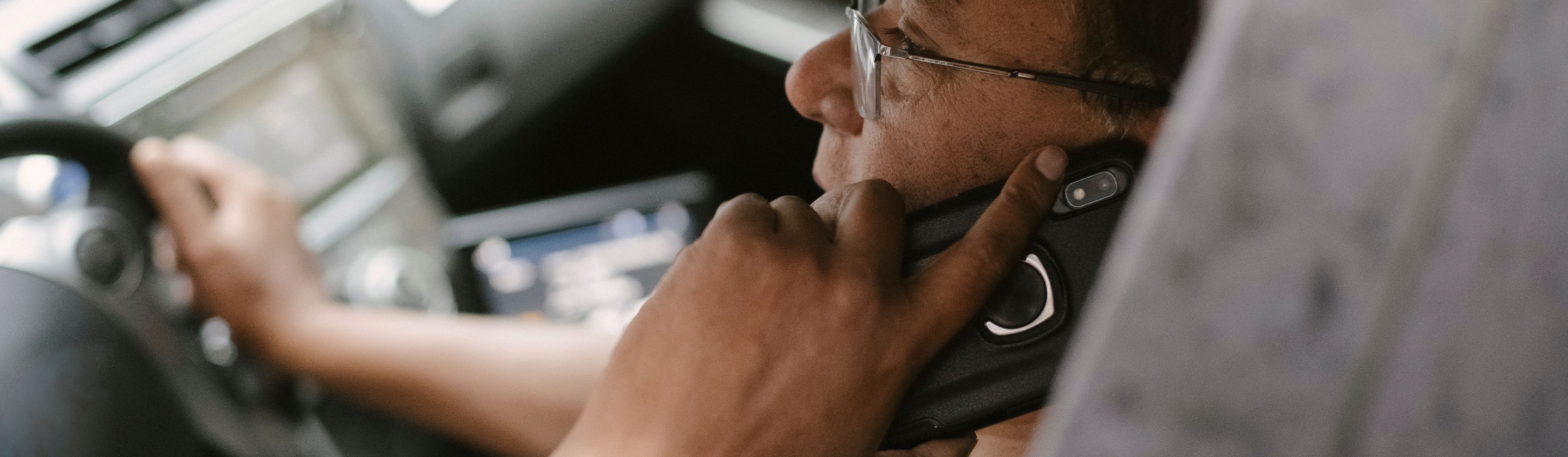

When most people picture distracted driving, they picture someone texting at a red light or scrolling through their phone while cruising down the road. That mental image isn't wrong, but it's incomplete, and it's led a lot of otherwise careful drivers to believe they're in the clear simply because their phone is tucked away in a bag or a cupholder. The truth is that distraction comes in far stranger and more mundane forms than most people realize, and plenty of them have nothing to do with a screen at all.
To reiterate, distracted driving is any activity that diverts attention from the road, whether that's talking on the phone, eating, adjusting the stereo, or anything else that pulls focus from the task of driving. You might think a second of inattention isn't enough to do serious damage, but in 2024 alone, distraction-affected crashes killed 3,208 people and injured an estimated 315,167 more in the United States. Those numbers only capture what's reported, too; researchers believe the real toll is significantly higher once you account for distractions that never make it into a police report. With that in mind, here's a closer look at some of the less obvious ways drivers lose focus behind the wheel.
Driving with Kids and Pets
A crying infant in the backseat can turn even a short drive into a genuine test of nerves, and it's tempting to twist around, reach back, or fumble for a pacifier while the car is still moving. That instinct to soothe a baby overrides the instinct to keep your eyes forward, even for drivers who'd never dream of checking a text message mid-drive. The safest move is always to pull over first; a few minutes lost on the shoulder is a far better trade than a few seconds of taking your eyes off the road.
Pets present a similar problem, especially dogs that like to climb into the front seat or paw at the window controls. A cat that's escaped its carrier and is prowling around your feet or the dashboard can be even more disruptive, since cats tend to move fast and unpredictably. Either scenario forces you to split your attention between driving and managing an animal that has no understanding of what's at stake.
Older kids bickering, dropping toys, or unbuckling their seatbelts create the same kind of pull, just with more noise attached. It's easy to underestimate how much mental bandwidth goes into monitoring what's happening behind you, even when your eyes are technically on the road ahead. Many parents don't think of this as "distracted driving" in the traditional sense, but the data doesn't draw that distinction, and neither does the pavement in front of you.
Sudden Distractions
A wasp or spider suddenly appearing on the dashboard triggers a reaction most people can't fully control, and that reaction often includes swatting, swerving, or briefly closing your eyes. It sounds almost comedic until you consider that drivers have caused serious crashes trying to kill or escape an insect that posed no real threat to begin with. The panic response happens faster than rational thought, which is exactly what makes it so dangerous in a moving vehicle.
Rummaging through the back seat or glove compartment for something you suddenly need, whether it's a phone charger, a fallen water bottle, or a piece of paperwork, is another habit that feels harmless in the moment. It isn't. Even a few seconds of looking away from the road at highway speed covers a startling amount of distance, roughly the length of a football field when you're going 55 mph. Reaching for something out of sight combines that visual distraction with a physical one, since your hands and often your torso are no longer oriented toward driving.
Spilled coffee or food is its own category of chaos, prompting an instinctive grab for napkins or a scramble to keep liquid off your lap. The urge to clean up immediately is strong, but it's rarely urgent enough to justify diverting attention from traffic. Waiting until you've reached a stoplight or pulled over costs you almost nothing compared to the risk of reacting in the moment.
Curiosity and Habit Behind the Wheel
Rubbernecking, or slowing down to stare at an accident, a police stop, or anything unusual on the roadside, is another one of the most common distractions on the road, and it's rarely treated as seriously as it should be. Drivers often don't even register that they've drifted within their lane while craning their neck to look, which is precisely how secondary crashes happen near the scene of a first one. Curiosity feels passive, but it has the same effect on reaction time as any other distraction.
Adjusting mirrors, seats, or climate controls mid-drive is another habit that feels like routine car maintenance rather than a risk. Fiddling with a stubborn air vent or trying to find the right seat position while merging onto a highway takes just enough attention away from your surroundings to matter. These small, physical distractions are easy to dismiss because they don't involve a phone, yet they demand the same visual and manual attention that texting does.
Daydreaming, sometimes called "mind wandering" by researchers, might be the least visible distraction of all, since it doesn't require touching anything or looking away from the windshield. Your eyes can be pointed straight ahead while your brain is somewhere else entirely, running through a conversation or planning the rest of your day. This kind of cognitive distraction is harder to catch in yourself precisely because it feels like nothing is happening.
All of this just goes to show that distracted driving isn't limited to phones. From fussy passengers to idle curiosity, many things can pull our focus away from the road. So the next time you think you're safe just because you've pocketed your phone out of sight, think again.