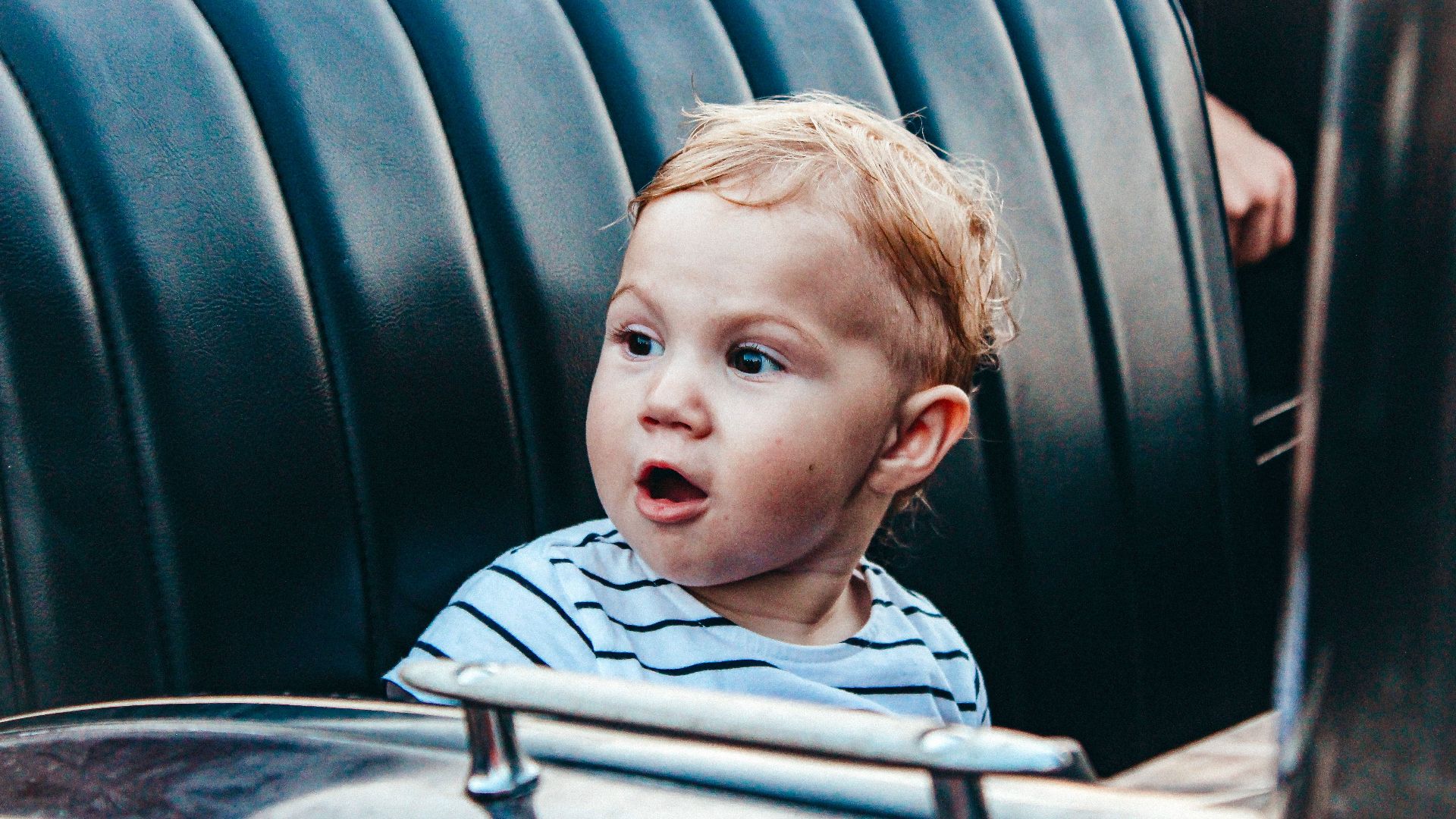
Long before anyone learned to negotiate a raise or read a passive aggressive email, they were mastering conflict in the back seat of a family sedan, wedged between a sibling and a door handle, defending territory that technically belonged to nobody. The back seat asked nothing of you except to survive a car ride, and somehow it still managed to produce some of the most sophisticated interpersonal strategy of an entire childhood.
Parents up front tend to remember the shouting and the eventual threat to turn the car around. What they rarely clocked was the quieter operation happening behind them, a running campaign of territory disputes, plausible deniability, and calculated provocation that would put most corporate negotiators to shame.
The Invisible Line Down The Middle
Every back seat eventually produced a border, an invisible line down the middle seat that no treaty ever authorized but every sibling somehow agreed to defend. An elbow crossing that line was not an accident, it was an incursion, and retaliation followed with the seriousness of an actual territorial dispute rather than a few inches of vinyl upholstery.
The genius of the arrangement was how it operated entirely on unspoken rules. Nobody drew the line with a ruler or negotiated its terms out loud, yet every sibling in the car understood exactly where it sat and exactly how much force a violation justified. Enforcement got handled through a shared, unofficial legal system built entirely on precedent and vibes.
What made the line so effective as a training ground was the total absence of adult oversight. Parents up front could not see six inches of seat cushion, which meant every skirmish over that space got resolved through pure sibling diplomacy, or the complete lack of it, long before either party had the vocabulary to describe what they were actually doing.
The Art Of Doing Nothing Wrong
Provocation only worked if it stayed technically invisible, which is how an entire generation of siblings became fluent in the art of doing something without appearing to do anything. The finger held an inch from someone's arm, close enough to count as touching without touching, was basically a diplomatic incident engineered specifically to survive a parent's rearview mirror glance.
The genius move was always plausible deniability. A sibling could stare at the other sibling with total blankness, offer no words, make no physical contact, and still manage to escalate a fight to a fever pitch purely through eye contact and posture. When accused, the response arrived instantly and with total conviction, insisting nothing had happened at all, since nothing technically had.
This was conflict conducted almost entirely below the threshold of provable evidence, and it required real skill. Reading exactly how far a look or a sigh could go before triggering a real reaction, then calibrating the next provocation accordingly, demanded the kind of social precision most adults still have not fully mastered in their actual careers.
Why It Actually Mattered
Sibling conflict happens far more often than most parents realize or want to admit. Psychologist Laurie Kramer's research at Northeastern University found that siblings between the ages of four and eight can rack up as many as eight fights an hour, a volume that makes the back seat look less like an anomaly and more like a fairly average sample of sibling life in general.
That frequency turns out to matter for a reason beyond parental sanity. Researchers who study sibling relationships generally treat this kind of low-stakes, constant friction as an early rehearsal space, a place kids practice reading tone, testing boundaries, and negotiating resolution long before those skills get applied anywhere that actually counts, like a friendship or a workplace.
None of that made the back seat feel like child development research in the moment. It felt like war, complete with a demilitarized zone down the middle seat and a ceasefire that lasted only until someone's foot drifted one inch too far to the left. Looking back, though, that back seat was quietly teaching a generation of siblings how to fight, how to bluff, and eventually, however reluctantly, how to make up.