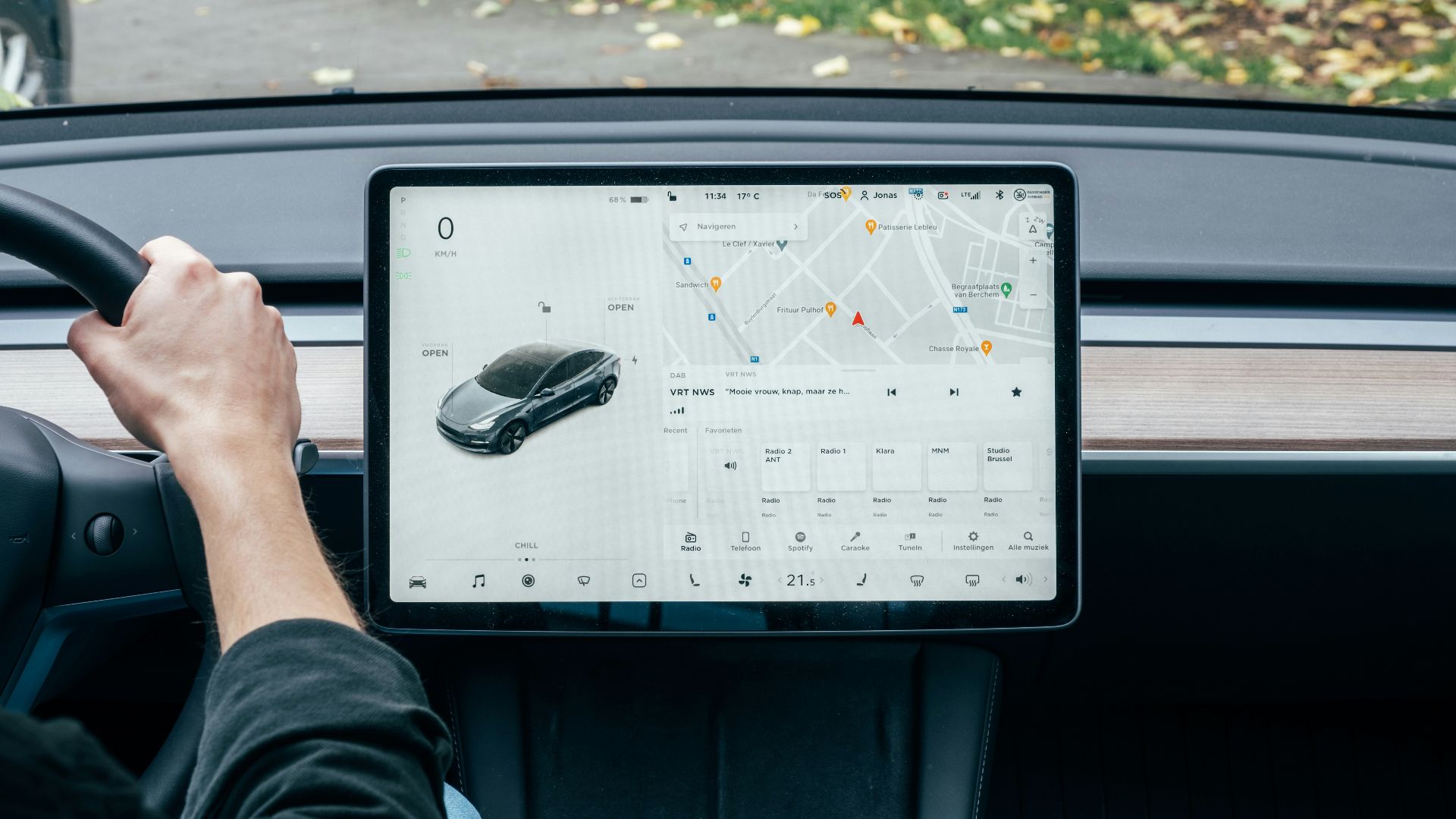
For most of the twentieth century, a car dashboard asked very little of you. A speedometer, a fuel gauge, maybe a temperature needle that you ignored until it turned red. The relationship between driver and dashboard was simple: you glanced, you noted, you drove. The car didn't have opinions about how you were doing it.
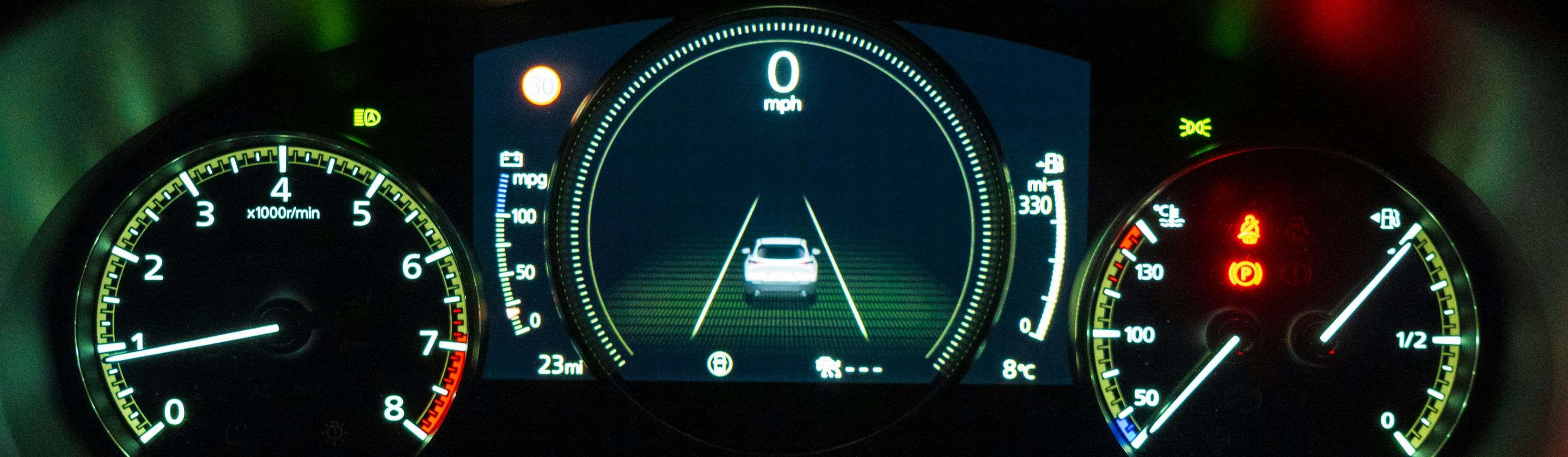
That relationship has fundamentally changed. The dashboard in a modern vehicle has become a dense, opinionated interface that monitors your behavior, second-guesses your decisions, and nudges you toward its preferred version of how driving should go. It tracks your speed relative to the limit, logs your fuel efficiency in real time, alerts you when you drift, and in some models, watches your eyes to see if you're paying attention. The car is still yours. The dashboard increasingly acts like it isn't.
From Gauges to Guardians
The original instrument cluster was a masterpiece of restraint. Early production vehicles gave drivers a handful of analog readouts and trusted them to interpret the information. Even through the 1980s and 1990s, dashboards stayed relatively spare. The average car had around 30 to 40 warning indicators. Today, a mid-range vehicle can carry over 200 distinct sensor inputs feeding into the cluster and infotainment system.
The shift accelerated with the arrival of CAN bus architecture, the standardized communication system that lets a car's dozens of electronic control units talk to each other. Once every system in the vehicle could share data with a central display, manufacturers had both the capability and the incentive to surface more of it. Capability became feature. Feature became selling point. And the dashboard grew.
The problem is that more information is not always more useful. Research from the AAA Foundation for Traffic Safety has found that high-tech dashboard features, including voice-command systems, navigation displays, and integrated infotainment, can impose significant cognitive demand on drivers even when hands stay on the wheel. The study measured mental workload across a range of in-vehicle systems and found some tasks produced levels of distraction that persisted for up to 27 seconds after the interaction ended.
The Car That Grades Your Driving
Modern dashboards don't just report; they evaluate. Fuel economy displays showing real-time miles per gallon have been standard for years, but the behavioral nudging goes deeper than that now. Systems like Ford's SmartGauge and various eco-coaching interfaces actively score your acceleration, braking, and coasting habits, then display that score so you can feel appropriately judged at a red light.
Lane-keeping alerts, forward collision warnings, speed limit overlays, and driver attention monitors all operate on a similar logic: the car has a model of correct driving behavior, and it will let you know when you deviate from it. Some of these systems are genuinely life-saving. The National Highway Traffic Safety Administration has credited automatic emergency braking with meaningful reductions in rear-end collision rates. The safety case for some of this technology is real and well-documented.
The friction comes when the volume of alerts outpaces a driver's ability to process them meaningfully. A 2022 J.D. Power study found that driver-assistance alerts were among the leading sources of owner dissatisfaction with new vehicles, with many owners describing the warning frequency as distracting rather than helpful. When a dashboard cries wolf often enough, drivers begin tuning out the alerts entirely, including the ones that matter.
The Data Leaving Your Driveway
The dashboard's authority doesn't stop at the windshield. A growing slice of the insurance industry now offers telematics programs, think Progressive's Snapshot, State Farm's Drive Safe and Save, and similar products, where a plugin device or built-in system monitors your driving behavior and feeds that data back to the insurer. Acceleration patterns, hard braking events, the times of day you drive, and how many miles you cover all become inputs into your premium calculation.
Automakers themselves collect substantial data through connected vehicle platforms. A 2023 investigation by the Mozilla Foundation found that major manufacturers including Nissan, Toyota, and Honda collected highly personal data through their vehicles, with some privacy policies disclosing the potential to share or sell that information to third parties. The dashboard interface is the visible face of this system, but the data collection runs in the background whether you're watching the screen or not.
None of this is an argument for going back to a single fuel gauge and a prayer. The question worth sitting with is whether you've consciously decided how much authority your dashboard gets over your driving experience, or whether that decision got made for you somewhere in the options package. The car is a tool. The dashboard is increasingly a perspective on how you should use it, and perspectives, unlike speedometers, have agendas.