

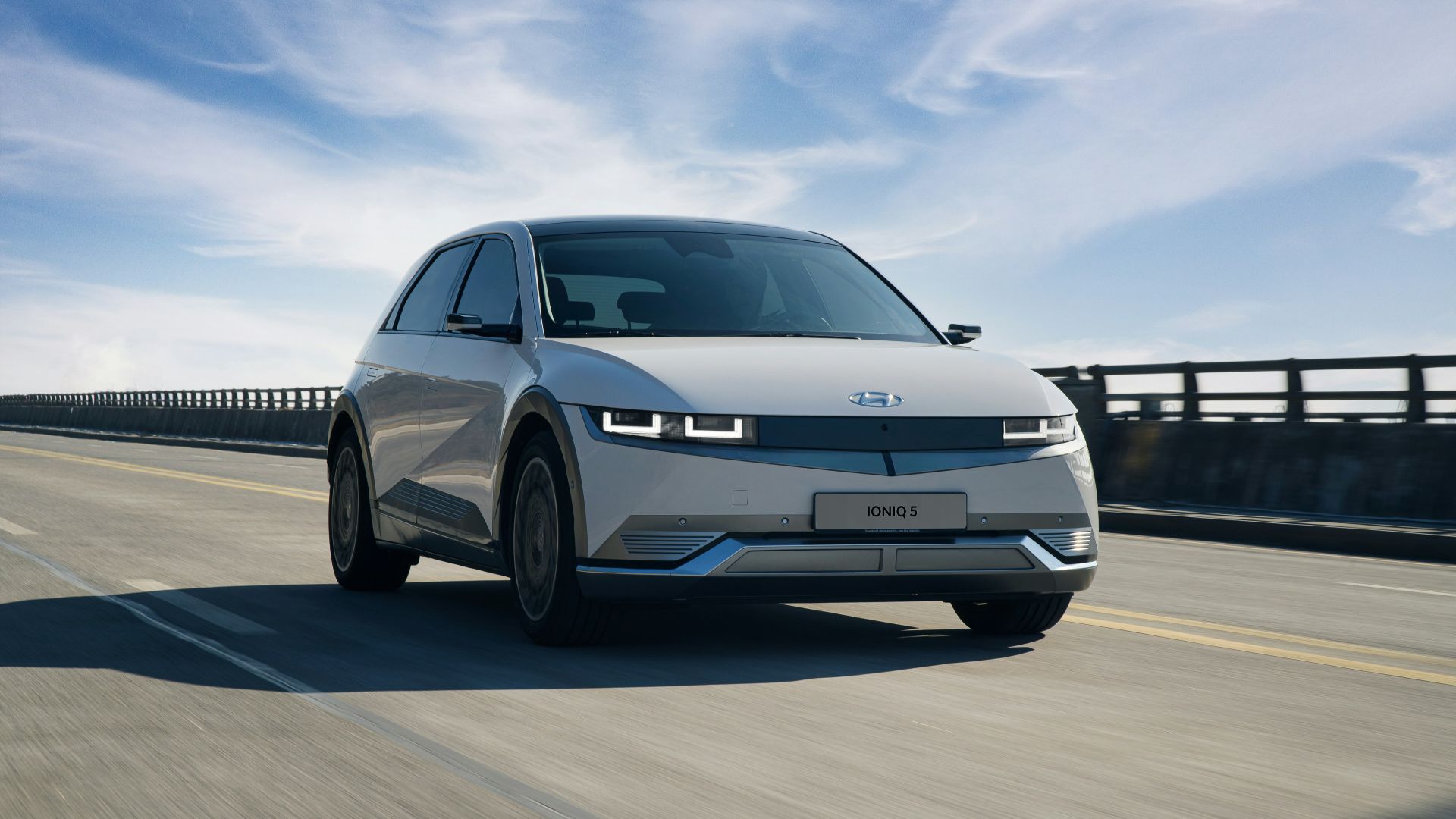
 Hyundai Motor Group on Unsplash
Electric cars have developed a reputation for being surprisingly quick, even when they aren’t marketed as performance vehicles. Press the accelerator in many EVs, and you get hurled forward in a way that ordinary gasoline-powered cars often struggle to match. That sudden burst of speed isn’t a trick, nor does it depend entirely on enormous horsepower figures.
The difference comes from how electric motors produce power, how EVs deliver it to the wheels, and how their electronic systems manage traction. Just like with gas cars, some electric vehicles are still faster than others, but the basic technology gives nearly all of them an advantage when pulling away from a stop. Once you understand what’s happening beneath the floor, the acceleration makes much more sense.
Electric Motors Deliver Power Immediately
The biggest reason electric cars accelerate so quickly is that their motors can produce strong torque almost as soon as they begin turning. Torque is the twisting force that helps move a vehicle forward, and electric motors don’t need to build up engine speed before delivering it. When you press the accelerator, the motor can respond almost instantly.
A gasoline engine works very differently. It usually produces its strongest torque within a particular range of revolutions per minute, which means the engine may need time to reach its most effective speed. Turbocharged engines can also experience a brief delay while the turbocharger builds pressure, even though modern systems have reduced that lag considerably.
Electric motors don’t rely on combustion, air intake, fuel injection, or a series of small explosions to create motion. Electricity flows from the battery to the motor, producing a magnetic force that turns the wheels through a relatively simple mechanical path. With fewer steps between your foot and the road, there’s less waiting for the car to react.
That immediate response is especially noticeable from a complete stop. Gasoline engines can be extremely powerful, but drivers often need to select the correct gear, raise the engine speed, or wait for the transmission to respond. An EV can simply apply a large amount of torque the moment the light turns green.
EVs Don’t Need Traditional Gear Changes
Most electric cars use a single-speed transmission rather than the multi-speed automatic or manual gearbox found in gasoline vehicles. Electric motors operate efficiently across a broad range of speeds, so they don’t need several gears to keep the motor within a narrow power band. This allows the car to continue accelerating without repeatedly interrupting power delivery.
In a traditional vehicle, every gear change creates at least a slight pause. Modern dual-clutch and performance automatic transmissions can shift incredibly quickly, but they still have to disengage one ratio and engage another. You may barely notice the process, yet those small interruptions matter when measuring acceleration.
An electric car usually sends power to the wheels in one smooth, continuous surge. There’s no engine note climbing toward a shift point, followed by a brief drop and another rise. The result can feel more dramatic because the acceleration remains steady instead of arriving in stages.
This doesn’t mean single-speed gearing is perfect for every situation. Some EVs lose part of their acceleration advantage at very high speeds, where traditional performance cars can use additional gears more effectively. For everyday driving and short acceleration runs, however, the simpler setup works extremely well.
Batteries, Traction, & Software Work Together
Electric cars are heavy because their battery packs add a substantial amount of weight. Normally, extra weight would make rapid acceleration more difficult, but the placement of that battery can actually help the car use its power. Most packs sit beneath the passenger compartment, creating a low center of gravity and improving stability.
Many high-performance EVs also use two or more motors, with separate units powering the front and rear wheels. This gives the vehicle all-wheel drive without requiring a conventional driveshaft running through the car. By sending power to all four tires, the system can create more grip when launching from a stop.
Electronic control plays an equally important role. An EV’s computers can adjust motor output extremely quickly, reducing power to a wheel the moment it begins losing traction. These corrections can happen more precisely than a driver could manage with the accelerator alone.
Launch-control systems take this coordination even further. The car prepares the motors, battery, and traction systems to deliver the strongest possible start while limiting wheelspin. In some models, the software can even warm or condition the battery beforehand so it’s ready to release maximum power.
Battery output also helps explain why some electric cars are much quicker than others. A large motor can only deliver its full potential if the battery can supply enough electrical energy without overheating or losing voltage. Performance EVs, therefore, require sophisticated cooling, powerful battery cells, and carefully designed electrical systems.
You may notice that an electric car doesn’t always accelerate as strongly when its battery is nearly empty or extremely cold. Low temperatures slow the chemical reactions inside the cells, while a low charge can reduce the power available to the motors. That’s why the fastest published acceleration figures are usually achieved under carefully controlled conditions.
Quickness from a stop is only one part of overall performance. Electric cars aren’t automatically unbeatable, and lightweight gasoline-powered sports cars can still offer advantages in handling, endurance, and sustained high-speed driving. Repeated hard acceleration can also create heat, causing some EVs to reduce power temporarily to protect their components.
Still, electric vehicles are unusually well-suited to short bursts of acceleration. Immediate torque, uninterrupted power delivery, strong traction, and fast-reacting software allow them to use their available energy remarkably effectively. That’s why even a practical electric family car can pull away with the urgency once associated mainly with expensive sports cars.