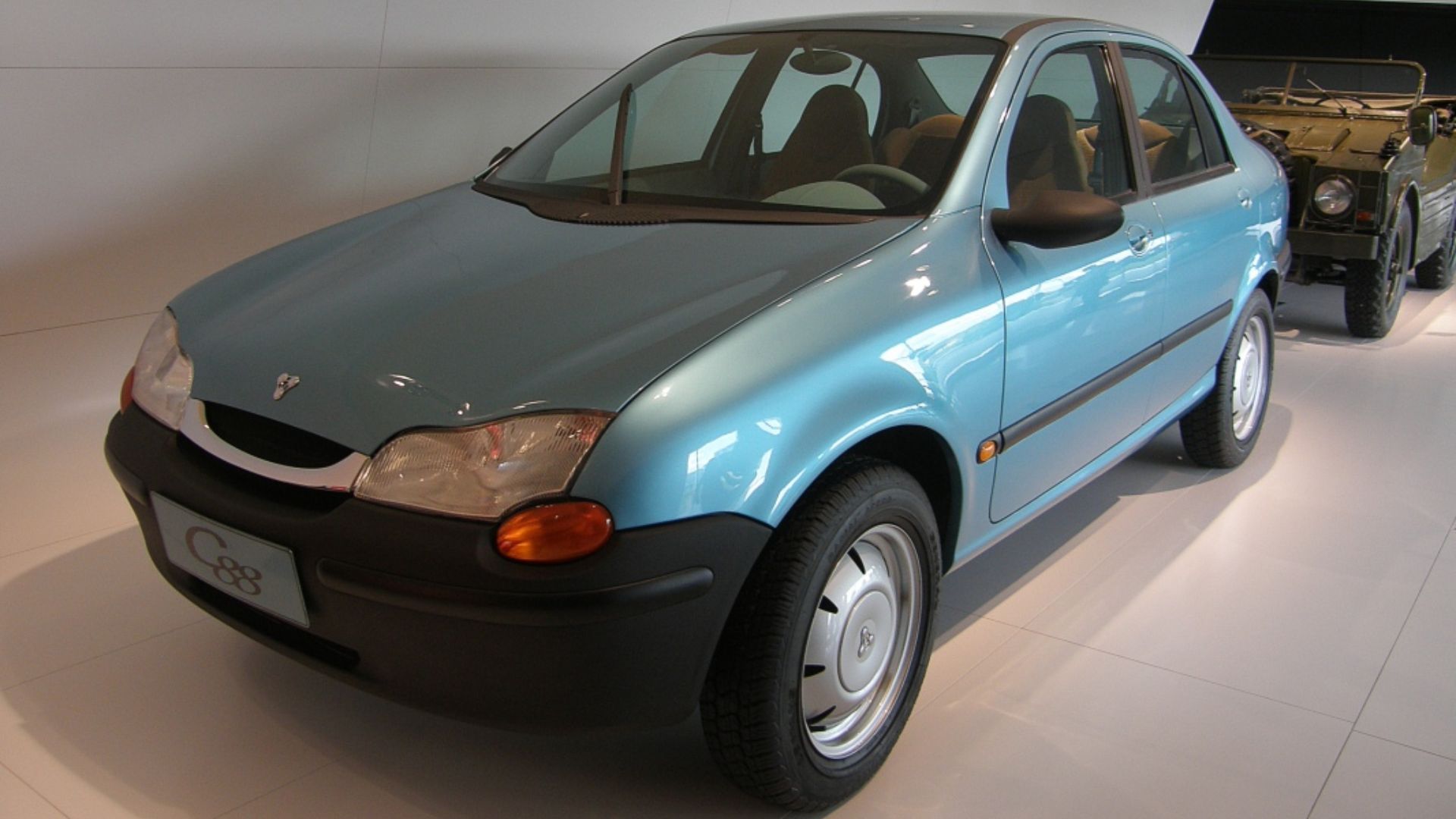
 © Ra Boe / Wikipedia on Wikimedia
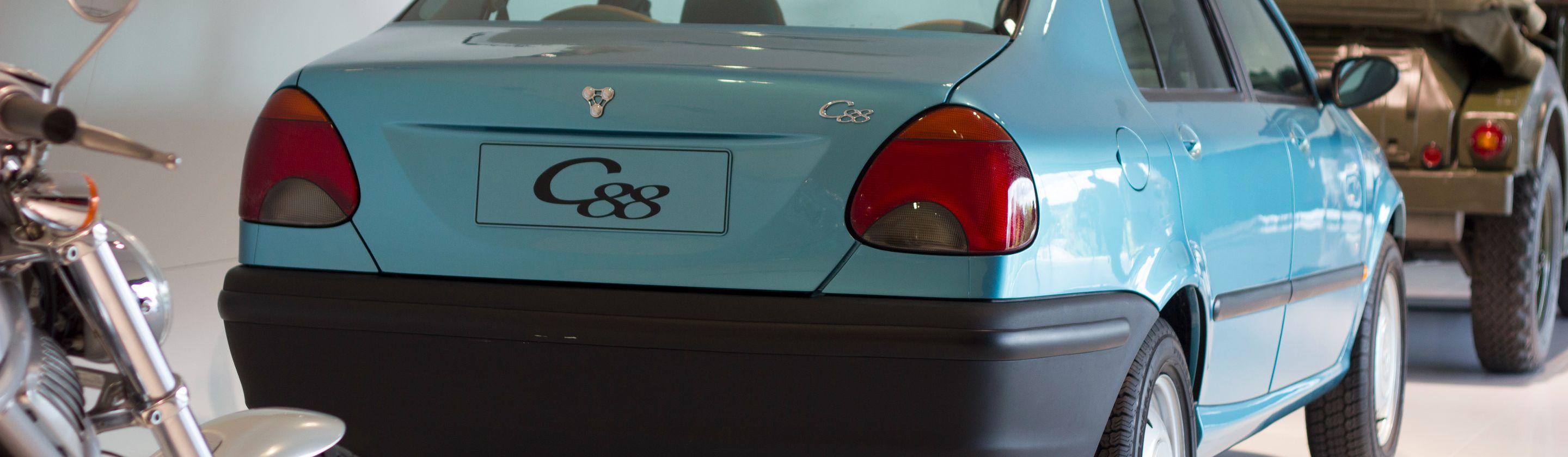
In 1994, Porsche built a small four-door family sedan with a 1.1-liter engine and a top speed of about 100 mph. It didn't wear a Porsche badge, and it was meant for a country where hardly anyone owned a car yet. One later headline joked that it looked just like a Saturn.
The car was called the C88, and it was Porsche's pitch to build China's people's car. It made it as far as a stage in Beijing before the whole program disappeared, and the only one ever built now sits in the Porsche Museum in Stuttgart.
China Went Shopping for a Family Car
Private cars were close to nonexistent in China at the time. Only about 4% of vehicles sold there went to private owners, with government agencies buying nearly all the rest. Streets in big cities still belonged mostly to bicycles, and a government report on the family car plan admitted a broad middle class probably wouldn't show up until sometime between 2005 and 2010.
That year, China's leaders put out a new policy for the auto industry and invited about 20 foreign automakers to propose a small, affordable family car. The winner was supposed to land a joint venture with state-owned First Automotive Works and a head start in a country of more than a billion people. Officials also made it clear they planned to keep out foreign automakers that weren't already building cars there, and they expected the industry to shrink to just three or four carmakers as it grew.
The field was crowded. Mercedes-Benz showed a tall, boxy one-box design that could be turned into a minivan or a small pickup, and Ford and Chrysler sent entries along with several others. (The Mercedes press photos even posed a family inside, with two parents and their one child up front and Grandma in the back.) Porsche, a company known for rear-engined sports cars, decided to compete with a sedan.
Porsche Built It in Four Months
Porsche needed the business. Sales had slumped badly in the early '90s, and the company's engineering arm already made a living doing development work for other carmakers. Porsche Engineering Services ended up drawing three different proposals for China.
Its engineers put the C88 together in just four months, borrowing ideas from the original Volkswagen Beetle. The name was picked with the audience in mind, with C for China and 88 because eight is a lucky number there. Under the hood sat a front-mounted four-cylinder making somewhere between 48 and 68 horsepower, enough to get to 62 mph in about 16 seconds. Its real-world rivals would have been cars along the lines of the Plymouth Neon, a long way from the 911 crowd. The whole car was a little over 13 feet long and weighed roughly 2,160 pounds.
The C88 skipped the Porsche crest. It wore a new triangle-shaped logo that stood for two parents and one child, a nod to China's one-child policy at the time. To get the details right, Porsche talked with Chinese business owners and journalists and brought an engineer and a technician over from China to work on the project. Of the three proposals, the C88 was the only one built at full size.
China Said Thanks and Moved On
Porsche took the pitch seriously. Wendelin Wiedeking, who had become CEO only the year before, reportedly delivered his speech at the unveiling in Mandarin, and the company promised to train Chinese specialists for a year so they could develop the car alongside Porsche's own engineers. The car itself would have been built in China.
The program didn't last. China was also fighting inflation that topped 24% in 1994, more than double the government's target, and the Chinese government canceled the Family Car Project in 1995, a few months after the automakers had shown their designs. Porsche's archive manager later said the government "said thank you very much and took the ideas for free" and claimed details of the C88 turned up in Chinese cars afterward.
Porsche then tried to sell the design to carmakers in India and found no takers. The prototype went into storage and only made rare public appearances for years afterward. Porsche went looking for volume a different way after that, and in 2002 it launched the Cayenne SUV.