
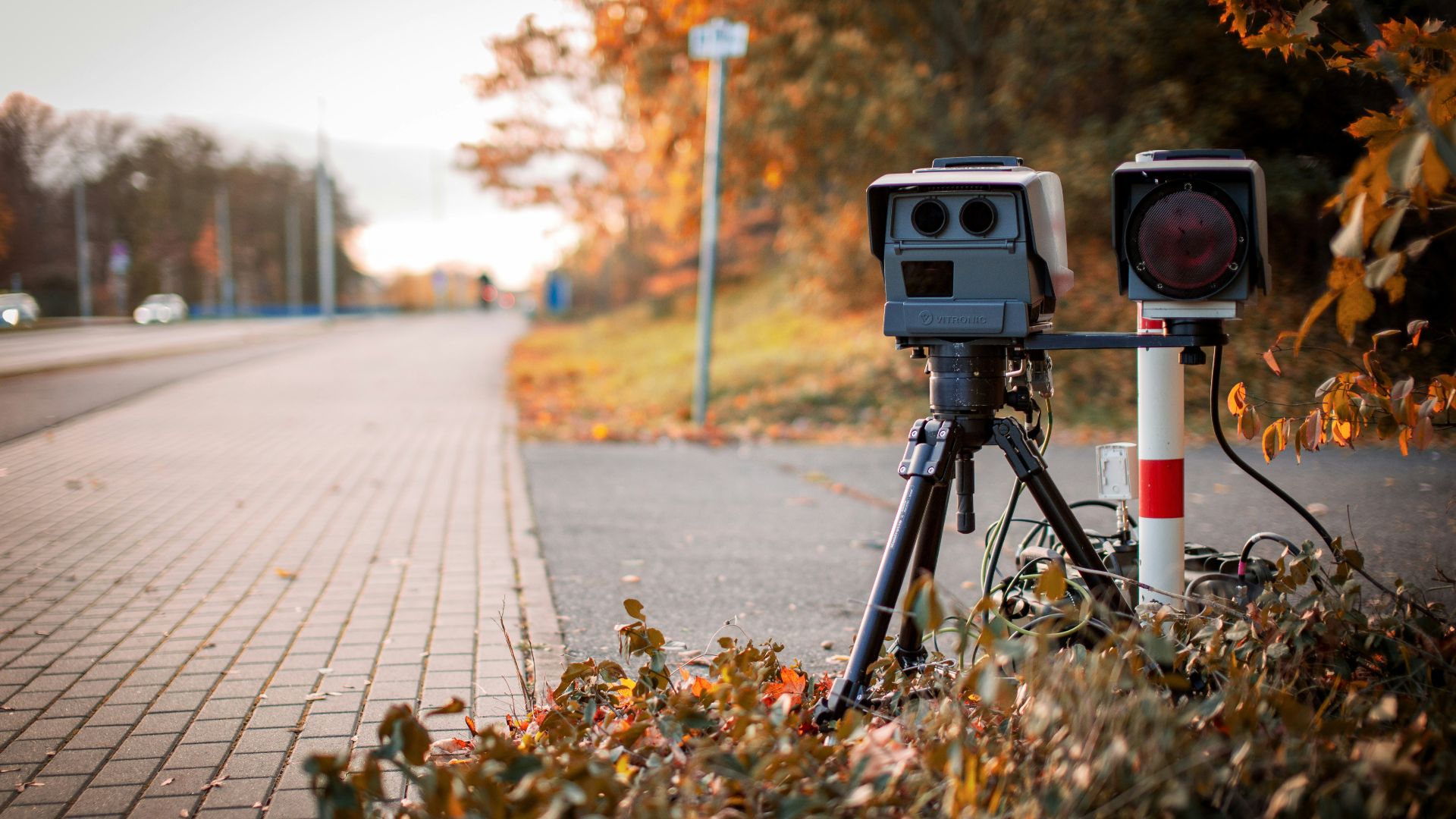
You don't see it coming. There's no cruiser idling behind a billboard, no radar gun aimed from a side street, no officer stepping into the road with a hand raised. There's a flash, or sometimes nothing at all, just a small box mounted to a pole above an intersection. A few weeks later, a notice arrives in the mail with a photograph of your license plate, a recorded speed, and a dollar figure attached. The interaction between driver and enforcement has been fully automated, and the middleman with the badge has been removed.
Automated speed enforcement has been spreading across American cities at a pace most drivers haven't tracked. The technology has outrun the public conversation about it, and the result is an enforcement system that operates on different logic than traditional policing, raises different questions about accountability and revenue generation, and has a genuinely complicated relationship with its own stated purpose of making roads safer.
The Technology Arrived Before the Debate Did
Speed cameras have been in use internationally for decades. The United Kingdom installed its first permanent Gatso radar camera on the A316 in Twickenham in 1992, and the British system eventually became one of the most extensive automated enforcement networks in the world. American cities were slower to adopt the technology, partly due to legal challenges and partly due to cultural resistance to enforcement that operates without direct human oversight.
Arizona was an early and instructive case. The state deployed a network of freeway speed cameras in 2008, one of the largest automated enforcement programs in U.S. history at the time, and dismantled it entirely by 2010 after sustained public backlash, a voter referendum threat, and widespread reports of cameras being vandalized and drivers wearing masks to defeat identification. The program ended, but the appetite for the technology among traffic engineers and municipal budget offices never did.
New York City's school zone speed camera program tells a different story. Beginning under a 2014 state law and expanding dramatically through subsequent legislation, the program grew to more than 2,000 active cameras by the early 2020s. The political framing around school zone cameras proved easier to sustain than general highway enforcement, because the safety argument is harder to oppose when children are the named beneficiaries. That rhetorical anchor is something broader automated enforcement programs have struggled to find.
The Revenue Question Nobody Wants to Answer Honestly
A 2022 ProPublica investigation revealed Chicago's speed camera program issued tickets at roughly double the rate in Black and Latino neighborhoods versus white ones from 2015–2019. The investigation documented how the program had become a significant revenue source, generating hundreds of millions of dollars over its operation. Chicago subsequently lowered the threshold for issuing tickets from 10 mph over the speed limit to 6 mph over, a change that dramatically increased ticket volume and the income that followed.
This is the tension running through every automated enforcement program. Cities face genuine fiscal pressure, enforcement cameras generate reliable revenue, and the safety rationale is simultaneously real and convenient. The cameras do capture speeding violations. They also produce income streams that municipal budgets come to depend on in ways that create institutional incentives to maximize ticket volume rather than maximize safety outcomes.
The structure of the fines compounds the problem. Fixed-dollar penalties for speeding, whether issued by an officer or a camera, represent a far larger share of income for a lower-earning driver than for a higher-earning one. Several European countries, including Finland and Switzerland, operate systems of proportional fines tied to income, a model that has produced some of the largest individual speeding fines ever recorded. American automated enforcement has made no such adjustment, which means the financial burden falls most heavily on the drivers least able to absorb it.
What the Evidence Actually Shows
The Insurance Institute for Highway Safety has published research showing that speed cameras, when properly implemented, do reduce average speeds and are associated with fewer injury crashes in the zones where they operate. A study of Washington D.C.'s camera program found measurable reductions in speeding at monitored sites. The safety effects are real, even if they're also geographically narrow, with drivers frequently slowing for the camera and accelerating again immediately after passing it.
The National Highway Traffic Safety Administration reported that speeding was a contributing factor in 29 percent of all traffic fatalities in 2022, accounting for roughly 12,151 deaths. That figure creates legitimate pressure on anyone designing road safety policy to use every available tool, cameras included. The safety case for automated enforcement is not manufactured.
What makes the current moment difficult is that the technology has scaled faster than the governance around it. Contracts with private vendors who operate cameras on a per-ticket revenue-sharing basis, opaque appeals processes, and inconsistent rules about camera placement have produced a system that varies wildly in its fairness and accountability depending on which city you're driving through. The cop car had real problems. At least you could see it coming.