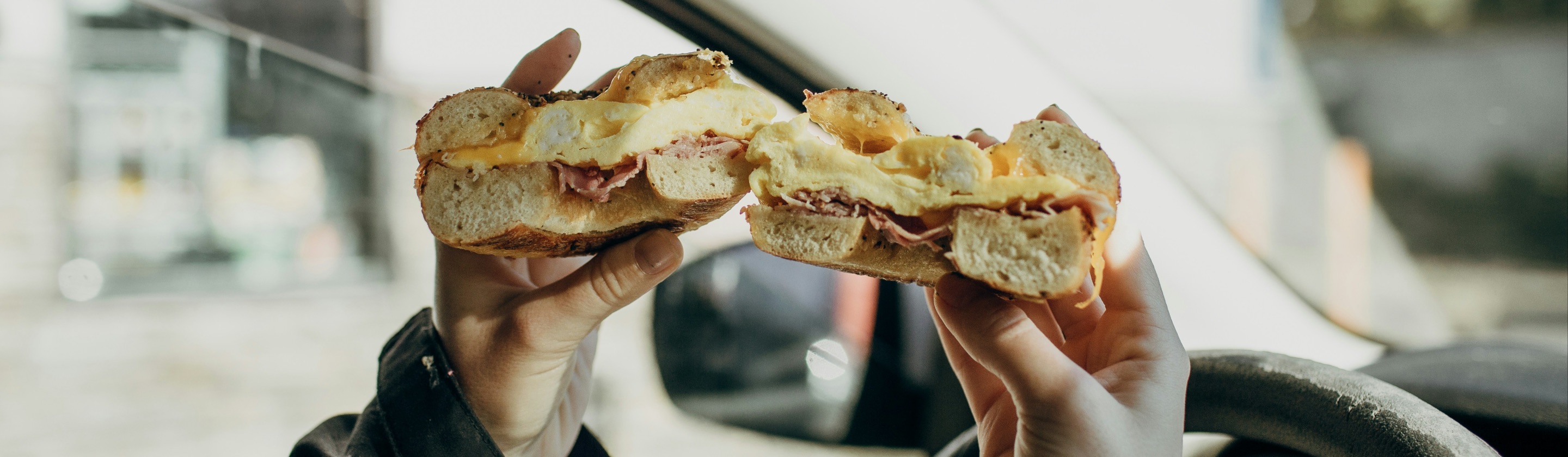
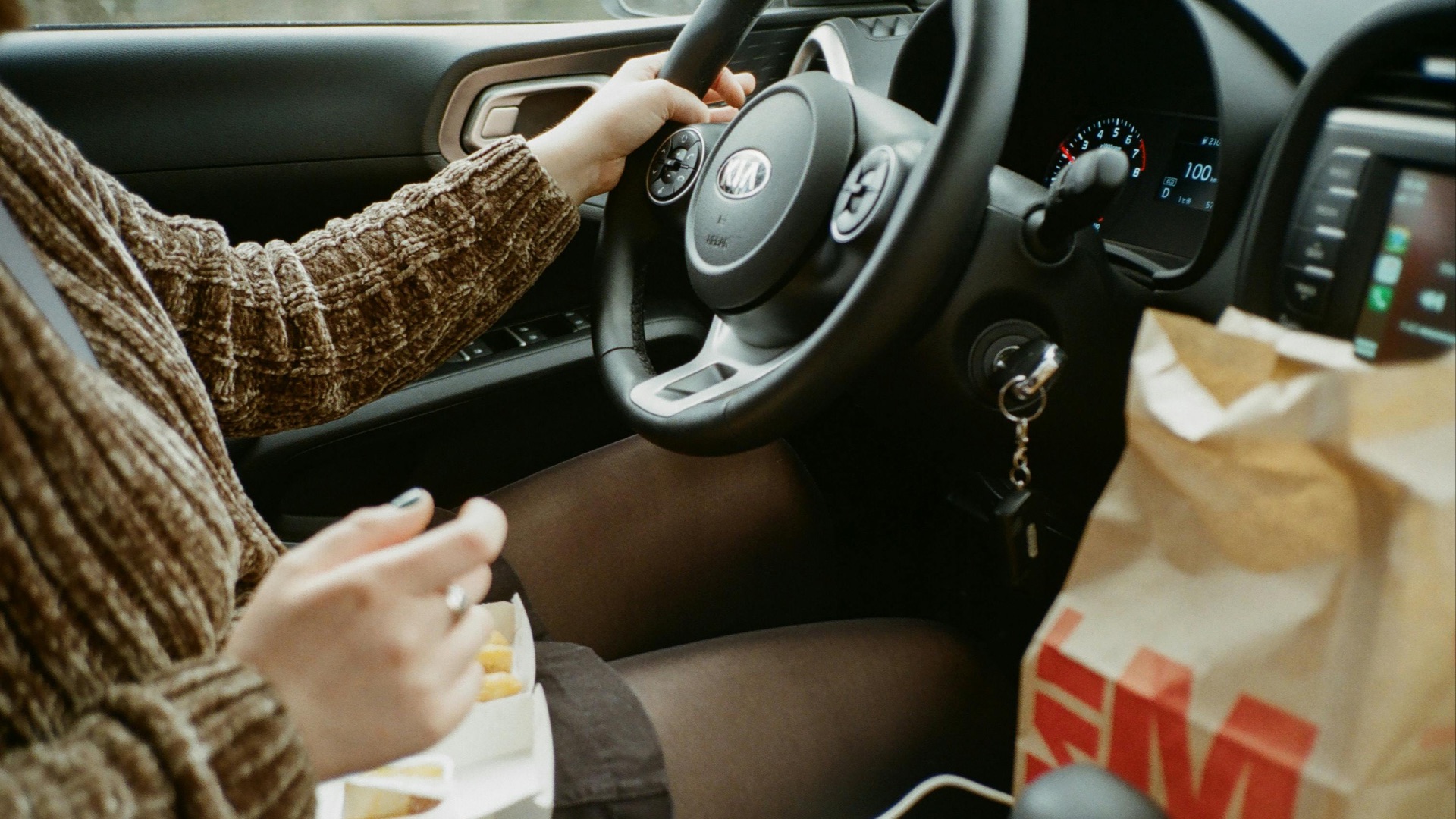
If you've ever unwrapped a breakfast sandwich at a red light or polished off a bag of chips on the highway, you're far from being the only one. In fact, eating in the car has become such a normalized part of daily life that most people don't give it a second thought. Between packed schedules, long commutes, and the convenience of drive-thrus, why not use your car as your little own dining spot?
But hold that thought. The problem is that this habit comes with more consequences than a few crumbs in the seat. From safety risks and hygiene issues to the way it affects your relationship with food, you might want to reconsider eating behind the wheel, especially if you do it often. Here's a closer look at why making the car a no-food zone may be one of the better changes you can make.
It's a Bigger Safety Risk Than You Might Think
Distracted driving is one of the leading causes of road accidents, but texting or calling isn't the only way your mind wanders. In fact, eating is arguably just as disruptive to your attention and reaction time. Think about it: when you're handling food, it takes your hands off the wheel, your eyes off the road, and your mind off the task of driving, and sometimes all at once.
The National Highway Traffic Safety Administration identifies eating and drinking as a significant source of distraction for drivers as well. It just takes a couple seconds of inattention while opening a fast-food bag or looking down to reach for another fry for you to accidentally drift in your lane or miss a stop sign. When you're on the road, you're constantly making small decisions while simultaneously navigating traffic. You might not be convinced, but anything that splits your focus, even just for a moment, can be detrimental. Food included.
Even if you're a confident driver, eating in the car creates unpredictable moments. A hot drink that spills, a wrapper that falls under your seat, or a bite that's harder to manage than expected can all cause you to react in ways that take your mind off the road. It's not until something bad actually happens that you'll realize you shouldn't have been doing it.
Crumbs All Around
Beyond safety, there's the matter of what regular in-car eating does to your vehicle. Food particles work their way into seat seams, floor mats, and air vents far more easily than most people realize. Over time, that buildup can become difficult to clean and can start to affect the overall condition of your interior.
Crumbs and food residue are also a reliable draw for pests, particularly if you drive in warmer climates or leave your car sitting for extended periods. Ants, cockroaches, and rodents are all attracted to the kinds of food remnants that accumulate from routine snacking. A single spilled drink or forgotten fast-food bag can be enough to create a recurring problem that's expensive and frustrating to resolve.
Odors are another issue that builds up gradually and can be surprisingly hard to eliminate. Upholstery, foam padding, and carpet all absorb food smells over time, and some—like fried food or anything with strong spices—tend to linger long after you've finished your meal. If you're leasing a car or plan to resell it, that kind of interior wear can directly affect its value.
It's Working Against Your Eating Habits
Beyond the obvious cons of eating in the car, the habit can also affect how you experience your meals in ways that have real consequences for your health. Mindful eating (paying attention to what you're consuming, how it tastes, and when you're full) is difficult to practice when you're also watching the road or navigating a parking lot. Distracted eating is consistently linked to consuming more food than intended and feeling less satisfied afterward.
There's also the question of what you're actually eating when you grab something for the car. Drive-thru meals and convenience store snacks tend to be higher in calories, sodium, and saturated fat than what most people would choose if they had the time to sit down and eat deliberately. That means making the car off-limits for meals may naturally push you toward situations where you're more likely to eat something better for you, simply because you'll be eating somewhere that allows for a proper choice.
Ultimately, eating in the car isn't as harmless as you might think it is. The next time you're feeling peckish and on the road, the better choice is to grab your grub and find a smarter place to enjoy it. While it's not recommended to have your meals behind the wheel, even if you're parked, let yourself have a bite or two to settle your hunger before you start driving again. If you can wait, drive safely home first, then dig in.